Cultic Studies Journal, Vol. 13, No. 1, 1996, page 44
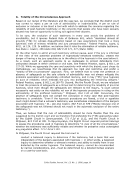
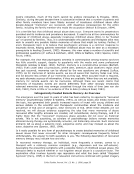
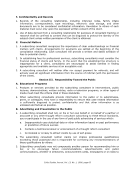
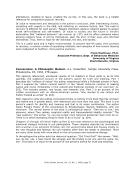
Table 1. True State
Diagnosis Experienced ICA and is amnesic Did not experience ICA
Repressed memory
of ICA
38 100
No repressed
memory of ICA
2 570
As you can see from the table, all but two of the women who experienced ICA and are
amnesic for it will be identified. However, 100 patients (.15 x 670) will be incorrectly
identified as suffering from ICA even though they were not abused as children. Thus, given
these assumptions, 100 of 138 patients (73%) diagnosed as having repressed memories of
ICA will be false positives. To put it another way, using these assumptions, of 40 patients
diagnosed as hidden presentations of ICA, 29 will be false positives.
To create a range for the proportion of false positives, we will do a second analysis using
more moderate assumptions about diagnostic specificity and prevalence rates. Studies of
childhood sexual abuse indicate that a significant minority of children show few or no ill
effects 18 months after the abuse (see Levitt &Pinnell, 1995, for a recent review). We will
assume that 20% of women coming for therapy have experienced ICA serious enough to
create long-term disturbances. Again assuming that 12% are amnesic for the experience
(Williams, 1994), this would result in a prevalence of 24 abused amnesic women per
thousand. We will continue to use a sensitivity estimate of .95, but decrease our specificity
estimate to .80, which is still good for any psychological or psychiatric diagnosis, never
mind a hidden, etiologic factor.
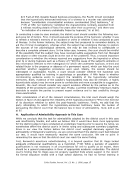
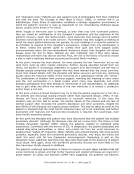
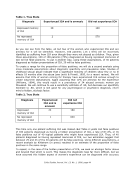
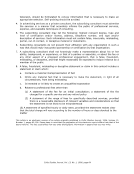
Table 2. True State
Diagnosis Experienced
ICA and is
amnesic
Did not
experience ICA
Repressed
memory of ICA
23 160
No repressed
memory of ICA
1 640
This time only one patient suffering ICA was missed. But Table 2 yields 160 false positives
of 183 patients diagnosed as having a hidden presentation of ICA, a rate of 87.4%, or 35
false positives out of 40 typical patients who might have experienced ICA. Thus, of 40
patients diagnosed as having repressed memories of ICA, our two estimates suggest that
between 29 and 35 of the 40 patients will be false positives. Using different assumptions, a
recent analysis by Kihlstrom (in press) resulted in an estimate of the proportion of false
positives in the same range.
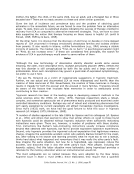
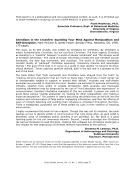
To repeat, in the case of the hidden presentation of ICA, we seek an etiologic factor above
and beyond that which is overt. This makes the diagnostic task far more difficult, but we
have assumed this hidden aspect of women‟s experience can be diagnosed with accuracy
Table 1. True State
Diagnosis Experienced ICA and is amnesic Did not experience ICA
Repressed memory
of ICA
38 100
No repressed
memory of ICA
2 570
As you can see from the table, all but two of the women who experienced ICA and are
amnesic for it will be identified. However, 100 patients (.15 x 670) will be incorrectly
identified as suffering from ICA even though they were not abused as children. Thus, given
these assumptions, 100 of 138 patients (73%) diagnosed as having repressed memories of
ICA will be false positives. To put it another way, using these assumptions, of 40 patients
diagnosed as hidden presentations of ICA, 29 will be false positives.
To create a range for the proportion of false positives, we will do a second analysis using
more moderate assumptions about diagnostic specificity and prevalence rates. Studies of
childhood sexual abuse indicate that a significant minority of children show few or no ill
effects 18 months after the abuse (see Levitt &Pinnell, 1995, for a recent review). We will
assume that 20% of women coming for therapy have experienced ICA serious enough to
create long-term disturbances. Again assuming that 12% are amnesic for the experience
(Williams, 1994), this would result in a prevalence of 24 abused amnesic women per
thousand. We will continue to use a sensitivity estimate of .95, but decrease our specificity
estimate to .80, which is still good for any psychological or psychiatric diagnosis, never
mind a hidden, etiologic factor.
Table 2. True State
Diagnosis Experienced
ICA and is
amnesic
Did not
experience ICA
Repressed
memory of ICA
23 160
No repressed
memory of ICA
1 640
This time only one patient suffering ICA was missed. But Table 2 yields 160 false positives
of 183 patients diagnosed as having a hidden presentation of ICA, a rate of 87.4%, or 35
false positives out of 40 typical patients who might have experienced ICA. Thus, of 40
patients diagnosed as having repressed memories of ICA, our two estimates suggest that
between 29 and 35 of the 40 patients will be false positives. Using different assumptions, a
recent analysis by Kihlstrom (in press) resulted in an estimate of the proportion of false
positives in the same range.
To repeat, in the case of the hidden presentation of ICA, we seek an etiologic factor above
and beyond that which is overt. This makes the diagnostic task far more difficult, but we
have assumed this hidden aspect of women‟s experience can be diagnosed with accuracy