Cultic Studies Journal, Vol. 13, No. 1, 1996, page 22
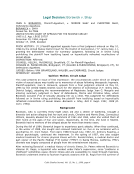
The second factor influencing the Second Circuit to deny Ms. Borawick her pretrial hearing is
the court‟s opinion about “the inherent incredibility of Borawick‟s allegations” including rape,
ritual abuse, blood drinking, satanic activities, and other events involving relatives and
strangers. The court acknowledges that Ms. Borawick was denied an opportunity to
substantiate her claims with proof, and then denies her that opportunity. In short, because
the court felt the claims were “incredible,” it denied Ms. Borawick the right to prove they
were true. Once again, this violates the spirit and the purpose of the totality-of-the-
circumstances test, as well as common sense. Even if some of the claims are incredible,
others might well be true. Let Ms. Borawick have her hearing to see what she can prove.
Does Daubert Apply?
In 1993 the United States Supreme Court changed the test federal courts must use in
admitting expert opinion testimony. Under the old rule articulated in Frye v. United States
(1923), a novel technique or procedure used as the basis of an expert‟s testimony must
have established itself in the eyes of the relevant scientific community as “reliable.” Under
the new test articulated in Daubert v. Merrell Dow Pharmaceuticals (1993), expert opinions
are tested by the answers to a series of questions such as the following:
1. Has the expert‟s theory been tested?
2. Has the theory been subject to peer review?
3. What is the theory‟s potential or known rate of error?
4. What standards were used during the technique‟s operation?
5. Has the theory been generally accepted in the scientific community?
At the dawn of the modern case rulings on hypnotically refreshed recollection, State v. Mack
(1980) took a fatal misstep by applying the Frye ruling about expert testimony to the
admissibility of lay witness testimony, where it has no place. In lockstep, many courts have
followed this error (People v. Shirley, 1982). But the rules of evidence have no such barrier
for the admissibility of competent witness testimony that is relevant.
The Second Circuit acknowledges this point by stating that “Daubert does not provide direct
guidance” because the testimony before the court “does not concern the admissibility of
experimental data or expert opinions.” Under the appropriate rules of evidence in state and
federal courts, Ms. Borawick‟s lay testimony is clearly admissible.
It should be noted that those experts who argue for Daubert to exclude hypnotically
refreshed recollection will also have to argue that Daubert excludes expert opinion on
matters of cult brainwashing, mind control, or coercive persuasion because these areas are
even “softer” and less amenable to objective verification than the area of hypnotically
refreshed recollection. This would be most unfortunate, and most unnecessary. Daubert
should not serve as a barrier to expert opinion on hypnotically refreshed recollection, nor to
expert opinion on cult mind control activities. And Daubert should have no relevance at all
to the admissibility of lay testimony.
Of great importance is the fact that when Daubert has been held to apply, courts have
concluded that it prohibits the use of a per se rule of exclusion in hypnosis cases (Rowland
v. Commonwealth, 1995) and in polygraph cases (United States v. Posado, 1995).
Repressed Memories
The issue of hypnotically refreshed recollection, and the science that informs us about it,
becomes more complex when the heavily litigated issues of repressed memories are added
(Spiegel &Scheflin, 1994). Beginning in 1986, when the first appellate court decided the
first repressed memory case (Tyson v. Tyson, 1986), a fierce debate has raged in scientific
and public circles about two issues: Do repressed memories exist? And, if so, are they
accurate?
The second factor influencing the Second Circuit to deny Ms. Borawick her pretrial hearing is
the court‟s opinion about “the inherent incredibility of Borawick‟s allegations” including rape,
ritual abuse, blood drinking, satanic activities, and other events involving relatives and
strangers. The court acknowledges that Ms. Borawick was denied an opportunity to
substantiate her claims with proof, and then denies her that opportunity. In short, because
the court felt the claims were “incredible,” it denied Ms. Borawick the right to prove they
were true. Once again, this violates the spirit and the purpose of the totality-of-the-
circumstances test, as well as common sense. Even if some of the claims are incredible,
others might well be true. Let Ms. Borawick have her hearing to see what she can prove.
Does Daubert Apply?
In 1993 the United States Supreme Court changed the test federal courts must use in
admitting expert opinion testimony. Under the old rule articulated in Frye v. United States
(1923), a novel technique or procedure used as the basis of an expert‟s testimony must
have established itself in the eyes of the relevant scientific community as “reliable.” Under
the new test articulated in Daubert v. Merrell Dow Pharmaceuticals (1993), expert opinions
are tested by the answers to a series of questions such as the following:
1. Has the expert‟s theory been tested?
2. Has the theory been subject to peer review?
3. What is the theory‟s potential or known rate of error?
4. What standards were used during the technique‟s operation?
5. Has the theory been generally accepted in the scientific community?
At the dawn of the modern case rulings on hypnotically refreshed recollection, State v. Mack
(1980) took a fatal misstep by applying the Frye ruling about expert testimony to the
admissibility of lay witness testimony, where it has no place. In lockstep, many courts have
followed this error (People v. Shirley, 1982). But the rules of evidence have no such barrier
for the admissibility of competent witness testimony that is relevant.
The Second Circuit acknowledges this point by stating that “Daubert does not provide direct
guidance” because the testimony before the court “does not concern the admissibility of
experimental data or expert opinions.” Under the appropriate rules of evidence in state and
federal courts, Ms. Borawick‟s lay testimony is clearly admissible.
It should be noted that those experts who argue for Daubert to exclude hypnotically
refreshed recollection will also have to argue that Daubert excludes expert opinion on
matters of cult brainwashing, mind control, or coercive persuasion because these areas are
even “softer” and less amenable to objective verification than the area of hypnotically
refreshed recollection. This would be most unfortunate, and most unnecessary. Daubert
should not serve as a barrier to expert opinion on hypnotically refreshed recollection, nor to
expert opinion on cult mind control activities. And Daubert should have no relevance at all
to the admissibility of lay testimony.
Of great importance is the fact that when Daubert has been held to apply, courts have
concluded that it prohibits the use of a per se rule of exclusion in hypnosis cases (Rowland
v. Commonwealth, 1995) and in polygraph cases (United States v. Posado, 1995).
Repressed Memories
The issue of hypnotically refreshed recollection, and the science that informs us about it,
becomes more complex when the heavily litigated issues of repressed memories are added
(Spiegel &Scheflin, 1994). Beginning in 1986, when the first appellate court decided the
first repressed memory case (Tyson v. Tyson, 1986), a fierce debate has raged in scientific
and public circles about two issues: Do repressed memories exist? And, if so, are they
accurate?