Cultic Studies Journal, Vol. 13, No. 1, 1996, page 31
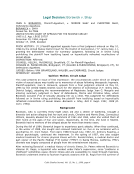
uncle placed a dog collar around her neck and committed anal rape. The court‟s decision
states that Ms. Borawick also “leveled fanciful accusations of sexual abuse against
numerous persons other than the defendants.... For example, Borawick allegedly recalls
being raped and sexually abused at the age of 3 during rituals by men whom she believed
to be members of the Masons. She also reports recollecting several incidents in which she
was drugged by injection as well as an incident in which she was forced to drink blood at a
ritual involving a dead pig, incense, chanting, and people dressed in black gowns” (Borawick
v. Shay, 1995, Slip opinion, p. 10).2
Ms. Borawick stated that she had no memory of these events for more than 20 years. While
seeking treatment in 1987 for various physical and psychological ills, Ms. Borawick‟s
physician referred her to a lay hypnotist, Valerian St. Regis. Her physician seemingly
believed that “„problems in childhood‟ sometimes cause chronic illness and are susceptible
to recall through hypnosis” (Borawick v. Shay, 1995, Slip opinion, p. 2). St. Regis was
known to help patients recover such memories.
During a course of 12 to 14 unrecorded hypnotic sessions in 1988, St. Regis aided Ms.
Borawick in recovering memories of childhood rape, incest, and ritual abuse involving her
aunt and uncle, among others. St. Regis seemingly allowed or suggested that Ms. Borawick
remain amnesic for these events when not in hypnosis, because he believed the memories
recovered in hypnosis would be “„devastating‟ and would probably surface in time”
(Borawick v. Shay, 1995, Slip opinion, p. 2). Ms. Borawick reports that it was several
months after the end of hypnotic treatment before she began to remember in “bits and
pieces” a lengthy and involved history of satanic ritual abuse (SRA). More memories
emerged over the ensuing months.
In January 1992 Ms. Borawick initiated suit against her aunt and uncle for their “alleged
willful, wanton, and malicious sexual exploitation of her in 1961 and 1964,” when she was 4
and 7 years old, respectively (Borawick v. Shay, 1995, Slip opinion, p. 5). The defendants
claimed that Ms. Borawick‟s memory was rendered unreliable by hypnosis and asked that
her entire testimony be excluded at trial. When the District Court agreed, the defendants
asked for and were granted summary judgment. Ms. Borawick appealed to the U.S. Court of
Appeals for the Second District, which affirmed the District Court‟s suppression of Ms.
Borawick‟s hypnotically influenced recall.
As part of its decision, the Court of Appeals noted the following five concerns with
hypnotically influenced recall: (1) the subject becomes hypersuggestible, (2) the subject
may fill in gaps in memory with fantasy [i.e., confabulate], (3) the subject may develop
unwarranted confidence in the version of the story that emerged during or through hypnosis
[memory hardening], (4) the subject may become less able to distinguish between accurate
and inaccurate memory, and (5) the subject may incorporate postevent information into the
narrative. Quoting Diamond (1980), the court held that “hypnotically recalled memory is apt
to be a mosaic of (1) appropriate accurate events, (2) entirely irrelevant actual events, (3)
pure fantasy, and (4) fantasized details to make a logical whole.” The present authors agree
with the five concerns expressed by the court and the conclusions quoted from Diamond.
The court then considered decisions by other courts about the admissibility of hypnotically
influenced testimony. These other courts made four types of rulings: (1) that hypnosis went
to the credibility but not the admissibility of the evidence, (2) that hypnotically influenced
testimony be excluded per se (i.e., automatically), (3) that adherence to some form of the
Hurd safeguards determines admissibility, and (4) that the “totality of the circumstances,”
as determined by the trial court, shall govern the admissibility of the hypnotically influenced
testimony. The last ruling, number 4 above, was the choice of the Borawick court. It calls
for a case-by-case evidentiary hearing at which the probative and prejudicial value of the
testimony is assessed. While on the surface this ruling seems reasonable, especially if the
uncle placed a dog collar around her neck and committed anal rape. The court‟s decision
states that Ms. Borawick also “leveled fanciful accusations of sexual abuse against
numerous persons other than the defendants.... For example, Borawick allegedly recalls
being raped and sexually abused at the age of 3 during rituals by men whom she believed
to be members of the Masons. She also reports recollecting several incidents in which she
was drugged by injection as well as an incident in which she was forced to drink blood at a
ritual involving a dead pig, incense, chanting, and people dressed in black gowns” (Borawick
v. Shay, 1995, Slip opinion, p. 10).2
Ms. Borawick stated that she had no memory of these events for more than 20 years. While
seeking treatment in 1987 for various physical and psychological ills, Ms. Borawick‟s
physician referred her to a lay hypnotist, Valerian St. Regis. Her physician seemingly
believed that “„problems in childhood‟ sometimes cause chronic illness and are susceptible
to recall through hypnosis” (Borawick v. Shay, 1995, Slip opinion, p. 2). St. Regis was
known to help patients recover such memories.
During a course of 12 to 14 unrecorded hypnotic sessions in 1988, St. Regis aided Ms.
Borawick in recovering memories of childhood rape, incest, and ritual abuse involving her
aunt and uncle, among others. St. Regis seemingly allowed or suggested that Ms. Borawick
remain amnesic for these events when not in hypnosis, because he believed the memories
recovered in hypnosis would be “„devastating‟ and would probably surface in time”
(Borawick v. Shay, 1995, Slip opinion, p. 2). Ms. Borawick reports that it was several
months after the end of hypnotic treatment before she began to remember in “bits and
pieces” a lengthy and involved history of satanic ritual abuse (SRA). More memories
emerged over the ensuing months.
In January 1992 Ms. Borawick initiated suit against her aunt and uncle for their “alleged
willful, wanton, and malicious sexual exploitation of her in 1961 and 1964,” when she was 4
and 7 years old, respectively (Borawick v. Shay, 1995, Slip opinion, p. 5). The defendants
claimed that Ms. Borawick‟s memory was rendered unreliable by hypnosis and asked that
her entire testimony be excluded at trial. When the District Court agreed, the defendants
asked for and were granted summary judgment. Ms. Borawick appealed to the U.S. Court of
Appeals for the Second District, which affirmed the District Court‟s suppression of Ms.
Borawick‟s hypnotically influenced recall.
As part of its decision, the Court of Appeals noted the following five concerns with
hypnotically influenced recall: (1) the subject becomes hypersuggestible, (2) the subject
may fill in gaps in memory with fantasy [i.e., confabulate], (3) the subject may develop
unwarranted confidence in the version of the story that emerged during or through hypnosis
[memory hardening], (4) the subject may become less able to distinguish between accurate
and inaccurate memory, and (5) the subject may incorporate postevent information into the
narrative. Quoting Diamond (1980), the court held that “hypnotically recalled memory is apt
to be a mosaic of (1) appropriate accurate events, (2) entirely irrelevant actual events, (3)
pure fantasy, and (4) fantasized details to make a logical whole.” The present authors agree
with the five concerns expressed by the court and the conclusions quoted from Diamond.
The court then considered decisions by other courts about the admissibility of hypnotically
influenced testimony. These other courts made four types of rulings: (1) that hypnosis went
to the credibility but not the admissibility of the evidence, (2) that hypnotically influenced
testimony be excluded per se (i.e., automatically), (3) that adherence to some form of the
Hurd safeguards determines admissibility, and (4) that the “totality of the circumstances,”
as determined by the trial court, shall govern the admissibility of the hypnotically influenced
testimony. The last ruling, number 4 above, was the choice of the Borawick court. It calls
for a case-by-case evidentiary hearing at which the probative and prejudicial value of the
testimony is assessed. While on the surface this ruling seems reasonable, especially if the