Cultic Studies Journal, Vol. 13, No. 1, 1996, page 13
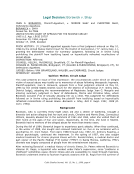
trauma, id. at 1221-22. The Kanovitz article sets forth some arguments in support of the
view that hypnosis may be better able to retrieve [*30] memories “kept out of conscious
awareness by ego-defenses that protect the psyche from trauma,” id. at 1194, than
hypnosis used for normal memory recall. In the clinical setting, hypnosis may overcome the
psychological barriers to remembering past traumas because it induces profound relaxation
and calmness, intensifies concentration, and focuses the subject‟s attention inward. Id. at
1213. In addition, the clinical literature “abounds with case histories of spectacular memory
successes.” Id. at 1225. Finally, repressed memories of events that have a traumatic impact
upon the witness may, even if unconscious, tend to remain fixed and survive longer than
memories of events witnessed quickly, in the context of a great deal of other sensory
information. Id. at 1231-32.
Based on those reasons, the article concludes that courts should be more willing to accept
testimony based on retrieval of repressed memories than when hypnosis is used to enhance
eyewitness accounts, particularly since failure to admit post-hypnotic testimony in cases like
this one might discourage the use of hypnosis in therapy. Therapists might fear that
patients who discover they were victimized as [*31] children could lose the opportunity for
legal redress if their testimony was based on post-hypnotic recall. See id. at 1255-56.
Noting, however, that clinical hypnosis is not without some risk of memory distortion --for
example, clinicians may “overstep the boundaries of interviewing neutrality” and may be
especially interested in their patients‟ “subjective impressions” of their pasts, rather than
accurate recollections, id. at 1218Cthe Kanovitz article suggests that courts should ask
“whether hypnosis can create sexual abuse memories in subjects who have never
experienced abuse.” Id. at 1220. Because the “only evidence that hypnosis can implant
false autobiographical memories comes from experiments with subjects who are hand-
picked for their high hypnotizability,” id. at 1235, a characteristic that can be measured, id.
at 1238, the article suggests that “high hypnotizability [may be] a factor bearing on
admissibility.” Id. at 1239.
While we appreciate the force of many of these arguments, the fact remains that the
literature has not yet conclusively demonstrated that hypnosis is a consistently effective
means to retrieve repressed memories of traumatic, [*32] past experiences accurately. For
example, the Council on Scientific Affairs has pointed out that the case histories of
“spectacular memory successes” are anecdotal and difficult to verify independently and
there are no controlled studies confirming these reports. Scientific Affairs, supra, at 1919.
In addition, some in the clinical community express reservations concerning the theory of
memory repression, or at least the phenomenon‟s prevalence. See Julie M. Murray,
“Repression, Memory, and Suggestibility,” 66 U. Colo. L. Rev. 477, 505-08 (1995).
Furthermore, we are highly skeptical of the belief in the clinician‟s ability to “weed out most
patently groundless claims” because childhood sexual abuse often “fits like a tailor-made
glove” to certain psychiatric disorders. Kanovitz, supra, at 1242. Some therapists may be
too eager to find patterns of behavior demonstrative of childhood sexual abuse. See Murray,
66 U. Colo. L. Rev. at 507B08. But cf. Colette M. Smith, “Recovered Memories of Alleged
Sexual Abuse,” 18 Seattle Univ. L. Rev. 51, 61 (1994) (noting that Harvard Medical School
psychiatrist Judith Herman “believes that therapists rarely wield enough power over [*33]
patients to impose false memories on them”). Therefore, even though there may be
important distinctions between the use of hypnosis to enhance memories of witnessed
events and the use of hypnosis to retrieve repressed memories, given the lack of empirical
studies as to the latter and the complicated nature of hypnotically-induced recall, we are not
willing to assume that the risks of suggestibility, confabulation, and memory hardening are
significantly reduced when the hypnosis that triggers the testimony is used for therapeutic
purposes.
trauma, id. at 1221-22. The Kanovitz article sets forth some arguments in support of the
view that hypnosis may be better able to retrieve [*30] memories “kept out of conscious
awareness by ego-defenses that protect the psyche from trauma,” id. at 1194, than
hypnosis used for normal memory recall. In the clinical setting, hypnosis may overcome the
psychological barriers to remembering past traumas because it induces profound relaxation
and calmness, intensifies concentration, and focuses the subject‟s attention inward. Id. at
1213. In addition, the clinical literature “abounds with case histories of spectacular memory
successes.” Id. at 1225. Finally, repressed memories of events that have a traumatic impact
upon the witness may, even if unconscious, tend to remain fixed and survive longer than
memories of events witnessed quickly, in the context of a great deal of other sensory
information. Id. at 1231-32.
Based on those reasons, the article concludes that courts should be more willing to accept
testimony based on retrieval of repressed memories than when hypnosis is used to enhance
eyewitness accounts, particularly since failure to admit post-hypnotic testimony in cases like
this one might discourage the use of hypnosis in therapy. Therapists might fear that
patients who discover they were victimized as [*31] children could lose the opportunity for
legal redress if their testimony was based on post-hypnotic recall. See id. at 1255-56.
Noting, however, that clinical hypnosis is not without some risk of memory distortion --for
example, clinicians may “overstep the boundaries of interviewing neutrality” and may be
especially interested in their patients‟ “subjective impressions” of their pasts, rather than
accurate recollections, id. at 1218Cthe Kanovitz article suggests that courts should ask
“whether hypnosis can create sexual abuse memories in subjects who have never
experienced abuse.” Id. at 1220. Because the “only evidence that hypnosis can implant
false autobiographical memories comes from experiments with subjects who are hand-
picked for their high hypnotizability,” id. at 1235, a characteristic that can be measured, id.
at 1238, the article suggests that “high hypnotizability [may be] a factor bearing on
admissibility.” Id. at 1239.
While we appreciate the force of many of these arguments, the fact remains that the
literature has not yet conclusively demonstrated that hypnosis is a consistently effective
means to retrieve repressed memories of traumatic, [*32] past experiences accurately. For
example, the Council on Scientific Affairs has pointed out that the case histories of
“spectacular memory successes” are anecdotal and difficult to verify independently and
there are no controlled studies confirming these reports. Scientific Affairs, supra, at 1919.
In addition, some in the clinical community express reservations concerning the theory of
memory repression, or at least the phenomenon‟s prevalence. See Julie M. Murray,
“Repression, Memory, and Suggestibility,” 66 U. Colo. L. Rev. 477, 505-08 (1995).
Furthermore, we are highly skeptical of the belief in the clinician‟s ability to “weed out most
patently groundless claims” because childhood sexual abuse often “fits like a tailor-made
glove” to certain psychiatric disorders. Kanovitz, supra, at 1242. Some therapists may be
too eager to find patterns of behavior demonstrative of childhood sexual abuse. See Murray,
66 U. Colo. L. Rev. at 507B08. But cf. Colette M. Smith, “Recovered Memories of Alleged
Sexual Abuse,” 18 Seattle Univ. L. Rev. 51, 61 (1994) (noting that Harvard Medical School
psychiatrist Judith Herman “believes that therapists rarely wield enough power over [*33]
patients to impose false memories on them”). Therefore, even though there may be
important distinctions between the use of hypnosis to enhance memories of witnessed
events and the use of hypnosis to retrieve repressed memories, given the lack of empirical
studies as to the latter and the complicated nature of hypnotically-induced recall, we are not
willing to assume that the risks of suggestibility, confabulation, and memory hardening are
significantly reduced when the hypnosis that triggers the testimony is used for therapeutic
purposes.