Cultic Studies Review, Vol. 5, No. 1, 2006, Page 94
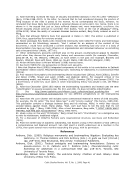
and hard that he would leave splashes of blood all over the floor. However, Escrivá never
required anyone to imitate him. According to Allen, Escrivá taught that no one in the
movement should do anything that compromises his or her health. These seemingly
barbaric rituals are to be done in private and endured silently. Opus numeraries also
practice mortification by sleeping on thin boards that cover the mattress. Men will sleep on
the floor once a week. Members practice small corporeal mortification at meals by skipping
sugar, extra butter, or dessert. Members fast on prescribed days and on their own. But
Allen notes that the time he spent with Opus Dei members over a year of research proved
that members are ―not especially fastidious about denying themselves food and drink.‖
Members might have an assigned spiritual director who acts as a guide and confessor of
sorts. Ritual prayer several times a day keeps each member aligned with his or her purpose
and cause, which is to represent Christ‘s message in everything. In general, Opus members
are very dedicated to family, job, church, and the mission. Members tend to follow
conservative values that align with Catholic principles. For this reason, critics see the group
as a throwback to a pre-Vatican II era.
Some ex-members describe Opus Dei as another harmful cult that uses deceptive recruiting
and brainwashing. But is it harmful? And if it is harmful, how could a pope as astute and
worldly wise as John Paul II support an extremist organization that could damage the
Church that he so served and loved?
John Allen wrote Opus Dei both to examine these criticisms and to expose Opus Dei to the
light of journalism. This means that he traveled far and wide to Opus centers around the
world, interviewed both members and ex-members and apologists and critics alike, and
read about the group till he thought he could not take it anymore. What he left out of his
book would fill many volumes, I‘m sure. What he put in should go a long way to explain
many facets of the Escrivá movement in Catholicism. Allen summarizes the history and
structure of the group and its leader in Section One. In Section Two, he covers the group
from the inside and describes its purpose as members generally see it. The title of chapter 4
is telling: ―Contemplatives in the Middle of the World.‖ In Section Three, Allen addresses the
criticisms about the group‘s attitude toward secrecy, mortification, women, money, politics
and the Church.
Allen addresses ―blind obedience‖ among members, and the cult label. In chapter 13, he
relates an interview with cult expert David Clark, who exit-counseled a female member who
later founded Opus Dei Awareness Network (ODAN). ODAN has Internet presence and
functions as a forum for former members. In his last section, Section Four, Allen gives a fine
―summary evaluation,‖ with some advice for Opus Dei as it moves into the future.
I must admit, having come from a career in the ―cult awareness‖ field, that I hold a bias
toward Opus Dei as a kind of Catholic cult with harmful elements. I am also a Catholic. My
early sources of information about Opus were not only ex-members‘ stories, but also several
books published before 1990, including The Secret World of Opus Dei by Michael Walsh.
Allen‘s book has given me a better understanding of this movement, and I am thankful for
his hard work that lays out all the Opus Dei laundry, both clean and soiled. The author
brought me more in touch with the average member who appears to suffer no undue harm.
Allen reports that members and leaders were more secretive prior to 1990, but this secrecy
may have been a flaw that is slowly being corrected. By following a principle of humility to
work silently in the world without bringing attention to oneself, the member is actually
following a commandment of Christ.
On the flip side, outsiders noted the lack of transparency in a group that, for its relatively
small size (less than 90,000 among a billion Catholics worldwide), has considerable
influence. Allen reports that Opus attracts people of financial means who have sophisticated
fundraising ability. Some critics believe that Opus Dei has too much influence over the
and hard that he would leave splashes of blood all over the floor. However, Escrivá never
required anyone to imitate him. According to Allen, Escrivá taught that no one in the
movement should do anything that compromises his or her health. These seemingly
barbaric rituals are to be done in private and endured silently. Opus numeraries also
practice mortification by sleeping on thin boards that cover the mattress. Men will sleep on
the floor once a week. Members practice small corporeal mortification at meals by skipping
sugar, extra butter, or dessert. Members fast on prescribed days and on their own. But
Allen notes that the time he spent with Opus Dei members over a year of research proved
that members are ―not especially fastidious about denying themselves food and drink.‖
Members might have an assigned spiritual director who acts as a guide and confessor of
sorts. Ritual prayer several times a day keeps each member aligned with his or her purpose
and cause, which is to represent Christ‘s message in everything. In general, Opus members
are very dedicated to family, job, church, and the mission. Members tend to follow
conservative values that align with Catholic principles. For this reason, critics see the group
as a throwback to a pre-Vatican II era.
Some ex-members describe Opus Dei as another harmful cult that uses deceptive recruiting
and brainwashing. But is it harmful? And if it is harmful, how could a pope as astute and
worldly wise as John Paul II support an extremist organization that could damage the
Church that he so served and loved?
John Allen wrote Opus Dei both to examine these criticisms and to expose Opus Dei to the
light of journalism. This means that he traveled far and wide to Opus centers around the
world, interviewed both members and ex-members and apologists and critics alike, and
read about the group till he thought he could not take it anymore. What he left out of his
book would fill many volumes, I‘m sure. What he put in should go a long way to explain
many facets of the Escrivá movement in Catholicism. Allen summarizes the history and
structure of the group and its leader in Section One. In Section Two, he covers the group
from the inside and describes its purpose as members generally see it. The title of chapter 4
is telling: ―Contemplatives in the Middle of the World.‖ In Section Three, Allen addresses the
criticisms about the group‘s attitude toward secrecy, mortification, women, money, politics
and the Church.
Allen addresses ―blind obedience‖ among members, and the cult label. In chapter 13, he
relates an interview with cult expert David Clark, who exit-counseled a female member who
later founded Opus Dei Awareness Network (ODAN). ODAN has Internet presence and
functions as a forum for former members. In his last section, Section Four, Allen gives a fine
―summary evaluation,‖ with some advice for Opus Dei as it moves into the future.
I must admit, having come from a career in the ―cult awareness‖ field, that I hold a bias
toward Opus Dei as a kind of Catholic cult with harmful elements. I am also a Catholic. My
early sources of information about Opus were not only ex-members‘ stories, but also several
books published before 1990, including The Secret World of Opus Dei by Michael Walsh.
Allen‘s book has given me a better understanding of this movement, and I am thankful for
his hard work that lays out all the Opus Dei laundry, both clean and soiled. The author
brought me more in touch with the average member who appears to suffer no undue harm.
Allen reports that members and leaders were more secretive prior to 1990, but this secrecy
may have been a flaw that is slowly being corrected. By following a principle of humility to
work silently in the world without bringing attention to oneself, the member is actually
following a commandment of Christ.
On the flip side, outsiders noted the lack of transparency in a group that, for its relatively
small size (less than 90,000 among a billion Catholics worldwide), has considerable
influence. Allen reports that Opus attracts people of financial means who have sophisticated
fundraising ability. Some critics believe that Opus Dei has too much influence over the