Cultic Studies Review, Vol. 5, No. 1, 2006, Page 67
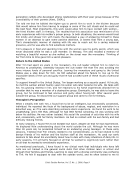
eighteen months before Enron declared bankruptcy, in which he concluded that ―We want to
be proud of Enron and to know it enjoys a reputation for fairness and honesty and that it is
respected… Let‟s keep that reputation high” (quoted in Cruver, 2003, p.333 – emphasis
in the original text). As is now known, Enron‘s leaders disregarded the code in their daily
practice – to such an extent that, to take but one of many examples, a 166-page report was
published in 1999 entitled ―The Enron Corporation: Corporate Complicity in Human Rights
Violations‖. It documented, amongst much else, how Enron executives paid local law
enforcement officers to suppress legitimate and peaceful opposition to its power plant near
Mumbai in India (Human Rights Watch, 2002). The code of ethics was thus a dramaturgical
device, whose theatrical display cultivated the illusion of noble ideals and generated a
convincing spectacle of ethical practice for both the organisation‘s internal and external
audiences (Boje et al., 2004). It also helped douse whatever suspicions people may have
been nurturing about the behaviour of the organisation‘s leaders.
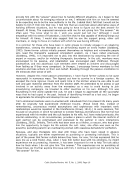
The RICE code suggests that Enron was engaged essentially in the production and trading of
illusions. The dominant illusion, of course, was one of high profitability. But the main
spectacle was sustained, at a deep structure level, by myriad other theatrical discourses. In
this instance, the RICE code suggested that the organisation‘s activities were underpinned
by a strong ethical code. The cultivation of such a belief was intended to facilitate intense
belief, compliance, over-identification with the group‘s goals and leaders and heightened
dedication to the pursuit of declared ideals. Accordingly, the presentation of an image at
odds with a malignant reality is a standard leadership tactic in most documented cults. For
example, the leader of the suicidal Jonestown cult in Guyana in the 1970s, Jim Jones,
engaged in the dramaturgy of miraculous healing in front of large audiences, to generate
the illusion of exceptional powers, while simultaneously informing his closest aides that he
was the reincarnation of Lenin (Layton, 1999). It is now clear that the architects of the
Enron story also made ample use of drama, spectacle, and the projection of financial
illusions in their daily practice.
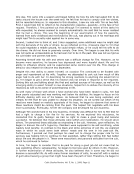
4. Producing the “Appropriate” Individual
Overall, it appears that Enron inculcated a powerful set of cultural norms in its employees.
These specified acceptable business dress, how people talked to each other, and what
values they were supposed to subscribe to. The culture attempted to regulate people‘s
identities – an increasingly common process, and one which has the effect of reinforcing
organizational control, through producing individuals deemed appropriate by the ruling
group (Alvesson and Willmott, 2002). It is a dynamic consistent with the role of culture
within cults, particular in terms of its role in defining a narrow range of acceptable
behaviours, attitudes and emotions.
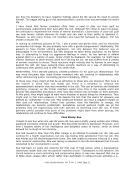
Paradoxically, even from Enron‘s own perspective, the ultimate effect was dysfunctional –
after all, the organisation expired. This suggests that though the methods analysed here
may temporarily strengthen leadership control in small groups they are incompatible with
long term growth and success. Thus, Enron maintained a façade of teamwork. But behind
the façade lurked the ruthless self interest of its leaders – a self interest that others then
felt compelled to emulate. As Swartz and Watkins (2003, p.192) noted:
There was so much infighting over who got financial credit for a deal in the
Performance Review Committee that the total amount credited to individuals
far exceeded the total company income for the year. Even so, everyone felt
obliged to quibble over the smallest points, because if you didn‘t, you got a
reputation as a chump.
Those deemed to be chumps were thought to be exhibiting a purely personal weakness,
rather than demonstrating any systemic difficulties with the organisation. Such a fate and
set of labels again mirrors those directed against dissenters in all variety of cults. They had
eighteen months before Enron declared bankruptcy, in which he concluded that ―We want to
be proud of Enron and to know it enjoys a reputation for fairness and honesty and that it is
respected… Let‟s keep that reputation high” (quoted in Cruver, 2003, p.333 – emphasis
in the original text). As is now known, Enron‘s leaders disregarded the code in their daily
practice – to such an extent that, to take but one of many examples, a 166-page report was
published in 1999 entitled ―The Enron Corporation: Corporate Complicity in Human Rights
Violations‖. It documented, amongst much else, how Enron executives paid local law
enforcement officers to suppress legitimate and peaceful opposition to its power plant near
Mumbai in India (Human Rights Watch, 2002). The code of ethics was thus a dramaturgical
device, whose theatrical display cultivated the illusion of noble ideals and generated a
convincing spectacle of ethical practice for both the organisation‘s internal and external
audiences (Boje et al., 2004). It also helped douse whatever suspicions people may have
been nurturing about the behaviour of the organisation‘s leaders.
The RICE code suggests that Enron was engaged essentially in the production and trading of
illusions. The dominant illusion, of course, was one of high profitability. But the main
spectacle was sustained, at a deep structure level, by myriad other theatrical discourses. In
this instance, the RICE code suggested that the organisation‘s activities were underpinned
by a strong ethical code. The cultivation of such a belief was intended to facilitate intense
belief, compliance, over-identification with the group‘s goals and leaders and heightened
dedication to the pursuit of declared ideals. Accordingly, the presentation of an image at
odds with a malignant reality is a standard leadership tactic in most documented cults. For
example, the leader of the suicidal Jonestown cult in Guyana in the 1970s, Jim Jones,
engaged in the dramaturgy of miraculous healing in front of large audiences, to generate
the illusion of exceptional powers, while simultaneously informing his closest aides that he
was the reincarnation of Lenin (Layton, 1999). It is now clear that the architects of the
Enron story also made ample use of drama, spectacle, and the projection of financial
illusions in their daily practice.
4. Producing the “Appropriate” Individual
Overall, it appears that Enron inculcated a powerful set of cultural norms in its employees.
These specified acceptable business dress, how people talked to each other, and what
values they were supposed to subscribe to. The culture attempted to regulate people‘s
identities – an increasingly common process, and one which has the effect of reinforcing
organizational control, through producing individuals deemed appropriate by the ruling
group (Alvesson and Willmott, 2002). It is a dynamic consistent with the role of culture
within cults, particular in terms of its role in defining a narrow range of acceptable
behaviours, attitudes and emotions.
Paradoxically, even from Enron‘s own perspective, the ultimate effect was dysfunctional –
after all, the organisation expired. This suggests that though the methods analysed here
may temporarily strengthen leadership control in small groups they are incompatible with
long term growth and success. Thus, Enron maintained a façade of teamwork. But behind
the façade lurked the ruthless self interest of its leaders – a self interest that others then
felt compelled to emulate. As Swartz and Watkins (2003, p.192) noted:
There was so much infighting over who got financial credit for a deal in the
Performance Review Committee that the total amount credited to individuals
far exceeded the total company income for the year. Even so, everyone felt
obliged to quibble over the smallest points, because if you didn‘t, you got a
reputation as a chump.
Those deemed to be chumps were thought to be exhibiting a purely personal weakness,
rather than demonstrating any systemic difficulties with the organisation. Such a fate and
set of labels again mirrors those directed against dissenters in all variety of cults. They had