Cultic Studies Review, Vol. 5, No. 1, 2006, Page 27
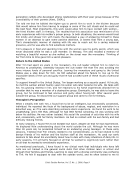
future quantitative and qualitative research. Indeed, the impressive amount of information
that Bainbridge gathered likely shall provide springboards for a variety of detailed studies.
Bainbridge received more than 1,000 completed questionnaires, which provided him with
information on many facets of the group‘s beliefs and practices. The coverage is
remarkable: Questions deal with topics such as frequency of prayer, beliefs about God,
beliefs about Satan, spiritual experiences, alienation, government, the meaning of life, fate,
morality, sexual attitudes, marriage, parenthood, and many more. The survey data reveals
that members, like nonmembers, are not a homogeneous group rather, they comprise a
diversity of types of people who not only come from differing backgrounds, but also at times
hold quite diverse views.
Similarities between the population and COG/The Family are evident. For example, in
Bainbridge‘s examination of people‘s beliefs on ―determinants of fate,‖ 56.2% of The Family
members and 57.1% of GSS respondents believe that ―Some people use their willpower and
work harder than others‖ (p. 109). On matters of alienation from power structures, 54.3%
of The Family respondents and 55.6% of GSS respondents believe that people in positions
of power will attempt to take advantage of others. As well, 25.3% of The Family and 28.3%
of GSS respondents felt ―left out of things going on around [them]‖ (p. 93). Other topics
that elicited comparable responses between The Family members and the general
population include desirable qualities sought in friendship (p. 120), and the belief that God
―reveals himself in and through the world‖ (p. 106).
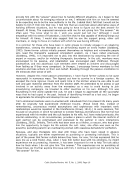
Many of the findings illustrate interesting differences between GSS respondents and The
Family members. For example, 95.6% of The Family respondents declared their unwavering
belief in the existence of God, compared to 64.9% of GSS respondents (p. 46). As one
might expect, attitudes toward sexuality were significantly different: Only 18.7% of The
Family members thought it wrong for young teenagers (under the age of 16) to have sex,
compared with 68.3% of GSS sample and 1.2% of The Family members felt it was wrong
for married couples to engage in extramarital sex, compared to 78.4% of the general
population. Other major differences emerged, including (but not limited to) the belief in the
reality of the devil (p. 53), frequency of prayer (p. 70), and attitudes about salvation (p.
77).
Bainbridge wrote in his foreword to Chancellor‘s (2000) book that COG/The Family
―institutionalized nuclear family‖ (Chancellor, 2000:xiii), a comment that seems quite
discordant with the realities of familial dynamics within COG/The Family. For example, the
―One Wife‖ doctrine (historically, a central COG/The Family tenet) in no way resembles the
mainstream nuclear-family ethic. This Mo Letter remains part of The Love Charter and is
―priority reading‖ for The Family members (The Family, 1995:201). In ―One Wife,‖ Berg
stated, ―BUT GOD‘S IN THE BUSINESS OF BREAKING UP LITTLE SELFISH PRIVATE WORDLY
FAMILIES TO MAKE ...A LARGER UNIT—ONE FAMILY‖ (Berg, 1972:1368). Bainbridge‘s
findings on COG/The Family‘s approach to nonmarital sex (p. 125), general ―marriage–
related attitudes‖ (p. 127), the ―ideal and actual number of children‖ (p. 142), and morals
for children (p. 154) illustrate more differences than similarities in terms of family structure
and beliefs. I do not suggest though that the ―nuclear‖ family is prevalent in mainstream
society, either family configurations in society are varied and fluid. The ideology of a
nuclear family, however, is more prevalent in this setting than in COG/The Family.
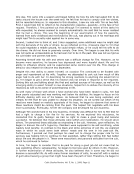
Moreover, Shepherd and Shepherd (2005) note that following the implementation of The
Love Charter, the ―increase in the number of single-family homes‖ has become one of Maria
and Peter‘s many concerns because it contravene[s] core Family values...‖ (p. 72).
Bainbridge concludes that ―The Family is a novel religious movement in considerable tension
with the surrounding sociocultural environment, yet its members are very similar to
nonmembers in many respects‖ (p. 169). Although I agree that similarities exist, I found
future quantitative and qualitative research. Indeed, the impressive amount of information
that Bainbridge gathered likely shall provide springboards for a variety of detailed studies.
Bainbridge received more than 1,000 completed questionnaires, which provided him with
information on many facets of the group‘s beliefs and practices. The coverage is
remarkable: Questions deal with topics such as frequency of prayer, beliefs about God,
beliefs about Satan, spiritual experiences, alienation, government, the meaning of life, fate,
morality, sexual attitudes, marriage, parenthood, and many more. The survey data reveals
that members, like nonmembers, are not a homogeneous group rather, they comprise a
diversity of types of people who not only come from differing backgrounds, but also at times
hold quite diverse views.
Similarities between the population and COG/The Family are evident. For example, in
Bainbridge‘s examination of people‘s beliefs on ―determinants of fate,‖ 56.2% of The Family
members and 57.1% of GSS respondents believe that ―Some people use their willpower and
work harder than others‖ (p. 109). On matters of alienation from power structures, 54.3%
of The Family respondents and 55.6% of GSS respondents believe that people in positions
of power will attempt to take advantage of others. As well, 25.3% of The Family and 28.3%
of GSS respondents felt ―left out of things going on around [them]‖ (p. 93). Other topics
that elicited comparable responses between The Family members and the general
population include desirable qualities sought in friendship (p. 120), and the belief that God
―reveals himself in and through the world‖ (p. 106).
Many of the findings illustrate interesting differences between GSS respondents and The
Family members. For example, 95.6% of The Family respondents declared their unwavering
belief in the existence of God, compared to 64.9% of GSS respondents (p. 46). As one
might expect, attitudes toward sexuality were significantly different: Only 18.7% of The
Family members thought it wrong for young teenagers (under the age of 16) to have sex,
compared with 68.3% of GSS sample and 1.2% of The Family members felt it was wrong
for married couples to engage in extramarital sex, compared to 78.4% of the general
population. Other major differences emerged, including (but not limited to) the belief in the
reality of the devil (p. 53), frequency of prayer (p. 70), and attitudes about salvation (p.
77).
Bainbridge wrote in his foreword to Chancellor‘s (2000) book that COG/The Family
―institutionalized nuclear family‖ (Chancellor, 2000:xiii), a comment that seems quite
discordant with the realities of familial dynamics within COG/The Family. For example, the
―One Wife‖ doctrine (historically, a central COG/The Family tenet) in no way resembles the
mainstream nuclear-family ethic. This Mo Letter remains part of The Love Charter and is
―priority reading‖ for The Family members (The Family, 1995:201). In ―One Wife,‖ Berg
stated, ―BUT GOD‘S IN THE BUSINESS OF BREAKING UP LITTLE SELFISH PRIVATE WORDLY
FAMILIES TO MAKE ...A LARGER UNIT—ONE FAMILY‖ (Berg, 1972:1368). Bainbridge‘s
findings on COG/The Family‘s approach to nonmarital sex (p. 125), general ―marriage–
related attitudes‖ (p. 127), the ―ideal and actual number of children‖ (p. 142), and morals
for children (p. 154) illustrate more differences than similarities in terms of family structure
and beliefs. I do not suggest though that the ―nuclear‖ family is prevalent in mainstream
society, either family configurations in society are varied and fluid. The ideology of a
nuclear family, however, is more prevalent in this setting than in COG/The Family.
Moreover, Shepherd and Shepherd (2005) note that following the implementation of The
Love Charter, the ―increase in the number of single-family homes‖ has become one of Maria
and Peter‘s many concerns because it contravene[s] core Family values...‖ (p. 72).
Bainbridge concludes that ―The Family is a novel religious movement in considerable tension
with the surrounding sociocultural environment, yet its members are very similar to
nonmembers in many respects‖ (p. 169). Although I agree that similarities exist, I found