Cultic Studies Review, Vol. 5, No. 1, 2006, Page 50
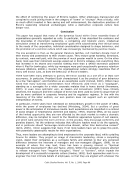
members.‖23 A group with a powerful mythology results in one resistant to ideological
challenges, and, therefore, it is more dangerous.
Mythologies nurtured, reinforced, and protected from outside ideas provide a forum where
group members can escape individual responsibility. ―When we lose our individual
independence in the corporateness of a mass movement we find a new freedom-freedom to
hate.‖24
Interviewing Techniques
Ironically, skinheads, especially hate-motivated skinheads, talk to anyone who will listen,
including law enforcement officers. One investigator who knew little about white-
supremacist ideology simply asked skinheads why they hated, what their tattoos meant,
and how skinhead groups were organized. Numerous interviews and observations
substantiated the initial information obtained by the investigator. On the other hand,
criminally motivated skinheads are less likely to talk because they act more like criminals.
Investigators should determine the motivation of skinheads when planning interview
strategies.
Hate-motivated skinheads have well-rehearsed answers for questions, such as ―Why do you
hate?‖ ―Can‘t you see what you‘re doing is wrong?‖ ―How would you like it if someone
picked on you because of your race?‖ Skinheads answer smugly they feel secure as
skinheads. Because hate masks personal insecurities, interviewers should temporarily
forego questions about why skinheads hate and strive to identify the skinheads‘ personal
insecurities. Interviewers should begin this probe by asking skinheads about their family
relationships, which probably represent the source of the skinhead‘s insecurities because a
sense of who people are and where they fit in society typically develops within the family
structure. Interviewers also should explore skinheads‘ future plans, educational goals, and
desired employment. This forces skinheads to see themselves as they really are. If forced to
look at themselves, skinheads become vulnerable, less resistant to rehabilitation, and, in
law enforcement settings, more likely to confess. This process could take several hours or
many months depending on the resistance level of the skinhead. This strategy proves less
effective when interviewing criminally motivated skinheads because they view themselves
as criminals who hate, rather than haters who commit criminal acts. More traditional
interviewing strategies have proven successful with criminally motivated skinheads.
Intervention Strategies
An accurate assessment of skinhead groups is critical to developing intervention strategies.
Dismantling immature skinhead groups proves easier than breaking down sophisticated
skinhead groups. Skinheads not solidly committed to supremacist ideology more likely will
respond to rehabilitation attempts than hard-core skinheads.25 Skinheads who have not
passed from Stage 4 (rhetoric) to Stage 5 (violence) will prove more receptive to
rehabilitation strategies than those skinheads who commit violence.
Investigators should approach criminally motivated skinhead groups by using tactics similar
to those used against criminal street gangs. Disrupting the activities of mature, hate-
motivated skinhead groups requires time and more elaborate interdiction strategies because
such groups are more unified and committed to their beliefs. Conversely, aggressive
prosecution constitutes an efficient means to disrupt immature, hate-motivated skinhead
groups.
Law enforcement used this technique to dismantle Peer Pride, an immature, hate-motivated
skinhead group in Palmdale, California. The FBI learned about Peer Pride when the group
hung a noose from a tree in front of the home of an African-American family. Five Peer Pride
members taunted the family with racial slurs and demanded that they move out of the
members.‖23 A group with a powerful mythology results in one resistant to ideological
challenges, and, therefore, it is more dangerous.
Mythologies nurtured, reinforced, and protected from outside ideas provide a forum where
group members can escape individual responsibility. ―When we lose our individual
independence in the corporateness of a mass movement we find a new freedom-freedom to
hate.‖24
Interviewing Techniques
Ironically, skinheads, especially hate-motivated skinheads, talk to anyone who will listen,
including law enforcement officers. One investigator who knew little about white-
supremacist ideology simply asked skinheads why they hated, what their tattoos meant,
and how skinhead groups were organized. Numerous interviews and observations
substantiated the initial information obtained by the investigator. On the other hand,
criminally motivated skinheads are less likely to talk because they act more like criminals.
Investigators should determine the motivation of skinheads when planning interview
strategies.
Hate-motivated skinheads have well-rehearsed answers for questions, such as ―Why do you
hate?‖ ―Can‘t you see what you‘re doing is wrong?‖ ―How would you like it if someone
picked on you because of your race?‖ Skinheads answer smugly they feel secure as
skinheads. Because hate masks personal insecurities, interviewers should temporarily
forego questions about why skinheads hate and strive to identify the skinheads‘ personal
insecurities. Interviewers should begin this probe by asking skinheads about their family
relationships, which probably represent the source of the skinhead‘s insecurities because a
sense of who people are and where they fit in society typically develops within the family
structure. Interviewers also should explore skinheads‘ future plans, educational goals, and
desired employment. This forces skinheads to see themselves as they really are. If forced to
look at themselves, skinheads become vulnerable, less resistant to rehabilitation, and, in
law enforcement settings, more likely to confess. This process could take several hours or
many months depending on the resistance level of the skinhead. This strategy proves less
effective when interviewing criminally motivated skinheads because they view themselves
as criminals who hate, rather than haters who commit criminal acts. More traditional
interviewing strategies have proven successful with criminally motivated skinheads.
Intervention Strategies
An accurate assessment of skinhead groups is critical to developing intervention strategies.
Dismantling immature skinhead groups proves easier than breaking down sophisticated
skinhead groups. Skinheads not solidly committed to supremacist ideology more likely will
respond to rehabilitation attempts than hard-core skinheads.25 Skinheads who have not
passed from Stage 4 (rhetoric) to Stage 5 (violence) will prove more receptive to
rehabilitation strategies than those skinheads who commit violence.
Investigators should approach criminally motivated skinhead groups by using tactics similar
to those used against criminal street gangs. Disrupting the activities of mature, hate-
motivated skinhead groups requires time and more elaborate interdiction strategies because
such groups are more unified and committed to their beliefs. Conversely, aggressive
prosecution constitutes an efficient means to disrupt immature, hate-motivated skinhead
groups.
Law enforcement used this technique to dismantle Peer Pride, an immature, hate-motivated
skinhead group in Palmdale, California. The FBI learned about Peer Pride when the group
hung a noose from a tree in front of the home of an African-American family. Five Peer Pride
members taunted the family with racial slurs and demanded that they move out of the