Cultic Studies Review, Vol. 5, No. 1, 2006, Page 53
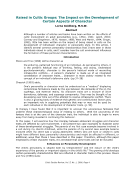
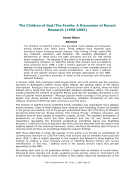
Charismatic Leadership and Corporate Cultism at Enron:
The Elimination of Dissent, the Promotion of Conformity,
and Organizational Collapse
Dennis Tourish, Ph.D.
Aberdeen Business School, Robert Gordon University
Naheed Vatcha
Aberdeen Business School, Robert Gordon University
Abstract
Enron stands out as one of the most spectacular failures in business history.
Thus far, most attention has been focused on its accountancy practices. This
paper, by contrast, explores its internal culture and the leadership practices
of its top people. These included a particular emphasis on charismatic
leadership, particularly in the persons of Kenneth Lay and Jeffrey Skilling
the promotion of a compelling vision by these leaders, of a totalistic nature
individual consideration, expressed in a recruitment system designed to
activate a process analogous to conversion and the promotion of a culture
characterized by conformity and the penalizing of dissent. Drawing on the
vast archive of material now available on Enron, and in particular on the best
known accounts of former employees, the paper discusses to what extent
Enron can be usefully regarded as an example of a corporate cult. Finally, the
discussion is located in the context of emerging trends in business and
leadership practice, and considers the extent to which what happened in
Enron is suggestive of a growing business phenomenon.
On the eve of its bankruptcy in 2001, Enron declared its intention to become the world‘s
leading company. At that stage, by some measures of turnover, it was the seventh largest
company in the US (Gordon, 2002) and was at one point valued at $70 billion by the stock
exchange (Steiger, 2002). Thus, the scale of its ambition had some credibility. But its
demise may instead ensure that its fate is to become the most analysed case study of
failure in business history. Myriad analyses have now been published, outlining its trading
practices (Steiger, 2002), exploring the implications for the communication aspects of
business ethics (May and Zorn, 2003) and ethics more generally (Peppas, 2003), its likely
impact on business education (Dean, 2003), the challenges posed for the accounting
profession (e.g. Semple, 2002 Copeland, 2003 Holt and Eccles, 2003 Tinker, 2003),
implications for the role of non-executive directors (Peaker, 2003) and the role more
generally of corporate governance (Vinten, 2002 Weidenbaum, 2002). Trust in visionary
leaders is among the most immediate casualties of the Enron debacle (Kendall, 2002).
More widely, it has resulted in a crisis of confidence in corporations (Jenkins, 2003).
This paper does not recapitulate the now familiar story of its meteoric rise and spectacular
fall. Rather, it addresses a major gap that remains in the literature. In particular, while it
has been noted that the Enron scandal highlights ―a recurring communication dysfunction
within the organizational structure of the corporation itself‖ (Cohan, 2002, p.276), relatively
little attention has been focused on what the culture of the organisation demonstrates about
the dark side of charismatic leadership. Thus, although The Economist suggested in June
2000 that Enron could be viewed as ―some sort of evangelical cult‖ (Sherman, 2002, p.25),
the idea has not been systematically explored in the academic literature. This paper
therefore discusses the nature of cults and cultic leadership, and explores the extent to
Charismatic Leadership and Corporate Cultism at Enron:
The Elimination of Dissent, the Promotion of Conformity,
and Organizational Collapse
Dennis Tourish, Ph.D.
Aberdeen Business School, Robert Gordon University
Naheed Vatcha
Aberdeen Business School, Robert Gordon University
Abstract
Enron stands out as one of the most spectacular failures in business history.
Thus far, most attention has been focused on its accountancy practices. This
paper, by contrast, explores its internal culture and the leadership practices
of its top people. These included a particular emphasis on charismatic
leadership, particularly in the persons of Kenneth Lay and Jeffrey Skilling
the promotion of a compelling vision by these leaders, of a totalistic nature
individual consideration, expressed in a recruitment system designed to
activate a process analogous to conversion and the promotion of a culture
characterized by conformity and the penalizing of dissent. Drawing on the
vast archive of material now available on Enron, and in particular on the best
known accounts of former employees, the paper discusses to what extent
Enron can be usefully regarded as an example of a corporate cult. Finally, the
discussion is located in the context of emerging trends in business and
leadership practice, and considers the extent to which what happened in
Enron is suggestive of a growing business phenomenon.
On the eve of its bankruptcy in 2001, Enron declared its intention to become the world‘s
leading company. At that stage, by some measures of turnover, it was the seventh largest
company in the US (Gordon, 2002) and was at one point valued at $70 billion by the stock
exchange (Steiger, 2002). Thus, the scale of its ambition had some credibility. But its
demise may instead ensure that its fate is to become the most analysed case study of
failure in business history. Myriad analyses have now been published, outlining its trading
practices (Steiger, 2002), exploring the implications for the communication aspects of
business ethics (May and Zorn, 2003) and ethics more generally (Peppas, 2003), its likely
impact on business education (Dean, 2003), the challenges posed for the accounting
profession (e.g. Semple, 2002 Copeland, 2003 Holt and Eccles, 2003 Tinker, 2003),
implications for the role of non-executive directors (Peaker, 2003) and the role more
generally of corporate governance (Vinten, 2002 Weidenbaum, 2002). Trust in visionary
leaders is among the most immediate casualties of the Enron debacle (Kendall, 2002).
More widely, it has resulted in a crisis of confidence in corporations (Jenkins, 2003).
This paper does not recapitulate the now familiar story of its meteoric rise and spectacular
fall. Rather, it addresses a major gap that remains in the literature. In particular, while it
has been noted that the Enron scandal highlights ―a recurring communication dysfunction
within the organizational structure of the corporation itself‖ (Cohan, 2002, p.276), relatively
little attention has been focused on what the culture of the organisation demonstrates about
the dark side of charismatic leadership. Thus, although The Economist suggested in June
2000 that Enron could be viewed as ―some sort of evangelical cult‖ (Sherman, 2002, p.25),
the idea has not been systematically explored in the academic literature. This paper
therefore discusses the nature of cults and cultic leadership, and explores the extent to