Cultic Studies Review, Vol. 4, No. 2, 2005, Page 97
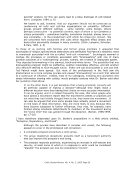
X disputational X relevant correct
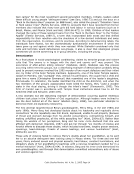
Anthony is assuming that totalism must be construed as a dichotomous variable. An
organization or an environment is either totalistic or it is not. Most sociologists see totalism
as a continuum. A given organization can be more or less totalistic than another
organization. This is how Goffman uses the concept in his work on total institutions.
Because totalism is a concept, not a theory, issues of falsifiability are misplaced in
discussing it. But the concept certainly measures something real. An organization with
seven of the criteria of totalism set out by Lifton is highly likely to be more totalistic than
one that has only two.
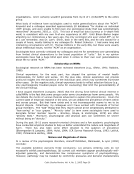
Conclusion
Because none of Anthony‘s ninety-eight propositions have proven to be disputational,
relevant, and correct, it follows that Anthony‘s chapter as a whole cannot be considered a
successful critique of the brainwashing theory as I have presented it in my chapter of
Misunderstanding Cults (which follows in this document as an Appendix). This conclusion, of
course, does not demonstrate that the theory is either useful or correct, but only that
Anthony‘s chapter is not relevant to any discussion of its validity. The only way that these
conclusions can be refuted would be if Anthony (or someone else) were to point out a
proposition that I have missed, or if my own comments on at least one of these propositions
can be shown to be inaccurate.
Appendix: Zablocki’s Theory of Brainwashing in Charismatic Groups Taken
Verbatim from Chapter Five of Zablocki and Robbins, Misunderstanding
Cults, Toronto: University of Toronto Press, 2001 (Pp. 182 -193)
Definitions
D1. Charisma is defined using the classical Weberian formula: as a condition of ―devotion to
the specific and exceptional sanctity, heroism, or exemplary character of an individual
person, of the normative patterns or order revealed or ordained by him.‖ Being defined this
way, as a condition of devotion, leads us to recognize that charisma is not to be understood
simply in terms of the characteristics of the leader, as it has come to be in popular usage,
but requires an understanding of the relationship between leader and followers. In other
words, charisma is a relational variable. Charisma is defined operationally as a network of
relationships in which authority is justified (for both superordinates and subordinates) in
terms of the special characteristics discussed above.
D2. Ideological Totalism is defined as a socio-cultural system that places high valuation on
total control over all aspects of the outer and inner lives of participants for the purpose of
achieving the goals of an ideology defined as all important. Individual rights either do not
exist under ideological totalism or they are clearly subordinated to the needs of the
collectivity whenever the two come into conflict. Ideological totalism has been
operationalized in terms of eight observable characteristics: milieu control, mystical
manipulation, the demand for purity, the cult of confession, ―sacred science,‖ loading the
language, doctrine over person, and the dispensing of existence.
D3. Surveillance is defined as keeping watch over a person‘s behavior and, perhaps,
attitudes. As Hechter has shown, the need for surveillance is the greatest obstacle to goal
achievement among ideological collectivities organized around the production of public
goods. Surveillance is not only costly, it is also impractical for many activities in which
agents of the collectivity may have to travel and act autonomously and at a distance. It
follows from this that all collectivities pursuing public goals will be motivated to find ways to
X disputational X relevant correct
Anthony is assuming that totalism must be construed as a dichotomous variable. An
organization or an environment is either totalistic or it is not. Most sociologists see totalism
as a continuum. A given organization can be more or less totalistic than another
organization. This is how Goffman uses the concept in his work on total institutions.
Because totalism is a concept, not a theory, issues of falsifiability are misplaced in
discussing it. But the concept certainly measures something real. An organization with
seven of the criteria of totalism set out by Lifton is highly likely to be more totalistic than
one that has only two.
Conclusion
Because none of Anthony‘s ninety-eight propositions have proven to be disputational,
relevant, and correct, it follows that Anthony‘s chapter as a whole cannot be considered a
successful critique of the brainwashing theory as I have presented it in my chapter of
Misunderstanding Cults (which follows in this document as an Appendix). This conclusion, of
course, does not demonstrate that the theory is either useful or correct, but only that
Anthony‘s chapter is not relevant to any discussion of its validity. The only way that these
conclusions can be refuted would be if Anthony (or someone else) were to point out a
proposition that I have missed, or if my own comments on at least one of these propositions
can be shown to be inaccurate.
Appendix: Zablocki’s Theory of Brainwashing in Charismatic Groups Taken
Verbatim from Chapter Five of Zablocki and Robbins, Misunderstanding
Cults, Toronto: University of Toronto Press, 2001 (Pp. 182 -193)
Definitions
D1. Charisma is defined using the classical Weberian formula: as a condition of ―devotion to
the specific and exceptional sanctity, heroism, or exemplary character of an individual
person, of the normative patterns or order revealed or ordained by him.‖ Being defined this
way, as a condition of devotion, leads us to recognize that charisma is not to be understood
simply in terms of the characteristics of the leader, as it has come to be in popular usage,
but requires an understanding of the relationship between leader and followers. In other
words, charisma is a relational variable. Charisma is defined operationally as a network of
relationships in which authority is justified (for both superordinates and subordinates) in
terms of the special characteristics discussed above.
D2. Ideological Totalism is defined as a socio-cultural system that places high valuation on
total control over all aspects of the outer and inner lives of participants for the purpose of
achieving the goals of an ideology defined as all important. Individual rights either do not
exist under ideological totalism or they are clearly subordinated to the needs of the
collectivity whenever the two come into conflict. Ideological totalism has been
operationalized in terms of eight observable characteristics: milieu control, mystical
manipulation, the demand for purity, the cult of confession, ―sacred science,‖ loading the
language, doctrine over person, and the dispensing of existence.
D3. Surveillance is defined as keeping watch over a person‘s behavior and, perhaps,
attitudes. As Hechter has shown, the need for surveillance is the greatest obstacle to goal
achievement among ideological collectivities organized around the production of public
goods. Surveillance is not only costly, it is also impractical for many activities in which
agents of the collectivity may have to travel and act autonomously and at a distance. It
follows from this that all collectivities pursuing public goals will be motivated to find ways to