Cultic Studies Review, Vol. 4, No. 2, 2005, Page 95
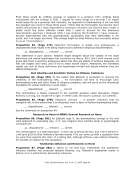
Here Anthony seems to be arguing, ironically enough, that ex-members get brainwashed
into feeling brainwashed. But again, right or wrong, this commentary is pure opinion and
does not deal with the theory itself.
End Notes
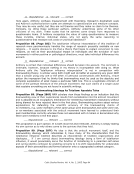
Proposition 91. (Footnote 15, page 294). Lifton ...could not accurately be claiming, as
Zablocki interprets him as claiming, that his ‗doubling‘ concept is equivalent to the
brainwashing notion of a false or shadow self.... The conception of a false or shadow self
proposed by Zablocki ...involves the notion of a new but inauthentic self.... Doubling, as
Lifton defines it ...could not reasonably be interpreted as implying the involuntary,
compulsive, or addictive attachment to a false self that Zablocki imputes to it.
X disputational relevant correct
I think that Anthony‘s reading of Lifton is wrong. But whether it is wrong or right is
irrelevant to the question at hand. The concepts discussed in this proposition do not appear
in the theory but only in conjectural explanations of how the brainwashing mechanism
might affect the self.
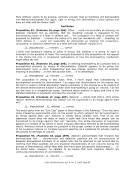
Proposition 92. (Footnote 16, page 296). In defining brainwashing as a process that is
accomplished primarily by means of disorientation, Zablocki appears to be giving the
disorientation term a more metaphorical and less precise meaning than its scientific
meaning in psychiatry ...In this less precise form, ...it is unfalsifiable.
X disputational X relevant correct
This proposition is wrong in two ways. First, I never argue that brainwashing is
accomplished primarily by disorientation. I do argue that disorientation (in the precise way
the term is used in clinical psychiatry) figures transiently in the process as a by-product of
the intense stress that the subject is under while brainwashing is going on. Second, I do not
use the term in a metaphorical sense. Confusion about position in space and time is the
standard definition in psychiatry and also the one that I use.
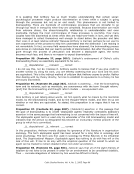
Proposition 93. (Footnote 17, page 297). Zablocki ...claims that Orne‘s 1972 article
reports research demonstrating that people ‗can be hypnotized to do things against their
will.‘
X disputational X relevant correct
The exact quote from my ―Exit Cost‖ paper in Nova Religio is the following: ―Orne has done
some interesting experimental work on the extent to which subjects can be hypnotized to
do things against their will.‖ Anthony is merely being careless here. First of all, the
statement clearly does not state or imply a claim that Orne found that people ‗can be
hypnotized to do things against their will.‘ Secondly, this whole discussion of hypnotism
appears in a section of my article in which I discuss alternative theories to the brainwashing
theory. Anthony‘s failure to place his quotation in the proper context is yet another example
of his excessive reliance on mindless keyword searches as a substitute for actually reading
the articles he attempts to criticize.
Proposition 94. (Footnote 18, page 297f). Zablocki acknowledges that research has
demonstrated that ...disorientation and defective cognition are not characteristics of
allegedly brainwashed members of so called cults, but he attempts to get around this by
claiming that these qualities are only essential characteristics of cult converts during the
process of brainwashing, rather than after they have been successfully brainwashed. ...In
his earlier book, however, he appears to be saying that such cognitive defects are
continuing characteristics of cult members.
X disputational X relevant correct
Here Anthony seems to be arguing, ironically enough, that ex-members get brainwashed
into feeling brainwashed. But again, right or wrong, this commentary is pure opinion and
does not deal with the theory itself.
End Notes
Proposition 91. (Footnote 15, page 294). Lifton ...could not accurately be claiming, as
Zablocki interprets him as claiming, that his ‗doubling‘ concept is equivalent to the
brainwashing notion of a false or shadow self.... The conception of a false or shadow self
proposed by Zablocki ...involves the notion of a new but inauthentic self.... Doubling, as
Lifton defines it ...could not reasonably be interpreted as implying the involuntary,
compulsive, or addictive attachment to a false self that Zablocki imputes to it.
X disputational relevant correct
I think that Anthony‘s reading of Lifton is wrong. But whether it is wrong or right is
irrelevant to the question at hand. The concepts discussed in this proposition do not appear
in the theory but only in conjectural explanations of how the brainwashing mechanism
might affect the self.
Proposition 92. (Footnote 16, page 296). In defining brainwashing as a process that is
accomplished primarily by means of disorientation, Zablocki appears to be giving the
disorientation term a more metaphorical and less precise meaning than its scientific
meaning in psychiatry ...In this less precise form, ...it is unfalsifiable.
X disputational X relevant correct
This proposition is wrong in two ways. First, I never argue that brainwashing is
accomplished primarily by disorientation. I do argue that disorientation (in the precise way
the term is used in clinical psychiatry) figures transiently in the process as a by-product of
the intense stress that the subject is under while brainwashing is going on. Second, I do not
use the term in a metaphorical sense. Confusion about position in space and time is the
standard definition in psychiatry and also the one that I use.
Proposition 93. (Footnote 17, page 297). Zablocki ...claims that Orne‘s 1972 article
reports research demonstrating that people ‗can be hypnotized to do things against their
will.‘
X disputational X relevant correct
The exact quote from my ―Exit Cost‖ paper in Nova Religio is the following: ―Orne has done
some interesting experimental work on the extent to which subjects can be hypnotized to
do things against their will.‖ Anthony is merely being careless here. First of all, the
statement clearly does not state or imply a claim that Orne found that people ‗can be
hypnotized to do things against their will.‘ Secondly, this whole discussion of hypnotism
appears in a section of my article in which I discuss alternative theories to the brainwashing
theory. Anthony‘s failure to place his quotation in the proper context is yet another example
of his excessive reliance on mindless keyword searches as a substitute for actually reading
the articles he attempts to criticize.
Proposition 94. (Footnote 18, page 297f). Zablocki acknowledges that research has
demonstrated that ...disorientation and defective cognition are not characteristics of
allegedly brainwashed members of so called cults, but he attempts to get around this by
claiming that these qualities are only essential characteristics of cult converts during the
process of brainwashing, rather than after they have been successfully brainwashed. ...In
his earlier book, however, he appears to be saying that such cognitive defects are
continuing characteristics of cult members.
X disputational X relevant correct