Cultic Studies Review, Vol. 4, No. 2, 2005, Page 22
There have certainly been changes within the critical community, although only some of
these changes can be attributed to the academic dialogue. Changes in the population of
people seeking information and assistance from the critical community has also contributed
significantly to the growing recognition that the cult issue is much more complex and
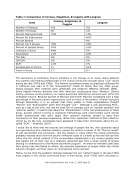
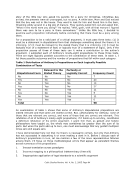
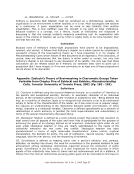
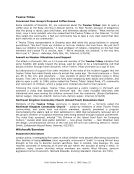
nuanced than was once thought. Two surveys (see Table 1) strikingly reveal these
population changes (Conway, Siegelman, &Coggins, 1986 Langone, 1992). Both surveys
used similar snowball methods. Conway et al.‘s subjects had closer ties to the parent
organizations, demonstrated by the fact that about 70% had been deprogrammed. In my
study 60% of the subjects had left on their own without any outside intervention, 9% had
been ejected from their groups, and only 13% had been deprogrammed. Although Conway
et al. had 426 subjects and I had only 308, their 426 subjects came from a total of 48
groups, whereas my smaller number of subjects came from a total of 101 groups. Seventy-
six percent of their subjects came from only 5 of the 48 groups (the Unification Church,
Scientology, The Way, Divine Light Mission, and ISKCON), and 44% of their subjects came
from the Unification Church. The five largest groups in my sample comprised only 33% of
the total subject population. Of the ―big five‖ in Conway et al.‘s survey, only Scientology
had a significant representation in my sample (16%).
Thus, nearly half of the Conway et al. subjects were former Moonies. Moreover, because
the Unification Church focused on college recruitment during this period, the average age of
joining for Conway et al.‘s subjects was less than in my survey and still in the college years:
21 vs. 24.8. Many, if not most, of the Conway and Siegelman Moonie subjects probably
dropped out of college after joining. In my study, 38% of those who were students when
they joined (43% of the total) dropped out of school after joining. A son or daughter‘s
sudden dropping out of college was probably one of the factors that most mobilized parents
during the late 70s and early 80s.
There have certainly been changes within the critical community, although only some of
these changes can be attributed to the academic dialogue. Changes in the population of
people seeking information and assistance from the critical community has also contributed
significantly to the growing recognition that the cult issue is much more complex and
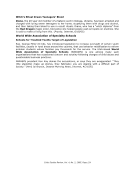
nuanced than was once thought. Two surveys (see Table 1) strikingly reveal these
population changes (Conway, Siegelman, &Coggins, 1986 Langone, 1992). Both surveys
used similar snowball methods. Conway et al.‘s subjects had closer ties to the parent
organizations, demonstrated by the fact that about 70% had been deprogrammed. In my
study 60% of the subjects had left on their own without any outside intervention, 9% had
been ejected from their groups, and only 13% had been deprogrammed. Although Conway
et al. had 426 subjects and I had only 308, their 426 subjects came from a total of 48
groups, whereas my smaller number of subjects came from a total of 101 groups. Seventy-
six percent of their subjects came from only 5 of the 48 groups (the Unification Church,
Scientology, The Way, Divine Light Mission, and ISKCON), and 44% of their subjects came
from the Unification Church. The five largest groups in my sample comprised only 33% of
the total subject population. Of the ―big five‖ in Conway et al.‘s survey, only Scientology
had a significant representation in my sample (16%).
Thus, nearly half of the Conway et al. subjects were former Moonies. Moreover, because
the Unification Church focused on college recruitment during this period, the average age of
joining for Conway et al.‘s subjects was less than in my survey and still in the college years:
21 vs. 24.8. Many, if not most, of the Conway and Siegelman Moonie subjects probably
dropped out of college after joining. In my study, 38% of those who were students when
they joined (43% of the total) dropped out of school after joining. A son or daughter‘s
sudden dropping out of college was probably one of the factors that most mobilized parents
during the late 70s and early 80s.