Cultic Studies Review, Vol. 4, No. 2, 2005, Page 89
possible to distinguish these in situations where the collectivity‘s beliefs and policy positions
are changing—especially when they are rapidly changing. In cases of wholehearted
agreement, the temporal sequence of attitude change in the leader and the follower will be
random. In cases of uncritical obedience, the change will always occur first in the leader and
then very rapidly in the follower.
Proposition 71. (Page 267) Zablocki‘s application of the 12 psychological steps model to
the Bruderhof does not supply a falsifiable way of differentiating a brainwashing process of
religious conversion from other forms of religious conversion.
X disputational relevant correct
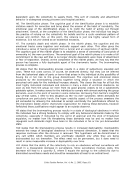
Here again, the term falsifiability is inappropriate. What Anthony appears to be saying is
that the brainwashing process, as a concept, lacks discriminant validity because there is no
operational way to distinguish it from the steps one may go through in the process that
leads to religious conversion. But such a distinction is necessary only if one imposes one‘s
own value judgments on these processes. If brainwashing is necessarily bad and religious
conversion is necessarily good, a distinction is important. But from a value-neutral point of
view, these twelve stages simply are what they are. My theory simply predicts that, if the
leadership of a group systematically takes some or all of its members through these stages,
certain behavioral consequences (enumerated in the theory) will follow. The likelihood of
these stages producing the internal changes of heart within the individual that Anthony calls
―religious conversion‖ is interesting to know about, but it falls outside the scope of this
theory.
Proposition 72. (Page 268) Zablocki‘s interpretation of any conversion that includes the
12 psychological steps as brainwashing in his recent articles, therefore, tends to confirm my
impression that this brainwashing interpretation of Lifton‘s research is an evaluative rather
than a scientific perspective, intended to call into question the authenticity of religious
conversion experiences simply because they are experiential in nature.
X disputational X relevant correct
This is ironic because, as I show in my comments to proposition 71, it is Anthony who is
imposing the value judgment. In my view, brainwashing is an ethically neutral behavioral
process of persuasion. We need to be careful here to distinguish carefully between
arguments about the wisdom of using the word ―brainwashing‖ to describe the process I
have been discussing from arguments about whether it is possible to determine empirically
if the process has occurred, regardless of whether I have labeled the process wisely or
unwisely. We have agreed to avoid discussion of the wisdom of using the word in this essay,
so we can focus on the scientific status of the theory. Anthony is not correct that my use of
this term, as I have defined it, is evaluative rather than scientific. At most, Anthony might
argue that the word itself has become so value laden that social scientists should no longer
be free to use the term, no matter how carefully they define it—that its use will cause other
people to misread the theory as making a moral argument that something bad is going on.
Falsifiability and the Dependent Variable of Brainwashing
Proposition 73. (Page 269) Zablocki‘s brainwashing formulation has no better luck in
defining a falsifiable dependent variable. In the course of his two articles, it becomes clear
that he has not been able to provide a testable criterion for involuntary belief and conduct,
the so-called “exit costs” that he maintains are the outcome of brainwashing. As we saw
above, the novel feature of this 3rd stage brainwashing argument is to claim that
brainwashing does not lead to involuntary conversions but rather to involuntary
commitments to a new world view. But what is the testable or falsifiable criterion of
involuntary commitment to the new world view such that an objective outsider could
determine that Zablocki‘s brainwashing theory has been either confirmed or disconfirmed?
possible to distinguish these in situations where the collectivity‘s beliefs and policy positions
are changing—especially when they are rapidly changing. In cases of wholehearted
agreement, the temporal sequence of attitude change in the leader and the follower will be
random. In cases of uncritical obedience, the change will always occur first in the leader and
then very rapidly in the follower.
Proposition 71. (Page 267) Zablocki‘s application of the 12 psychological steps model to
the Bruderhof does not supply a falsifiable way of differentiating a brainwashing process of
religious conversion from other forms of religious conversion.
X disputational relevant correct
Here again, the term falsifiability is inappropriate. What Anthony appears to be saying is
that the brainwashing process, as a concept, lacks discriminant validity because there is no
operational way to distinguish it from the steps one may go through in the process that
leads to religious conversion. But such a distinction is necessary only if one imposes one‘s
own value judgments on these processes. If brainwashing is necessarily bad and religious
conversion is necessarily good, a distinction is important. But from a value-neutral point of
view, these twelve stages simply are what they are. My theory simply predicts that, if the
leadership of a group systematically takes some or all of its members through these stages,
certain behavioral consequences (enumerated in the theory) will follow. The likelihood of
these stages producing the internal changes of heart within the individual that Anthony calls
―religious conversion‖ is interesting to know about, but it falls outside the scope of this
theory.
Proposition 72. (Page 268) Zablocki‘s interpretation of any conversion that includes the
12 psychological steps as brainwashing in his recent articles, therefore, tends to confirm my
impression that this brainwashing interpretation of Lifton‘s research is an evaluative rather
than a scientific perspective, intended to call into question the authenticity of religious
conversion experiences simply because they are experiential in nature.
X disputational X relevant correct
This is ironic because, as I show in my comments to proposition 71, it is Anthony who is
imposing the value judgment. In my view, brainwashing is an ethically neutral behavioral
process of persuasion. We need to be careful here to distinguish carefully between
arguments about the wisdom of using the word ―brainwashing‖ to describe the process I
have been discussing from arguments about whether it is possible to determine empirically
if the process has occurred, regardless of whether I have labeled the process wisely or
unwisely. We have agreed to avoid discussion of the wisdom of using the word in this essay,
so we can focus on the scientific status of the theory. Anthony is not correct that my use of
this term, as I have defined it, is evaluative rather than scientific. At most, Anthony might
argue that the word itself has become so value laden that social scientists should no longer
be free to use the term, no matter how carefully they define it—that its use will cause other
people to misread the theory as making a moral argument that something bad is going on.
Falsifiability and the Dependent Variable of Brainwashing
Proposition 73. (Page 269) Zablocki‘s brainwashing formulation has no better luck in
defining a falsifiable dependent variable. In the course of his two articles, it becomes clear
that he has not been able to provide a testable criterion for involuntary belief and conduct,
the so-called “exit costs” that he maintains are the outcome of brainwashing. As we saw
above, the novel feature of this 3rd stage brainwashing argument is to claim that
brainwashing does not lead to involuntary conversions but rather to involuntary
commitments to a new world view. But what is the testable or falsifiable criterion of
involuntary commitment to the new world view such that an objective outsider could
determine that Zablocki‘s brainwashing theory has been either confirmed or disconfirmed?