Cultic Studies Review, Vol. 4, No. 2, 2005, Page 64
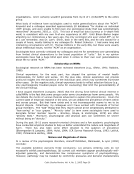
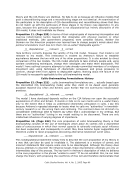
story of the little boy who asked his parents for a pony for Christmas. Christmas day
arrived, the presents were all unwrapped, but no pony. A while later, Mom and Dad noticed
that the boy was not in the house. They went to look for him and found him in the barn,
thrashing wildly around in a big pile of manure. They quickly pulled him out and asked him,
―What in the world were you doing?‖ He replied, ―Well, gosh, with all that manure I figured
there was sure to be a pony in there somewhere.‖ Unlike the little boy, I decided to
examine each proposition individually before concluding that there must be a pony among
them.
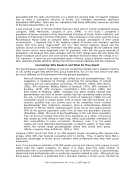
For a proposition to be a valid part of a critical argument, it must pass three tests: (1) It
must be a statement in disputational form that challenges something about the theory it is
criticizing. (2) It must be relevant to the stated theory that it is criticizing. (3) It must be
factually true (if a statement of fact) or logically true (if a statement of logic). Only if the
proposition passes all three of these tests can it make a contribution to the author‘s
argument. I subjected each of Anthony‘s ninety-eight propositions to these three tests.
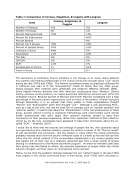
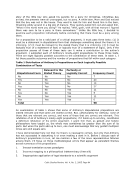
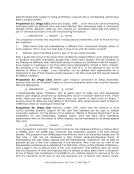
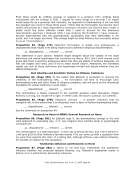
There are eight logically possible outcomes to the combination of these tests. In table 1, I
list these possible outcomes and the number of propositions that fall within each category.
Table 1 Distribution of Anthony’s Propositions on Each Logically Possible
Combination of Tests
Disputational Form
Relevant to the
Stated Theory
Factually or
Logically Correct Frequency Count
No No No 7
Yes No No 23
No Yes No 14
Yes Yes No 27
No No Yes 11
Yes No Yes 5
No Yes Yes 11
Yes Yes Yes 0
Total 98
An examination of table 1 shows that some of Anthony‘s disputational propositions are
indeed relevant and that some are indeed correct. But, unfortunately for Anthony, none of
those that are relevant are correct, and none of those that are correct are relevant. This
refutation of all of Anthony‘s ninety-eight propositions, if it holds up to scrutiny, constitutes
a definitive refutation of his entire argument. I grant him that, as gestalt and holistic
philosophers have taught us, the whole may sometimes be greater than the sum of its
parts. But when the parts add up to zero, one must acknowledge that any gestalt multiplier
times zero still equals zero.
I have demonstrated here not that my theory is necessarily correct, but only that Anthony
has not succeeded in debunking it or even making a dent in it. Before I discuss each of
Anthony‘s propositions in turn, let me mention a few of the more representative fallacies
among them. I‘ll focus on three methodological errors that appear as persistent themes
across numerous of his propositions:
1. Inexact translation across paradigms
2. Incorrect mapping to a philosophical indeterminacy (free will)
3. Inappropriate application of legal standards to a scientific argument
story of the little boy who asked his parents for a pony for Christmas. Christmas day
arrived, the presents were all unwrapped, but no pony. A while later, Mom and Dad noticed
that the boy was not in the house. They went to look for him and found him in the barn,
thrashing wildly around in a big pile of manure. They quickly pulled him out and asked him,
―What in the world were you doing?‖ He replied, ―Well, gosh, with all that manure I figured
there was sure to be a pony in there somewhere.‖ Unlike the little boy, I decided to
examine each proposition individually before concluding that there must be a pony among
them.
For a proposition to be a valid part of a critical argument, it must pass three tests: (1) It
must be a statement in disputational form that challenges something about the theory it is
criticizing. (2) It must be relevant to the stated theory that it is criticizing. (3) It must be
factually true (if a statement of fact) or logically true (if a statement of logic). Only if the
proposition passes all three of these tests can it make a contribution to the author‘s
argument. I subjected each of Anthony‘s ninety-eight propositions to these three tests.
There are eight logically possible outcomes to the combination of these tests. In table 1, I
list these possible outcomes and the number of propositions that fall within each category.
Table 1 Distribution of Anthony’s Propositions on Each Logically Possible
Combination of Tests
Disputational Form
Relevant to the
Stated Theory
Factually or
Logically Correct Frequency Count
No No No 7
Yes No No 23
No Yes No 14
Yes Yes No 27
No No Yes 11
Yes No Yes 5
No Yes Yes 11
Yes Yes Yes 0
Total 98
An examination of table 1 shows that some of Anthony‘s disputational propositions are
indeed relevant and that some are indeed correct. But, unfortunately for Anthony, none of
those that are relevant are correct, and none of those that are correct are relevant. This
refutation of all of Anthony‘s ninety-eight propositions, if it holds up to scrutiny, constitutes
a definitive refutation of his entire argument. I grant him that, as gestalt and holistic
philosophers have taught us, the whole may sometimes be greater than the sum of its
parts. But when the parts add up to zero, one must acknowledge that any gestalt multiplier
times zero still equals zero.
I have demonstrated here not that my theory is necessarily correct, but only that Anthony
has not succeeded in debunking it or even making a dent in it. Before I discuss each of
Anthony‘s propositions in turn, let me mention a few of the more representative fallacies
among them. I‘ll focus on three methodological errors that appear as persistent themes
across numerous of his propositions:
1. Inexact translation across paradigms
2. Incorrect mapping to a philosophical indeterminacy (free will)
3. Inappropriate application of legal standards to a scientific argument