Cultic Studies Review, Vol. 4, No. 2, 2005, Page 23
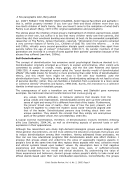
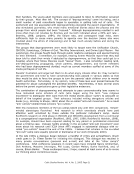
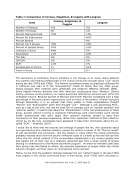
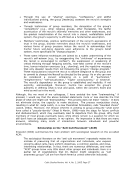
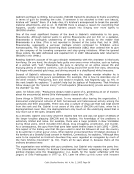
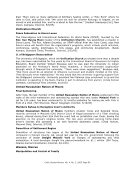
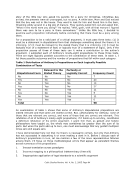
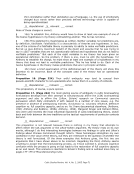
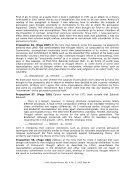
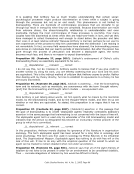
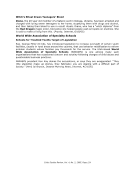
Table 1: Comparison of Conway, Siegelman, &Coggins with Langone
Item
Conway, Seigelman, &
Coggins
Langone
Number of Subjects 426 301
Number of Groups 48 101
Percent Deprogrammed 70% 13%
Percent No Intervention 60%
Percent Ejected 9%
Percent Top 5 Groups 76% 33%
Percent of Largest Group 44% 16%
Unification Church 44% 5%
Scientology 11% 16%
The Way 6% 2%
ISKCON 5% 2%
DLM 11% 1%
Average Age at Joining 21 24.8
Years in Group 2.7 6.7
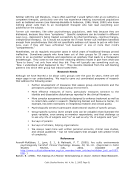
The dominance of Unification Church members in the Conway et al. study clearly affected
how parents and helping professionals in the critical community thought about ―cult‖ issues
during the late 1970s and 1980s. The Moonie recruitment model as practiced at Booneville
in California was seen to fit the ―brainwashing‖ model far better than any other group,
mainly because their methods were systematic and relatively effective (Scharff, 1985).
Some English Moonies believed that their American counterparts were ―fanatics‖ (Donna
Collins, personal communication), so maybe Booneville reflected an extreme even within the
Unification Church. Because parents of Moonies and former Moonies constituted such a high
percentage of the early parent organizations (and so many of the parents‘ children had gone
through Booneville), it is no wonder that many people in these organizations thought
―Moonie‖ and ―brainwashed‖ when they thought ―cult.‖ Although a new psychology Ph.D.,
such as I was at the time, still has his head full of concepts such as ―random samples‖ and
―external validity‖ (I used to talk about the ―Moonification‖ of the cult phenomenon in those
days), parents without training in statistical methodology (and unfortunately some mental
health professionals who don‘t apply their research training) tended to base their
conclusions on their personal experience, rather than systematic methods of data collection
(much as, by the way, sociologists have appeared to base their conclusions about the so-
called ―ACM‖ – Kropveld, 2003).
I would like to think that the lectures and writings of people like me, who cautioned about
over generalizing from selected samples, caused the decline in power of the ―Moonie model‖
of cult recruitment and conversion. But the change in views within the critical community
probably resulted more from the decline of Moonie cases to a trickle by the late 80s and the
influx into the critical network of the ex-members represented in my survey—people who
had walked out on their own at a relatively advanced age from a large variety of groups
bearing no resemblance to the Moonie Booneville program. As these ex-members described
their group lives and talked to others, the personal experience of people within the critical
network changed, and their views on cults became more nuanced.
Hence, by the time the academic dialogue between the two ―camps‖ began in the late 1990s
most experts in the critical community knew in their bones, even if they didn‘t articulate it,
Table 1: Comparison of Conway, Siegelman, &Coggins with Langone
Item
Conway, Seigelman, &
Coggins
Langone
Number of Subjects 426 301
Number of Groups 48 101
Percent Deprogrammed 70% 13%
Percent No Intervention 60%
Percent Ejected 9%
Percent Top 5 Groups 76% 33%
Percent of Largest Group 44% 16%
Unification Church 44% 5%
Scientology 11% 16%
The Way 6% 2%
ISKCON 5% 2%
DLM 11% 1%
Average Age at Joining 21 24.8
Years in Group 2.7 6.7
The dominance of Unification Church members in the Conway et al. study clearly affected
how parents and helping professionals in the critical community thought about ―cult‖ issues
during the late 1970s and 1980s. The Moonie recruitment model as practiced at Booneville
in California was seen to fit the ―brainwashing‖ model far better than any other group,
mainly because their methods were systematic and relatively effective (Scharff, 1985).
Some English Moonies believed that their American counterparts were ―fanatics‖ (Donna
Collins, personal communication), so maybe Booneville reflected an extreme even within the
Unification Church. Because parents of Moonies and former Moonies constituted such a high
percentage of the early parent organizations (and so many of the parents‘ children had gone
through Booneville), it is no wonder that many people in these organizations thought
―Moonie‖ and ―brainwashed‖ when they thought ―cult.‖ Although a new psychology Ph.D.,
such as I was at the time, still has his head full of concepts such as ―random samples‖ and
―external validity‖ (I used to talk about the ―Moonification‖ of the cult phenomenon in those
days), parents without training in statistical methodology (and unfortunately some mental
health professionals who don‘t apply their research training) tended to base their
conclusions on their personal experience, rather than systematic methods of data collection
(much as, by the way, sociologists have appeared to base their conclusions about the so-
called ―ACM‖ – Kropveld, 2003).
I would like to think that the lectures and writings of people like me, who cautioned about
over generalizing from selected samples, caused the decline in power of the ―Moonie model‖
of cult recruitment and conversion. But the change in views within the critical community
probably resulted more from the decline of Moonie cases to a trickle by the late 80s and the
influx into the critical network of the ex-members represented in my survey—people who
had walked out on their own at a relatively advanced age from a large variety of groups
bearing no resemblance to the Moonie Booneville program. As these ex-members described
their group lives and talked to others, the personal experience of people within the critical
network changed, and their views on cults became more nuanced.
Hence, by the time the academic dialogue between the two ―camps‖ began in the late 1990s
most experts in the critical community knew in their bones, even if they didn‘t articulate it,