Cultic Studies Review, Vol. 4, No. 2, 2005, Page 76
is relevant neither to the observation that the phenomenon exists nor to the theoretical
criteria offered by which an instance of the phenomenon can be identified.
Proposition 28. (Page 230) the notion that brainwashing uses the induction of a primitive
state of consciousness and a resulting inability to resist indoctrination, leading to an
addictive or compulsive attachment to a new world view and a false self, is the heart of the
CIA brainwashing paradigm.
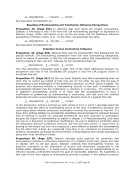
disputational relevant X correct
On the face of it, this is a statement of fact, not about my theory, but about the CIA theory.
Building on propositions 25 through 27, Anthony seems to be implying that my theory is
essentially identical to the CIA theory and therefore must somehow posit an ―inability to
resist indoctrination‖ and, therefore, the overthrow of free will. As we have seen, however,
my theory makes no such argument. Because Anthony has failed in his attempt to establish
an isomorphism between my theory and the CIA theory, any such implication is irrelevant.
Proposition 29. (Page 230) In Zablocki‘s formulation, the conversion to the new world
view is regarded as involuntary and compulsive because it follows from the absence of even
―low-level testing of the consequences of our convictions‖ and thus the new world view is
―accepted uncritically.‖
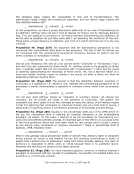
disputational X relevant correct
This is one of Anthony‘s critical propositions. He wishes to establish an equivalence between
criticism and voluntarism so that he can tag my theory with what he calls the involuntarism
assumption and thus demonstrate that it rests on the unscientific argument that free will
can be overthrown. But a moment‘s reflection will indicate that all of us, at times, engage in
behavior in which our critical faculties do not come into play. When my wife tells me in the
middle of the night that I‘m snoring and should role over on my side, I do so without
subjecting the message to critical examination. All introductory social psychology textbooks
include discussions of the Elaboration Likelihood Model of Persuasion. In this model, a
distinction is made between persuasion via ―the central route‖ and persuasion via ―the
peripheral route.‖ In the case of the former, the message is subjected to critical
―elaboration‖ by the target of the persuasion before the target decides whether or not to
accept the message‘s validity. In the case of the latter, the target bases the decision
whether or not to accept the validity of the message on the source and context rather than
the content. Peripheral-route persuasion involves little or no critical evaluation of the
content of the message itself. Thus, Anthony‘s 29th proposition is relevant in that it correctly
identifies suspension of critical message elaboration as an essential component of
brainwashing. But it is not correct because lack of criticism does not imply lack of free will.
Disconfirmation of the Primitive-Consciousness Hypothesis
Proposition 30. (Page 230f) ...researchers found that such Communist influence did not
result from diminished cognitive competence. The essence of coercive persuasion, on the
other hand, is to produce ideological and behavioral changes in a fully conscious, mentally
intact individual. (Schein, 1959, 437 emphasis mine)
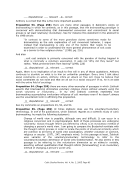
X disputational relevant X correct
Anthony, Lifton, Schein, and I are all in agreement on this point. The end result of a
successful brainwashing project is for the target individual to emerge fully conscious and
mentally intact. How else would he or she be able to function as a deployable agent? Here
Anthony is mixing up a brief transitory period of disorientation that occurs during
brainwashing with mental intactness that is a result have having been successfully
brainwashed. This error of Anthony‘s is comparable to the error of stating that, since
is relevant neither to the observation that the phenomenon exists nor to the theoretical
criteria offered by which an instance of the phenomenon can be identified.
Proposition 28. (Page 230) the notion that brainwashing uses the induction of a primitive
state of consciousness and a resulting inability to resist indoctrination, leading to an
addictive or compulsive attachment to a new world view and a false self, is the heart of the
CIA brainwashing paradigm.
disputational relevant X correct
On the face of it, this is a statement of fact, not about my theory, but about the CIA theory.
Building on propositions 25 through 27, Anthony seems to be implying that my theory is
essentially identical to the CIA theory and therefore must somehow posit an ―inability to
resist indoctrination‖ and, therefore, the overthrow of free will. As we have seen, however,
my theory makes no such argument. Because Anthony has failed in his attempt to establish
an isomorphism between my theory and the CIA theory, any such implication is irrelevant.
Proposition 29. (Page 230) In Zablocki‘s formulation, the conversion to the new world
view is regarded as involuntary and compulsive because it follows from the absence of even
―low-level testing of the consequences of our convictions‖ and thus the new world view is
―accepted uncritically.‖
disputational X relevant correct
This is one of Anthony‘s critical propositions. He wishes to establish an equivalence between
criticism and voluntarism so that he can tag my theory with what he calls the involuntarism
assumption and thus demonstrate that it rests on the unscientific argument that free will
can be overthrown. But a moment‘s reflection will indicate that all of us, at times, engage in
behavior in which our critical faculties do not come into play. When my wife tells me in the
middle of the night that I‘m snoring and should role over on my side, I do so without
subjecting the message to critical examination. All introductory social psychology textbooks
include discussions of the Elaboration Likelihood Model of Persuasion. In this model, a
distinction is made between persuasion via ―the central route‖ and persuasion via ―the
peripheral route.‖ In the case of the former, the message is subjected to critical
―elaboration‖ by the target of the persuasion before the target decides whether or not to
accept the message‘s validity. In the case of the latter, the target bases the decision
whether or not to accept the validity of the message on the source and context rather than
the content. Peripheral-route persuasion involves little or no critical evaluation of the
content of the message itself. Thus, Anthony‘s 29th proposition is relevant in that it correctly
identifies suspension of critical message elaboration as an essential component of
brainwashing. But it is not correct because lack of criticism does not imply lack of free will.
Disconfirmation of the Primitive-Consciousness Hypothesis
Proposition 30. (Page 230f) ...researchers found that such Communist influence did not
result from diminished cognitive competence. The essence of coercive persuasion, on the
other hand, is to produce ideological and behavioral changes in a fully conscious, mentally
intact individual. (Schein, 1959, 437 emphasis mine)
X disputational relevant X correct
Anthony, Lifton, Schein, and I are all in agreement on this point. The end result of a
successful brainwashing project is for the target individual to emerge fully conscious and
mentally intact. How else would he or she be able to function as a deployable agent? Here
Anthony is mixing up a brief transitory period of disorientation that occurs during
brainwashing with mental intactness that is a result have having been successfully
brainwashed. This error of Anthony‘s is comparable to the error of stating that, since