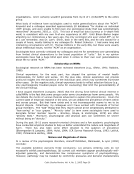
Cultic Studies Review, Vol. 4, No. 2, 2005, Page 20
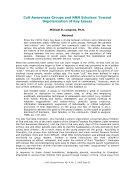
Cult Awareness Groups and NRM Scholars: Toward
Depolarization of Key Issues
Michael D. Langone, Ph.D.
Abstract
Since the 1970s there has been a divide between scholars and professionals
with sometimes widely differing views of cultic groups. Although the phrases
―anti-cultists‖ and ―pro-cultists‖ are commonly used to describe the two
camps, this article refers to sympathizers and critics. The article discusses
the history of the academic disputes, attempts over the years to encourage
dialogue between the two camps, and changes in the population of help
seekers. Dialogue in recent years has decreased the polarization and
increased communication between the two ―camps.‖
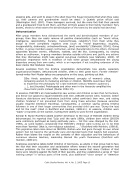
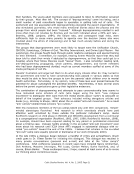
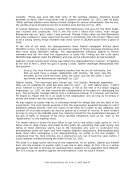
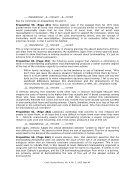
What has sometimes been called ―the cult wars‖ began in the 1970s. At that time ad hoc
grass roots organizations began to form in response to what was perceived to be a sudden
increase in the number of young people joining nonmainstream religious groups, i.e.,
―cults.‖ Virtually all of these organizations were founded and supported by parents of cult-
involved young people, mostly college age. The term ―cult‖ has been defined in many
different ways. I now prefer a modification of a definition advanced by sociologist Benjamin
Zablocki (cf. Rosedale &Langone, 1998): ―an ideological organization held together by
charismatic relationships and demanding a high level of commitment.‖ However, most of
the early critics of cultic groups, including myself, placed exploitative manipulation at the
core of their definitions. A popular definition in this tradition is:
Cult (totalist type): A group or movement exhibiting a great or excessive
devotion or dedication to some person, idea, or thing and employing
unethically manipulative techniques of persuasion and control (e.g. isolation
from former friends and family, debilitation, use of special methods to
heighten suggestibility and subservience, powerful group pressures,
information management, suspension of individuality or critical judgment,
promotion of total dependency on the group and fear of leaving it, etc.),
designed to advance the goals of the group‘s leaders, to the actual or possible
detriment of members, their families, or the community. (West &Langone,
1986, pp. 119-120)
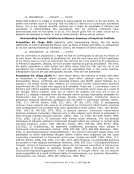
The late Henrietta Crampton, who founded a parent organization concerned about Children
of God and was one of the early leaders of the Citizens Freedom Foundation (later renamed
the Cult Awareness Network), told me that in the very early days of this movement (early
1970s), she and other parents were able to visit the headquarters of cults and talk to their
young adult children. As a result, many of the young people left the group. According to
Crampton, the groups then tightened their boundaries and made contact between families
and members more and more difficult. What little communication was allowed was closely
monitored by group leaders. Parents in these interactions saw their children‘s‘
conversations as stilted, rehearsed, and under the control of their ―handlers.‖ Analogies
with Korean War era brainwashing were easy to make, and the nascent parent organizations
began to say that their children had been brainwashed, had been ―programmed‖ to behave
in predetermined ways.
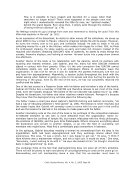
In response to these closed boundaries, desperate parents, according to Crampton,
attempted to remove their children from groups through trickery or force. Once away from
Cult Awareness Groups and NRM Scholars: Toward
Depolarization of Key Issues
Michael D. Langone, Ph.D.
Abstract
Since the 1970s there has been a divide between scholars and professionals
with sometimes widely differing views of cultic groups. Although the phrases
―anti-cultists‖ and ―pro-cultists‖ are commonly used to describe the two
camps, this article refers to sympathizers and critics. The article discusses
the history of the academic disputes, attempts over the years to encourage
dialogue between the two camps, and changes in the population of help
seekers. Dialogue in recent years has decreased the polarization and
increased communication between the two ―camps.‖
What has sometimes been called ―the cult wars‖ began in the 1970s. At that time ad hoc
grass roots organizations began to form in response to what was perceived to be a sudden
increase in the number of young people joining nonmainstream religious groups, i.e.,
―cults.‖ Virtually all of these organizations were founded and supported by parents of cult-
involved young people, mostly college age. The term ―cult‖ has been defined in many
different ways. I now prefer a modification of a definition advanced by sociologist Benjamin
Zablocki (cf. Rosedale &Langone, 1998): ―an ideological organization held together by
charismatic relationships and demanding a high level of commitment.‖ However, most of
the early critics of cultic groups, including myself, placed exploitative manipulation at the
core of their definitions. A popular definition in this tradition is:
Cult (totalist type): A group or movement exhibiting a great or excessive
devotion or dedication to some person, idea, or thing and employing
unethically manipulative techniques of persuasion and control (e.g. isolation
from former friends and family, debilitation, use of special methods to
heighten suggestibility and subservience, powerful group pressures,
information management, suspension of individuality or critical judgment,
promotion of total dependency on the group and fear of leaving it, etc.),
designed to advance the goals of the group‘s leaders, to the actual or possible
detriment of members, their families, or the community. (West &Langone,
1986, pp. 119-120)
The late Henrietta Crampton, who founded a parent organization concerned about Children
of God and was one of the early leaders of the Citizens Freedom Foundation (later renamed
the Cult Awareness Network), told me that in the very early days of this movement (early
1970s), she and other parents were able to visit the headquarters of cults and talk to their
young adult children. As a result, many of the young people left the group. According to
Crampton, the groups then tightened their boundaries and made contact between families
and members more and more difficult. What little communication was allowed was closely
monitored by group leaders. Parents in these interactions saw their children‘s‘
conversations as stilted, rehearsed, and under the control of their ―handlers.‖ Analogies
with Korean War era brainwashing were easy to make, and the nascent parent organizations
began to say that their children had been brainwashed, had been ―programmed‖ to behave
in predetermined ways.
In response to these closed boundaries, desperate parents, according to Crampton,
attempted to remove their children from groups through trickery or force. Once away from