Cultic Studies Review, Vol. 4, No. 2, 2005, Page 21
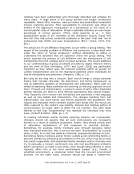
their handlers, the young adult members were persuaded to listen to information censored
by their groups. Most then left. The concept of ―deprogramming‖ came into being, and a
small number of paid consultants began to specialize in getting kids out of cults. The
excitement and risk associated with deprogramming energized the parent organizations. It
also stimulated journalists, who wrote many emotional stories about the process and the
groups from which people had been ―rescued.‖ Although deprogramming resulted in exit
more often than not (studies by Bromley and me both indicated about a 60% exit rate –
Bromley, 1988 Langone, 1984), the failure rate, and consequent legal risks, were
sufficiently high to cause many parents to agonize over the decision (many also were
troubled about the ethics of intervening) and to feel much anxiety before and during the
intervention.
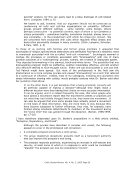
The groups that deprogrammers were most likely to target were the Unification Church,
ISKCON, Scientology, Children of God, The Way International, and Divine Light Mission. Not
surprisingly, the groups fought back through public relations campaigns and special training
for their members. I remember, for example, hearing former Moonies report that they had
been told to slash their wrists if abducted by deprogrammers, so that they could get to a
hospital, where their fellow Moonies could ―rescue‖ them. I also remember reading lurid,
anti-deprogramming propaganda, which parents, deprogrammers, and former members
who had been deprogrammed derided, much as current members scoffed at some of the
media portrayals of cult life.
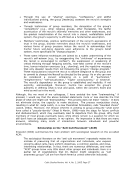
Parents‘ frustration and anger led them to do what angry citizens often do: they turned to
the government and tried to have conservatorship laws passed in various states so that
they would be able to force the groups to turn the parents‘ adult children over to mental
health authorities. Fortunately, in my opinion, none of these laws ever passed because the
potential for abuse outweighed the potential benefits. Nevertheless, it took several years
before the parent organizations gave up their legislative endeavors.
The combination of deprogramming and attempts to pass conservatorship laws seems to
have motivated some scholars of cults (who began using the term ―new religious
movement‖ to distinguish their work from the media stories about ―cults‖) to advocate on
behalf of the targeted groups. Their advocacy included writing derogatory articles and
books (e.g., Bromley &Shupe, 1981) about the so-called ―anti-cult movement.‖ As a result
―anti-cultists‖ labeled these scholars ―pro-cultists.‖
With few exceptions members of the two camps talked only with their compatriots. Simple-
minded stereotypes flourished. And research to which everybody should have paid
attention went unnoticed by those outside the particular individual‘s camp. Burke
Rochford‘s research on child abuse in ISKCON and ISKCON‘s development from a communal
to a congregational organization (Rochford, 1983, 1997, 1998 Rochford &Heinlein, 1998),
for example, should have been required reading for any parent or professional concerned
about a Krishna case. Instead, hardly anybody in the so-called ―anti-cult movement‖ even
knew about his research until ICSA (then AFF) engaged in substantial dialogue with so-
called ―pro-cultists‖ toward the end of the 1990s. I believe that scholars in the so-called
―pro-cult‖ camp were equally ignorant or dismissive of our work (Kropveld, 2003).
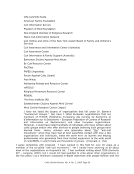
In the late 1990s a dialogue began between a handful of critics and sympathizers (much
credit goes to Dr. Eileen Barker for initiating this dialogue). This dialogue has resulted in
many private conversations (personal and e-mail) and talks at the ―other camp‘s‖
conferences. ICSA conference speakers in recent years have included Nancy Ammerman,
Dick Anthony, Massimo Introvigne, Phil Lucas, Gordon Melton, Burke Rochford, and, of
course, Eileen Barker. These exchanges have, I hope, caused at least some of us to revise
our thinking about contentious issues.
their handlers, the young adult members were persuaded to listen to information censored
by their groups. Most then left. The concept of ―deprogramming‖ came into being, and a
small number of paid consultants began to specialize in getting kids out of cults. The
excitement and risk associated with deprogramming energized the parent organizations. It
also stimulated journalists, who wrote many emotional stories about the process and the
groups from which people had been ―rescued.‖ Although deprogramming resulted in exit
more often than not (studies by Bromley and me both indicated about a 60% exit rate –
Bromley, 1988 Langone, 1984), the failure rate, and consequent legal risks, were
sufficiently high to cause many parents to agonize over the decision (many also were
troubled about the ethics of intervening) and to feel much anxiety before and during the
intervention.
The groups that deprogrammers were most likely to target were the Unification Church,
ISKCON, Scientology, Children of God, The Way International, and Divine Light Mission. Not
surprisingly, the groups fought back through public relations campaigns and special training
for their members. I remember, for example, hearing former Moonies report that they had
been told to slash their wrists if abducted by deprogrammers, so that they could get to a
hospital, where their fellow Moonies could ―rescue‖ them. I also remember reading lurid,
anti-deprogramming propaganda, which parents, deprogrammers, and former members
who had been deprogrammed derided, much as current members scoffed at some of the
media portrayals of cult life.
Parents‘ frustration and anger led them to do what angry citizens often do: they turned to
the government and tried to have conservatorship laws passed in various states so that
they would be able to force the groups to turn the parents‘ adult children over to mental
health authorities. Fortunately, in my opinion, none of these laws ever passed because the
potential for abuse outweighed the potential benefits. Nevertheless, it took several years
before the parent organizations gave up their legislative endeavors.
The combination of deprogramming and attempts to pass conservatorship laws seems to
have motivated some scholars of cults (who began using the term ―new religious
movement‖ to distinguish their work from the media stories about ―cults‖) to advocate on
behalf of the targeted groups. Their advocacy included writing derogatory articles and
books (e.g., Bromley &Shupe, 1981) about the so-called ―anti-cult movement.‖ As a result
―anti-cultists‖ labeled these scholars ―pro-cultists.‖
With few exceptions members of the two camps talked only with their compatriots. Simple-
minded stereotypes flourished. And research to which everybody should have paid
attention went unnoticed by those outside the particular individual‘s camp. Burke
Rochford‘s research on child abuse in ISKCON and ISKCON‘s development from a communal
to a congregational organization (Rochford, 1983, 1997, 1998 Rochford &Heinlein, 1998),
for example, should have been required reading for any parent or professional concerned
about a Krishna case. Instead, hardly anybody in the so-called ―anti-cult movement‖ even
knew about his research until ICSA (then AFF) engaged in substantial dialogue with so-
called ―pro-cultists‖ toward the end of the 1990s. I believe that scholars in the so-called
―pro-cult‖ camp were equally ignorant or dismissive of our work (Kropveld, 2003).
In the late 1990s a dialogue began between a handful of critics and sympathizers (much
credit goes to Dr. Eileen Barker for initiating this dialogue). This dialogue has resulted in
many private conversations (personal and e-mail) and talks at the ―other camp‘s‖
conferences. ICSA conference speakers in recent years have included Nancy Ammerman,
Dick Anthony, Massimo Introvigne, Phil Lucas, Gordon Melton, Burke Rochford, and, of
course, Eileen Barker. These exchanges have, I hope, caused at least some of us to revise
our thinking about contentious issues.