Cultic Studies Review, Vol. 4, No. 2, 2005, Page 88
X disputational X relevant correct
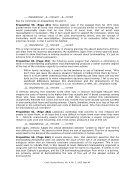
One doesn‘t ordinarily speak of variables as being falsifiable or unfalsifiable. That
terminology is reserved for discussion of hypotheses. Perhaps Anthony is just a little
confused and is trying to say that he thinks my definitions of these variables are not
sufficiently operationalized to allow for testing. If true, that would be a more
comprehensible charge. I have provided operational definitions in my theory for all the
conceptual terms I use, either as independent or dependent variables. If Anthony finds
these operational definitions less than persuasive, he should point out the specific
definitions he finds lacking. I will then try to deal with his points and clarify the definitions.
Another point about this proposition is that his identification of a single independent variable
and a single dependent variable is overly simplistic and does not fit my model. On page
186, I provide a diagram that maps the causal connections implied by my theory.
Depending on the section of the path diagram one is looking at, several variables might be
considered ―independent‖ or ―dependent,‖ and others are intermediary and can serve as
both.
Falsifiability and Independent Variable of Brainwashing
Proposition 69. (Page 266) Zablocki primarily identifies brainwashing techniques, i.e. the
independent or causal variable, with Lifton‘s accounts of the 12 psychological steps which
Lifton found to characterize the Communist thought reform process for his subjects (Lifton,
1961, 65-85). It is Zablocki‘s application of this model of conversion to the Bruderhof which
constitutes his only concrete empirical application of thought reform research to a new
religion. Zablocki also claims that this process usually must occur in the context of a
totalistic social organization in order to constitute brainwashing.
disputational X relevant X correct
This proposition is slippery. Strictly speaking, his labeling of the set of actual brainwashing
techniques as the independent variable is not correct for the reasons stated in my
discussion of proposition 68. But I coded this proposition as correct because it does
faithfully capture the important point that the actual techniques used by brainwashers,
ideal-typically, are precisely the twelve steps delineated by Lifton. Anthony is also correct in
stating that I argue that this process generally takes place in the context of a totalist
organization. But these statements are merely descriptive and do not attempt to dispute the
theory.
Proposition 70. (Page 266f) Zablocki interprets the imposition of such psychological
steps as occurring through techniques that impose a primitive state of consciousness (and
resulting suggestibility) that he variously describes as disorientation, hypnosis,
transference, the suspension of critical rationality, and so on. But as we also saw, he
supplies no criteria or generally accepted empirical foundation which differentiates these
different terms for primitive consciousness in a falsifiable way from other forms of religious
experience.
X disputational X relevant correct
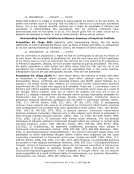
In this proposition and the next one, Anthony seems to be saying that he believes that
some of the concepts I use are lacking in discriminant validity. His argument is complicated
by the fact that he throws out four unrelated terms as if they are synonymous with one
another. I don‘t use the terms hypnosis and transference in my theory. Disorientation, as I
discussed in my comments to proposition 25 above, is a commonplace term in psychology
with a well-established, consensually agreed-upon operational definition. I don‘t use the
term suspension of critical rationality in my theory. I think he is confusing this with
uncritical obedience. I think he‘s worried that it may be impossible for a researcher to
distinguish cases of uncritical obedience from cases of wholehearted agreement. But it is
X disputational X relevant correct
One doesn‘t ordinarily speak of variables as being falsifiable or unfalsifiable. That
terminology is reserved for discussion of hypotheses. Perhaps Anthony is just a little
confused and is trying to say that he thinks my definitions of these variables are not
sufficiently operationalized to allow for testing. If true, that would be a more
comprehensible charge. I have provided operational definitions in my theory for all the
conceptual terms I use, either as independent or dependent variables. If Anthony finds
these operational definitions less than persuasive, he should point out the specific
definitions he finds lacking. I will then try to deal with his points and clarify the definitions.
Another point about this proposition is that his identification of a single independent variable
and a single dependent variable is overly simplistic and does not fit my model. On page
186, I provide a diagram that maps the causal connections implied by my theory.
Depending on the section of the path diagram one is looking at, several variables might be
considered ―independent‖ or ―dependent,‖ and others are intermediary and can serve as
both.
Falsifiability and Independent Variable of Brainwashing
Proposition 69. (Page 266) Zablocki primarily identifies brainwashing techniques, i.e. the
independent or causal variable, with Lifton‘s accounts of the 12 psychological steps which
Lifton found to characterize the Communist thought reform process for his subjects (Lifton,
1961, 65-85). It is Zablocki‘s application of this model of conversion to the Bruderhof which
constitutes his only concrete empirical application of thought reform research to a new
religion. Zablocki also claims that this process usually must occur in the context of a
totalistic social organization in order to constitute brainwashing.
disputational X relevant X correct
This proposition is slippery. Strictly speaking, his labeling of the set of actual brainwashing
techniques as the independent variable is not correct for the reasons stated in my
discussion of proposition 68. But I coded this proposition as correct because it does
faithfully capture the important point that the actual techniques used by brainwashers,
ideal-typically, are precisely the twelve steps delineated by Lifton. Anthony is also correct in
stating that I argue that this process generally takes place in the context of a totalist
organization. But these statements are merely descriptive and do not attempt to dispute the
theory.
Proposition 70. (Page 266f) Zablocki interprets the imposition of such psychological
steps as occurring through techniques that impose a primitive state of consciousness (and
resulting suggestibility) that he variously describes as disorientation, hypnosis,
transference, the suspension of critical rationality, and so on. But as we also saw, he
supplies no criteria or generally accepted empirical foundation which differentiates these
different terms for primitive consciousness in a falsifiable way from other forms of religious
experience.
X disputational X relevant correct
In this proposition and the next one, Anthony seems to be saying that he believes that
some of the concepts I use are lacking in discriminant validity. His argument is complicated
by the fact that he throws out four unrelated terms as if they are synonymous with one
another. I don‘t use the terms hypnosis and transference in my theory. Disorientation, as I
discussed in my comments to proposition 25 above, is a commonplace term in psychology
with a well-established, consensually agreed-upon operational definition. I don‘t use the
term suspension of critical rationality in my theory. I think he is confusing this with
uncritical obedience. I think he‘s worried that it may be impossible for a researcher to
distinguish cases of uncritical obedience from cases of wholehearted agreement. But it is