Cultic Studies Review, Vol. 4, No. 2, 2005, Page 82
The stripping stage creates the vulnerability to this sort of transformations. The
identification stage creates the biochemical alignment, and the rebirth stage creates the
fully addicted shadow self.‖
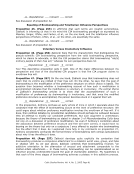
disputational X relevant X correct
In this proposition, we have a purely descriptive statement of my view of brainwashing as
an addiction. Anthony does not use it here to dispute my theory, but he obviously believes
that, if he can establish a connection in my theory between brainwashing and addiction, he
will be able to establish his pet false claim that I am asserting the overthrow of free will.
There exists a huge literature on addiction, and none of it claims that free will is in any way
involved.
Proposition 49. (Page 257f) His argument that the brainwashing perspective is not
concerned with involuntarism boils down to two assertions. The first is that his articles are
not concerned with the voluntarism/involuntarism dimension because he doesn’t use the
terms voluntary or involuntary in them.
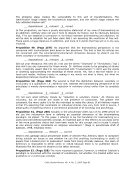
disputational X relevant X correct
Get out your thesaurus. Not only do I not use the terms ―voluntary‖ or ―involuntary,‖ but I
also don‘t use any synonyms for these words. Dr. Anthony seems to be grasping at straws
here. I explicitly assert that I‘m not concerned with ―involuntarism.‖ I don‘t use the words
or anything approximating the meanings of these words. Yet, like a tea-leaf reader or a
tarot-card reader, Anthony insists on seeing in my words not what is there, but what he
desperately believes must be there.
Proposition 50. (Page 258) The second is that the distinction between voluntary or
involuntary is a qualitative, i.e., either/or one, whereas the brainwashing perspective as he
articulates it merely demonstrates a reduction in voluntary choice rather than its complete
loss.
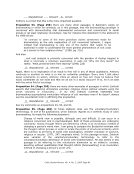
disputational X relevant X correct
I‘m not sure what Anthony means by ―reduction in voluntary choice.‖ All choices are
voluntary, but all choices are made in the presence of constraints. The greater the
constraint, the more costly it is for the individual to make the choice. If all Anthony means
is that I‘m asserting that constraints on individual choices may vary from mild to severe, I
plead guilty of asserting what is a cornerstone postulate of all sociology and psychology.
Proposition 51. (Page 258) Actually in the penultimate draft (sic) of his 1998 article he
did use the voluntarism term in defining an essential dimension of the brainwashing
paradigm. He stated: ―In this paper, I attempt to lay the foundation for brainwashing as a
useful and well defined scientific concept. An essential part of this effort is to cut away some
of the more grandiose claims that have been made for this concept and to locate it simply
as one among many constraints on religious voluntarism.‖ (Page 2, penultimate draft of
Zablocki, 1998, emphasis mine)
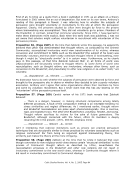
disputational relevant correct
What is this garbage about penultimate drafts of articles? Has Anthony taken to dumpster
diving outside my house to see whether he can find anything incriminating in drafts of
papers that I discard prior to publication? Aside from being ethically dubious, this claim of
Anthony‘s is impossible to either verify or refute because there is no published record.
Nonsense like this does not deserve to be taken seriously.
Proposition 52. (Page 258) The more important question, however, is whether Zablocki‘s
paradigm is concerned with the concept of voluntarism, not whether it is treated either as a
qualitative or a continuous variable.