Cultic Studies Review, Vol. 4, No. 2, 2005, Page 7
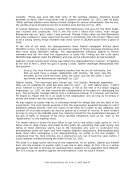
129]. No mystery, however, exists around the death of Berg‘s stepson, Ricky Rodriquez,
who, hours before he killed his childhood nanny (and shortly thereafter, himself), left a
video discussing his rage over his sexualized upbringing [Goldstein, 2005]). Like Berg, the
Branch Davidian‘s leader, David Koresh, also seems to have been a nonexclusive
heterosexual pedophile. He refused to release his twelve biological children to authorities
during the siege of his compound, and they eventually were among the twenty-one children
who died in the fire (Tabor and Gallagher, 1995:231 n.22 255). Scientology‘s founder, L.
Ron Hubbard, likely was plagued by narcissism and paranoia, the latter accentuated though
drug abuse (Atack 1990: 119, 131, 171, 372 Kent 2004: 106). His son, Quentin,
committed suicide, ostensibly because of his homosexuality (a lifestyle that his father
abhorred [Miller 1987: 303]).
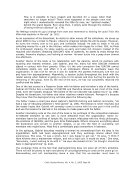
The Unification Church‘s founder, Reverend Sun Myung Moon, thinks of himself as the
messiah (Chambers 1982), yet one of his sons, Young Jin Moon, apparently jumped or fell
from the seventh floor of a Las Vegas hotel room in November 1999 MACROBUTTON
endnote+.cit (Schoenmann 1999). Peoples‘ Temple founder, Jim Jones, once received a
psychiatric diagnosis of ―paranoid with delusions of grandeur‖ (Reiterman with Jacobs,
1982:262), and his family watched him slip into increasingly destructive and deceitful
behaviour. The strain on his biological son, Stephan, worsened as family life deteriorated
amidst the father‘s philandering, hypocrisy, and drug abuse. These and other pressures
drove the young man to overdose on Quaaludes on two separate occasions (Rieterman with
Jacobs, 1982:125, 310).
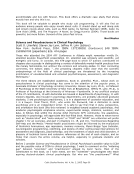
Anecdotal as these accounts are, that several prominent sect leaders from the 1970s had
children who could not stand living under the shadow of their charismatic parents is
remarkable. The pressures of being a child of the ―godly‖ was simply too much to withstand.
Charisma, it seems, provided poor frameworks in which to rear the young, and we only can
speculate why this was so. A likely factor was the hypocrisy that these offspring witnessed
between the public figure and the private parent. A teenaged Donna Collins, for example,
started asking tough questions about what she saw in Moon‘s inner circle….
―He and his kids didn‘t live by the teachings. His sons would come in and
swear all the time. They were having steaks flown in from America [to Korea].
I‘d been eating rice and kimchi for three years and getting serious dysentery.
It was a joke. I started asking myself, ‗What is godly about all this?‘‖ (Collins
in Lattin, 2003:198).
Later, I will discuss the tragic case of David Berg‘s granddaughter, Merry Berg, who paid a
terrible price for expressing doubts about the godliness of her hypocritical grandfather.
Berg‘s household environment proved disastrous to Merry Berg, Ricky Rodriquez, and other
children reared in that inner circle, but the models of education and socialization that had
failed on Berg‘s own family were the foundation for equally disastrous and abusive programs
implemented on children throughout the Children of God organization. In varying degrees,
the failed patterns of socialization and education within the families of charismatic leaders
led to equally disastrous child-rearing and educational practices throughout entire
organizations (see Whitsett and Kent, 2003:493-495). Countless children were hurt by their
parents and other adults. The charisma at the foundation of these organizations was
dysfunctional if not at times pathological, but it became the basis upon which leaders and
their followers developed and imposed socialization and education programs upon the
young.
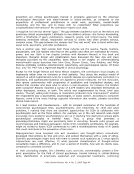
Depluralization
The term depluralization is not one readily found in social-psychological literature, yet it
conveys an important dimension of the reeducation process of many converts. Stahelski‘s
point is that the ―ideal type‖ of social person in a complex society has multiple social
129]. No mystery, however, exists around the death of Berg‘s stepson, Ricky Rodriquez,
who, hours before he killed his childhood nanny (and shortly thereafter, himself), left a
video discussing his rage over his sexualized upbringing [Goldstein, 2005]). Like Berg, the
Branch Davidian‘s leader, David Koresh, also seems to have been a nonexclusive
heterosexual pedophile. He refused to release his twelve biological children to authorities
during the siege of his compound, and they eventually were among the twenty-one children
who died in the fire (Tabor and Gallagher, 1995:231 n.22 255). Scientology‘s founder, L.
Ron Hubbard, likely was plagued by narcissism and paranoia, the latter accentuated though
drug abuse (Atack 1990: 119, 131, 171, 372 Kent 2004: 106). His son, Quentin,
committed suicide, ostensibly because of his homosexuality (a lifestyle that his father
abhorred [Miller 1987: 303]).
The Unification Church‘s founder, Reverend Sun Myung Moon, thinks of himself as the
messiah (Chambers 1982), yet one of his sons, Young Jin Moon, apparently jumped or fell
from the seventh floor of a Las Vegas hotel room in November 1999 MACROBUTTON
endnote+.cit (Schoenmann 1999). Peoples‘ Temple founder, Jim Jones, once received a
psychiatric diagnosis of ―paranoid with delusions of grandeur‖ (Reiterman with Jacobs,
1982:262), and his family watched him slip into increasingly destructive and deceitful
behaviour. The strain on his biological son, Stephan, worsened as family life deteriorated
amidst the father‘s philandering, hypocrisy, and drug abuse. These and other pressures
drove the young man to overdose on Quaaludes on two separate occasions (Rieterman with
Jacobs, 1982:125, 310).
Anecdotal as these accounts are, that several prominent sect leaders from the 1970s had
children who could not stand living under the shadow of their charismatic parents is
remarkable. The pressures of being a child of the ―godly‖ was simply too much to withstand.
Charisma, it seems, provided poor frameworks in which to rear the young, and we only can
speculate why this was so. A likely factor was the hypocrisy that these offspring witnessed
between the public figure and the private parent. A teenaged Donna Collins, for example,
started asking tough questions about what she saw in Moon‘s inner circle….
―He and his kids didn‘t live by the teachings. His sons would come in and
swear all the time. They were having steaks flown in from America [to Korea].
I‘d been eating rice and kimchi for three years and getting serious dysentery.
It was a joke. I started asking myself, ‗What is godly about all this?‘‖ (Collins
in Lattin, 2003:198).
Later, I will discuss the tragic case of David Berg‘s granddaughter, Merry Berg, who paid a
terrible price for expressing doubts about the godliness of her hypocritical grandfather.
Berg‘s household environment proved disastrous to Merry Berg, Ricky Rodriquez, and other
children reared in that inner circle, but the models of education and socialization that had
failed on Berg‘s own family were the foundation for equally disastrous and abusive programs
implemented on children throughout the Children of God organization. In varying degrees,
the failed patterns of socialization and education within the families of charismatic leaders
led to equally disastrous child-rearing and educational practices throughout entire
organizations (see Whitsett and Kent, 2003:493-495). Countless children were hurt by their
parents and other adults. The charisma at the foundation of these organizations was
dysfunctional if not at times pathological, but it became the basis upon which leaders and
their followers developed and imposed socialization and education programs upon the
young.
Depluralization
The term depluralization is not one readily found in social-psychological literature, yet it
conveys an important dimension of the reeducation process of many converts. Stahelski‘s
point is that the ―ideal type‖ of social person in a complex society has multiple social