Cultic Studies Review, Vol. 4, No. 2, 2005, Page 93
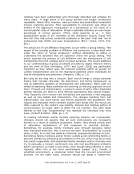
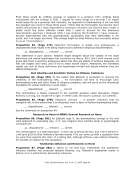
First, there would be nothing unusual or suspect in a person‘s 1971 writings being
inconsistent with his writings in 2001. I argued for many things as a kid that I no longer
would argue for as a grownup. But ironically, my approach to brainwashing is not one that
has changed very much in these thirty years. I think that my formulation has become more
careful and precise as I have responded to numerous criticisms, but that the basic model is
pretty much the same Liftonian model that I used to account for the strenuous
resocialization exercises I observed while I was studying the Bruderhof. I have, however,
become disenchanted with the psychoanalytic conjectures that were fashionable in my
youth, and I no longer use them. This change might be what Anthony has incorrectly seized
on as an ―inconsistency.‖
Proposition 83. (Page 276) Zablocki‘s formulation is stated very ambiguously, a
characteristic that results in its being impervious to definitive empirical disconfirmation.
X disputational relevant correct
This statement is pure opinion. Readers might disagree about the validity of the eight
definitions and twelve hypotheses that constitute my theory. But I don‘t think anyone could
argue that there is anything ambiguous about how they are stated. If Anthony disagrees, let
him cite chapter and verse, and I‘ll try to make myself clearer. Meanwhile, the interested
reader can look at these definitions and hypotheses himself and decide whether they are
stated ambiguously.
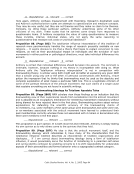
Civil Liberties and Scientists’ Duties As Citizens: Testimony
Proposition 84. (Page 279) To the extent that Zablocki is successful in reviving the
credibility of the brainwashing idea, ...his formulation will tend to encourage cultic
brainwashing trials and other forms of religious prejudice, and will serve as the theoretical
foundation for actual testimony in such trials...
disputational relevant correct
This commentary is totally irrelevant to the scientific question under discussion. Maybe
Anthony is wrong, but maybe he is right. In either case, the issue is political, not scientific.
Proposition 85. (Page 279f) Zablocki‘s criticism ...is another indication that his
viewpoint will, to the extent that it is influential, work in favor of further brainwashing trials.
disputational relevant correct
See my comments on proposition 84.
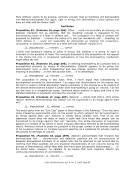
Research on Harm in NRMS General Research on Harm
Proposition 86. (Page 281) As Zablocki sees it, the brainwashing concept is the only
valid approach to evaluating why, or if, new religions have harmful social or psychological
consequences.
X disputational relevant correct
This interpretation is a total fabrication. I never say anything like this, and I don‘t believe it.
I will give $100 to Dick Anthony‘s favorite charity if he can come up with a quotation from
my work that supports this claim. It is telling that, although Anthony uses citations liberally,
he includes no citation for this accusation.
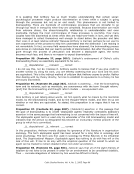
Totalitarian Influence and Research on Harm
Proposition 87. (Page 283) it seems to me that thus interpreted, the totalitarian
influence tradition has produced testable theories, e.g. Rokeach‘s dogmatism scales or
Adorno et al.‘s authoritarian personality measures.
First, there would be nothing unusual or suspect in a person‘s 1971 writings being
inconsistent with his writings in 2001. I argued for many things as a kid that I no longer
would argue for as a grownup. But ironically, my approach to brainwashing is not one that
has changed very much in these thirty years. I think that my formulation has become more
careful and precise as I have responded to numerous criticisms, but that the basic model is
pretty much the same Liftonian model that I used to account for the strenuous
resocialization exercises I observed while I was studying the Bruderhof. I have, however,
become disenchanted with the psychoanalytic conjectures that were fashionable in my
youth, and I no longer use them. This change might be what Anthony has incorrectly seized
on as an ―inconsistency.‖
Proposition 83. (Page 276) Zablocki‘s formulation is stated very ambiguously, a
characteristic that results in its being impervious to definitive empirical disconfirmation.
X disputational relevant correct
This statement is pure opinion. Readers might disagree about the validity of the eight
definitions and twelve hypotheses that constitute my theory. But I don‘t think anyone could
argue that there is anything ambiguous about how they are stated. If Anthony disagrees, let
him cite chapter and verse, and I‘ll try to make myself clearer. Meanwhile, the interested
reader can look at these definitions and hypotheses himself and decide whether they are
stated ambiguously.
Civil Liberties and Scientists’ Duties As Citizens: Testimony
Proposition 84. (Page 279) To the extent that Zablocki is successful in reviving the
credibility of the brainwashing idea, ...his formulation will tend to encourage cultic
brainwashing trials and other forms of religious prejudice, and will serve as the theoretical
foundation for actual testimony in such trials...
disputational relevant correct
This commentary is totally irrelevant to the scientific question under discussion. Maybe
Anthony is wrong, but maybe he is right. In either case, the issue is political, not scientific.
Proposition 85. (Page 279f) Zablocki‘s criticism ...is another indication that his
viewpoint will, to the extent that it is influential, work in favor of further brainwashing trials.
disputational relevant correct
See my comments on proposition 84.
Research on Harm in NRMS General Research on Harm
Proposition 86. (Page 281) As Zablocki sees it, the brainwashing concept is the only
valid approach to evaluating why, or if, new religions have harmful social or psychological
consequences.
X disputational relevant correct
This interpretation is a total fabrication. I never say anything like this, and I don‘t believe it.
I will give $100 to Dick Anthony‘s favorite charity if he can come up with a quotation from
my work that supports this claim. It is telling that, although Anthony uses citations liberally,
he includes no citation for this accusation.
Totalitarian Influence and Research on Harm
Proposition 87. (Page 283) it seems to me that thus interpreted, the totalitarian
influence tradition has produced testable theories, e.g. Rokeach‘s dogmatism scales or
Adorno et al.‘s authoritarian personality measures.