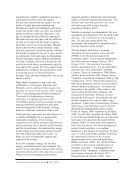
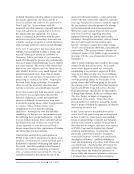
Hungry for Ecstasy:
Trauma, the Brain, and the Influence of the Sixties
By Sharon Klayman Farber
Reviewed by Lorna Goldberg
Lanhan, Maryland: Jason Aronson (subsidiary
of Rowman &Littlefield Publishing Group, Inc.)
2012. ISBN-10: 0765708582 |ISBN-13: 978-
0765708588 (hardcover), $95.40, 444 pages
Kindle edition (2013), $56.99 (Amazon.com).
Dr. Sharon Farber begins her book with a
personal account of her own experience of
ecstasy. Her husband had a life-threatening
illness finally, after many frightening months,
he was scheduled for surgery that might save his
life. At the same time, she was coping with
other life-changing events. On the morning of
the surgery, Farber began driving on the
highway, heading from her suburban home to
the hospital in the city. It was a glorious, sunny
autumn day in New York. Farber began to think
of a particularly upbeat melody and popped a
Zydeco CD into the player. She was “in a
groove, going higher and higher” (p. 16) until
she suddenly became aware that she could get
herself killed if she didn’t rein herself in. As
quickly as this exuberance began, it ended, and
Farber returned to her previous worries. Her
husband survived the illness. Later, recalling this
experience of ecstasy helped Farber better
appreciate the underlying dynamics of why
someone would begin spiraling up toward an
ecstatic state when under duress.
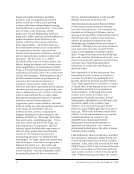
Melanie Klein originated the term manic defense
to refer to a mental operation that gives us
protection from depressive as well as paranoid
anxieties. Farber uses this concept to describe
how the manic defense aids us in coping with
painful affects. It plays a central role for those
of us who are terrified of feeling grief and
sadness and who are unable to mourn. It creates
the illusion that we are omnipotent and can stand
above our vulnerable self. This is the defense
Farber relied upon briefly when she became
overwhelmed by the pain of facing the
possibility of her husband’s death.
Farber also examines the derivation of the word
ecstasy. She discovered that it derives from the
Greek ekstasis, which means “a state of
displacement, of being driven out of one’s
senses, mentally transported, to stand outside
oneself. This suggests an out-of-body
experience” (p. 16).
In her introduction, Farber states, “I have no
final conclusions about ecstasy, only hypotheses
and questions. Writing this book was a terrific
adventure that took me to unexpected places I
never imagined I would go.” This book does,
indeed, take the reader to unexpected places.
The author weighs in on a broad range of topics,
including research on the brain and altered states
of consciousness, the sixties, the use of
pharmaceuticals that produce the state of
ecstasy, ecstasies of pain and near-death
experiences, religious ecstasies, killing and
cannibalistic ecstasies, and creative ecstasies.
The final chapters of the book comprise sections
on the therapist’s considerations in working with
those on the road to ecstasy. She has written all
of these topics with clarity and filled them with
fascinating research, both old and new. This is a
lengthy book, but I believe readers will find
themselves returning to some of these sections
again and again.
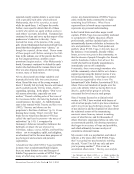
Of particular interest to readers of this journal is
Farber’s chapter on cult-induced ecstasy and
psychosis. Farber points out that some who end
up in a cult are longing for an ecstatic
experience. The cult experience can induce
“radical personality change, ongoing states of
dissociation, as well as ecstatic and psychotic
states” (p. 128). It has been my experience that
many of those who leave cults are saddened by
the loss of those ecstatic experiences. Some
might have the need to replace cult ecstasy with
addictive or other dissociative-inducing
experiences. I agree with Farber that it is crucial
International Journal of Cultic Studies ■ Vol. 5, 2014 61
Trauma, the Brain, and the Influence of the Sixties
By Sharon Klayman Farber
Reviewed by Lorna Goldberg
Lanhan, Maryland: Jason Aronson (subsidiary
of Rowman &Littlefield Publishing Group, Inc.)
2012. ISBN-10: 0765708582 |ISBN-13: 978-
0765708588 (hardcover), $95.40, 444 pages
Kindle edition (2013), $56.99 (Amazon.com).
Dr. Sharon Farber begins her book with a
personal account of her own experience of
ecstasy. Her husband had a life-threatening
illness finally, after many frightening months,
he was scheduled for surgery that might save his
life. At the same time, she was coping with
other life-changing events. On the morning of
the surgery, Farber began driving on the
highway, heading from her suburban home to
the hospital in the city. It was a glorious, sunny
autumn day in New York. Farber began to think
of a particularly upbeat melody and popped a
Zydeco CD into the player. She was “in a
groove, going higher and higher” (p. 16) until
she suddenly became aware that she could get
herself killed if she didn’t rein herself in. As
quickly as this exuberance began, it ended, and
Farber returned to her previous worries. Her
husband survived the illness. Later, recalling this
experience of ecstasy helped Farber better
appreciate the underlying dynamics of why
someone would begin spiraling up toward an
ecstatic state when under duress.
Melanie Klein originated the term manic defense
to refer to a mental operation that gives us
protection from depressive as well as paranoid
anxieties. Farber uses this concept to describe
how the manic defense aids us in coping with
painful affects. It plays a central role for those
of us who are terrified of feeling grief and
sadness and who are unable to mourn. It creates
the illusion that we are omnipotent and can stand
above our vulnerable self. This is the defense
Farber relied upon briefly when she became
overwhelmed by the pain of facing the
possibility of her husband’s death.
Farber also examines the derivation of the word
ecstasy. She discovered that it derives from the
Greek ekstasis, which means “a state of
displacement, of being driven out of one’s
senses, mentally transported, to stand outside
oneself. This suggests an out-of-body
experience” (p. 16).
In her introduction, Farber states, “I have no
final conclusions about ecstasy, only hypotheses
and questions. Writing this book was a terrific
adventure that took me to unexpected places I
never imagined I would go.” This book does,
indeed, take the reader to unexpected places.
The author weighs in on a broad range of topics,
including research on the brain and altered states
of consciousness, the sixties, the use of
pharmaceuticals that produce the state of
ecstasy, ecstasies of pain and near-death
experiences, religious ecstasies, killing and
cannibalistic ecstasies, and creative ecstasies.
The final chapters of the book comprise sections
on the therapist’s considerations in working with
those on the road to ecstasy. She has written all
of these topics with clarity and filled them with
fascinating research, both old and new. This is a
lengthy book, but I believe readers will find
themselves returning to some of these sections
again and again.
Of particular interest to readers of this journal is
Farber’s chapter on cult-induced ecstasy and
psychosis. Farber points out that some who end
up in a cult are longing for an ecstatic
experience. The cult experience can induce
“radical personality change, ongoing states of
dissociation, as well as ecstatic and psychotic
states” (p. 128). It has been my experience that
many of those who leave cults are saddened by
the loss of those ecstatic experiences. Some
might have the need to replace cult ecstasy with
addictive or other dissociative-inducing
experiences. I agree with Farber that it is crucial
International Journal of Cultic Studies ■ Vol. 5, 2014 61