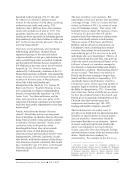
My purpose here is twofold: first, to describe
how elements of this environment impacted my
life and second, to explain how I was finally
impelled to break free. I hope my story will help
others better understand people who have been
victims of mentally abusive movements,
especially those who, like me, were born and
raised in them.
My Early Experience
The day I was born, my father was on a troop
carrier off the coast of Normandy. My mother
was living in a loft in Greenwich Village. While
I was still an infant, my mother would bring me
with her to sessions with Siegel. When my
father returned from Europe, I am told, he
visited Siegel before he came home to see my
mother and meet me.
From my earliest years, Siegel was a dominant
force in my family. My parents would take me
out of nursery school to go to sessions. When
they fought, they would call Siegel on the
telephone to mediate. He advised them on their
families, friendships, jobs, money, me, where to
live, their dreams—literally, and their fears. We
lived on the Upper East Side and then in
Brooklyn with other adults who studied with
Siegel. There were “study groups” in
Manhattan, Brooklyn, and Queens. There were
a few other young children involved, but I was
the first, and for years the only one born into the
movement. Three of us from that time remained
until adulthood. The other two are still there.
Siegel was a constant source of dissention with
my parents’ families, who did not share my
parents’ opinion of Siegel. We grew more and
more distant from my parents’ relatives and by
the time I was an adolescent had nothing to do
with them at all. When my mother’s father was
dying of cancer, she refused to visit him, and she
did not attend his funeral. Siegel praised her for
this approach, calling it “the new kindness.”
Also from my earliest years, Siegel seemed to
me to be two different people. One was
charming, warm, and often quite funny. He
talked as if he expected me to understand, and
he criticized my parents when he felt they did
not respect or understand me.
Other times, he became angry to the point of
rage because he believed we as his students were
not sufficiently grateful for the good he was
doing in our lives, and we were not doing
enough to tell other people about him. He
believed he represented beauty and ethics, and
so our attitude to him was our attitude to beauty.
I grew up believing Siegel’s explanation that the
reason for whatever problem I had—in life, at
school, with friends, was that I did not like
myself because I was ungrateful to him.
When I was about ten years old, my parents and
some of their friends bought a brownstone on
16th Street in Manhattan, within walking
distance of Siegel’s studio. My mother wanted
to start an art gallery to promote Siegel’s
teachings about art.
The Terrain Gallery opened on February 26,
1955, with a program of readings from Siegel’s
work. Earlier that day, my father had been
rushed to the hospital in agony. As the gallery
program began, we didn’t know whether he
would live or die. My mother went on to the
opening anyway. I was too young to attend, but
I sat on the brick steps outside the gallery
looking through the window. Later that night,
we learned that my father had survived.
The Terrain Gallery published a manifesto by
Siegel called “Is Beauty the Making One of
Opposites?” Siegel believed he had discovered
the role of opposites in beauty and their
connection to life. The art world was not
receptive. The New York Times and Art News
either disparaged Siegel or ignored him. Siegel
said that was because he knew more about art
than the critics, and the critics did not want to
learn from him.
When the Terrain Gallery had a major exhibition
of my mother’s paintings, the Times reviewer
praised her work but pointedly did not even
mention Eli Siegel or Aesthetic Realism. She
knew that she was going to have to make a
choice between having a successful career as an
artist or being faithful to Eli Siegel. I watched
her struggle over this dilemma as the art world’s
animosity to Aesthetic Realism quickly
hardened, and Siegel’s demand for loyalty
became ever more intense. Ultimately, she
38 International Journal of Cultic Studies ■ Vol. 5, 2014
how elements of this environment impacted my
life and second, to explain how I was finally
impelled to break free. I hope my story will help
others better understand people who have been
victims of mentally abusive movements,
especially those who, like me, were born and
raised in them.
My Early Experience
The day I was born, my father was on a troop
carrier off the coast of Normandy. My mother
was living in a loft in Greenwich Village. While
I was still an infant, my mother would bring me
with her to sessions with Siegel. When my
father returned from Europe, I am told, he
visited Siegel before he came home to see my
mother and meet me.
From my earliest years, Siegel was a dominant
force in my family. My parents would take me
out of nursery school to go to sessions. When
they fought, they would call Siegel on the
telephone to mediate. He advised them on their
families, friendships, jobs, money, me, where to
live, their dreams—literally, and their fears. We
lived on the Upper East Side and then in
Brooklyn with other adults who studied with
Siegel. There were “study groups” in
Manhattan, Brooklyn, and Queens. There were
a few other young children involved, but I was
the first, and for years the only one born into the
movement. Three of us from that time remained
until adulthood. The other two are still there.
Siegel was a constant source of dissention with
my parents’ families, who did not share my
parents’ opinion of Siegel. We grew more and
more distant from my parents’ relatives and by
the time I was an adolescent had nothing to do
with them at all. When my mother’s father was
dying of cancer, she refused to visit him, and she
did not attend his funeral. Siegel praised her for
this approach, calling it “the new kindness.”
Also from my earliest years, Siegel seemed to
me to be two different people. One was
charming, warm, and often quite funny. He
talked as if he expected me to understand, and
he criticized my parents when he felt they did
not respect or understand me.
Other times, he became angry to the point of
rage because he believed we as his students were
not sufficiently grateful for the good he was
doing in our lives, and we were not doing
enough to tell other people about him. He
believed he represented beauty and ethics, and
so our attitude to him was our attitude to beauty.
I grew up believing Siegel’s explanation that the
reason for whatever problem I had—in life, at
school, with friends, was that I did not like
myself because I was ungrateful to him.
When I was about ten years old, my parents and
some of their friends bought a brownstone on
16th Street in Manhattan, within walking
distance of Siegel’s studio. My mother wanted
to start an art gallery to promote Siegel’s
teachings about art.
The Terrain Gallery opened on February 26,
1955, with a program of readings from Siegel’s
work. Earlier that day, my father had been
rushed to the hospital in agony. As the gallery
program began, we didn’t know whether he
would live or die. My mother went on to the
opening anyway. I was too young to attend, but
I sat on the brick steps outside the gallery
looking through the window. Later that night,
we learned that my father had survived.
The Terrain Gallery published a manifesto by
Siegel called “Is Beauty the Making One of
Opposites?” Siegel believed he had discovered
the role of opposites in beauty and their
connection to life. The art world was not
receptive. The New York Times and Art News
either disparaged Siegel or ignored him. Siegel
said that was because he knew more about art
than the critics, and the critics did not want to
learn from him.
When the Terrain Gallery had a major exhibition
of my mother’s paintings, the Times reviewer
praised her work but pointedly did not even
mention Eli Siegel or Aesthetic Realism. She
knew that she was going to have to make a
choice between having a successful career as an
artist or being faithful to Eli Siegel. I watched
her struggle over this dilemma as the art world’s
animosity to Aesthetic Realism quickly
hardened, and Siegel’s demand for loyalty
became ever more intense. Ultimately, she
38 International Journal of Cultic Studies ■ Vol. 5, 2014