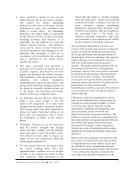
the phase-oriented model Pierre Janet first
proposed (1919), and that various other trauma
theorists and clinicians have most recently
embraced (Courtois &Ford, 2009 Herman,
1992b Ogden et al., 2006 Van der Hart et al.,
2006). I have labeled these phases as
Assessment, Stabilization, Trauma Processing,
and Reintegration.
Assessment
As in all psychotherapies, the therapist needs to
assess the trauma client in terms of the client’s
situation, history, culture, and current troubles.
Safety and Stabilization
The factors within this treatment phase include
the following relative to the client:
a) Ensuring one’s personal and interpersonal
safety.
b) Increasing one’s ability to manage extreme
arousal.
c) Building one’s capacity to manage
bodily/affective states, including numbing,
flashbacks, dissociation, and so on.
d) Psychoeducation.
e) Awareness of one’s sense of self and one’s
relationship capacities.
f) Working through one’s fears of the therapy
relationship.
g) Working through one’s fears of warded-off
or dissociated trauma-related memories.
Trauma Processing
This phase includes providing the space for the
client’s safe self-disclosure and exposure to
traumatic memories.
Reintegration
During this phase, the focus with the client is on
the following:
a) Building a narrative while integrating
thoughts, feelings body sensations, and
images.
b) Mourning and grief.
c) Increasing one’s level of functioning in the
world (throughout therapy). Doing this
necessitates
i. moving back and forth from
stabilization to processing throughout
the therapy.
ii. increasing social functioning with
friends, family, groups, and possible
romantic partners.
iii. increasing work possibilities.
iv. ensuring that psychotherapy does not
become a primary social connection
over time (specific to former members).
v. strengthening boundaries—learning how
to be intimate while maintaining a sense
of self and self-priorities.
I will now review these stages of trauma therapy
in more detail, with important considerations for
both first- and second-generation former
members.
Assessment
The therapist should have or seek knowledge of
how high-demand groups function, how harmful
the experience can be, and the range of cultures,
beliefs, and behaviors of such groups. If the
therapist does not understand the cult
experience—i.e., does not “get it,” the client
may feel alone and untrusting (Brown 2008).
Cult involvement is a unique cultural
phenomenon. The International Cultic Studies
Association (ICSA) website (icsahome.com)
provides useful information about cults and
includes a bookstore. There you can find
“everything you ever wanted to learn about
cults.”
At the same time, although high-demand groups
have similar processes and attributes, each
individual has a unique relationship to the group
that individual was involved with, and every
group is different. I recommend that the
clinician approach each client and his situation
like an anthropologist would, by assessing and
understanding how the client experienced the
group, how the client came to judge whether or
not the group was harmful to him, and how the
client integrated the experience. For the
18 International Journal of Cultic Studies ■ Vol. 5, 2014
proposed (1919), and that various other trauma
theorists and clinicians have most recently
embraced (Courtois &Ford, 2009 Herman,
1992b Ogden et al., 2006 Van der Hart et al.,
2006). I have labeled these phases as
Assessment, Stabilization, Trauma Processing,
and Reintegration.
Assessment
As in all psychotherapies, the therapist needs to
assess the trauma client in terms of the client’s
situation, history, culture, and current troubles.
Safety and Stabilization
The factors within this treatment phase include
the following relative to the client:
a) Ensuring one’s personal and interpersonal
safety.
b) Increasing one’s ability to manage extreme
arousal.
c) Building one’s capacity to manage
bodily/affective states, including numbing,
flashbacks, dissociation, and so on.
d) Psychoeducation.
e) Awareness of one’s sense of self and one’s
relationship capacities.
f) Working through one’s fears of the therapy
relationship.
g) Working through one’s fears of warded-off
or dissociated trauma-related memories.
Trauma Processing
This phase includes providing the space for the
client’s safe self-disclosure and exposure to
traumatic memories.
Reintegration
During this phase, the focus with the client is on
the following:
a) Building a narrative while integrating
thoughts, feelings body sensations, and
images.
b) Mourning and grief.
c) Increasing one’s level of functioning in the
world (throughout therapy). Doing this
necessitates
i. moving back and forth from
stabilization to processing throughout
the therapy.
ii. increasing social functioning with
friends, family, groups, and possible
romantic partners.
iii. increasing work possibilities.
iv. ensuring that psychotherapy does not
become a primary social connection
over time (specific to former members).
v. strengthening boundaries—learning how
to be intimate while maintaining a sense
of self and self-priorities.
I will now review these stages of trauma therapy
in more detail, with important considerations for
both first- and second-generation former
members.
Assessment
The therapist should have or seek knowledge of
how high-demand groups function, how harmful
the experience can be, and the range of cultures,
beliefs, and behaviors of such groups. If the
therapist does not understand the cult
experience—i.e., does not “get it,” the client
may feel alone and untrusting (Brown 2008).
Cult involvement is a unique cultural
phenomenon. The International Cultic Studies
Association (ICSA) website (icsahome.com)
provides useful information about cults and
includes a bookstore. There you can find
“everything you ever wanted to learn about
cults.”
At the same time, although high-demand groups
have similar processes and attributes, each
individual has a unique relationship to the group
that individual was involved with, and every
group is different. I recommend that the
clinician approach each client and his situation
like an anthropologist would, by assessing and
understanding how the client experienced the
group, how the client came to judge whether or
not the group was harmful to him, and how the
client integrated the experience. For the
18 International Journal of Cultic Studies ■ Vol. 5, 2014