Cultic Studies Journal, Vol. 3, No. 2, 1986 Page 69
Book Reviews
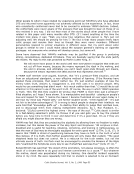
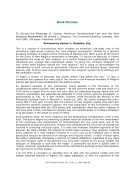
To Secure the Blessings of Liberty: American Constitutional Law and the New
Religious Movements* By William C. Shepherd. The Crossroad Publishing Company. New
York-1985. 155 pages. Paperback. $9.95.
Reviewed by Herbert L. Rosedale, Esq,
This is a volume of contradictions which presents an essentially one-sided view of the
contentious legal issues involving the ―new religious movements.‖ Written by a recently
deceased professor of religion at the University of Montana who spent a year at the Center
for the Study of New Religious Movements at Berkeley, To Secure the Blessings of Liberty
approaches the study of ―new religions‖ as a conflict between the constitutional rights of
individuals and .strongly held majoritarian values.‖ In doing this, Professor Shepherd not
only comes down squarely behind the ―new religions,‖ but in doing so acknowledges his
indebtedness to such sources as psychiatrist Coleman and civil liberties lawyer Jeremiah
Guanan, both of whom have staunchly defended ―new religious‖ groups like Scientology and
the Unification Church.
To begin, a portion of Blessings was clearly written long before the rest. In fact, a
substantial part appears four years ago in the Journal of the American Academy of Religion
and the last section was completed by the author‘s widow.
An apparent example of this unfortunate timing appears in the discussion of the
constitutional cases involving ―new religions.‖ At one point the author cites and relies on a
1978 article to assert that no court has ever, after an evidentiary hearing, found that any
religious organization has subjected its adherents to mind control, coercive persuasion, or
brainwashing (p. 53). In a later chapter, however, while discussing the decision of the
Minnesota Supreme Court in Peterson v. Sorlien (p. 106), the author criticizes the court,
noting that in this case it found that the conduct of new religious groups may well have
impaired the plaintiffs volitional capacity. The easy explanation of this inconsistency is that
Peterson was decided after the 1978 article, and, undoubtedly, when the earlier chapters of
this book were written, the Peterson decision was not available either to Professor Shepherd
or to the author of the article on which he relies.
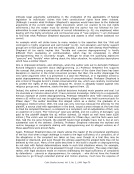
Such problems aside, far more vexatious are the philosophical contradictions I find in this
book. The author begins by presenting excellent historical analyses of the First Amendment
of the enactment and interpretation of Reconstruction era civil rights laws, and of the
development of judicial construction of those laws which thrust the court into an activist role
involved in protecting individual rights. It is clear that Professor Shepherd approves of this
activism. By stark contrast, his analysis of recent cases involving ―new religions‖ presents
every adherent of a ―new religion‖ involved in a court case as an individual who is being
persecuted because he deviates from strongly held majority beliefs. In each of these cases
the author vehemently champions a doctrine of judicial abstention, regardless of any claim
that the individual rights of the adherent may have been violated by the group. Indeed, the
structure of Blessings is such that the reader is continually led down a golden path of
―closely reasoned‖ arguments only to find at the end that the phrasing of the initial question
can have led to no other answer.
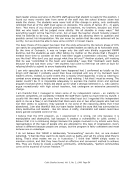
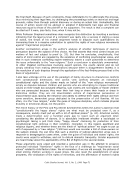
I do not think it necessary or desirable here to deal with the author‘s careful and well
written historical analysis of federal civil rights legislation, or with his exposition of the
Book Reviews
To Secure the Blessings of Liberty: American Constitutional Law and the New
Religious Movements* By William C. Shepherd. The Crossroad Publishing Company. New
York-1985. 155 pages. Paperback. $9.95.
Reviewed by Herbert L. Rosedale, Esq,
This is a volume of contradictions which presents an essentially one-sided view of the
contentious legal issues involving the ―new religious movements.‖ Written by a recently
deceased professor of religion at the University of Montana who spent a year at the Center
for the Study of New Religious Movements at Berkeley, To Secure the Blessings of Liberty
approaches the study of ―new religions‖ as a conflict between the constitutional rights of
individuals and .strongly held majoritarian values.‖ In doing this, Professor Shepherd not
only comes down squarely behind the ―new religions,‖ but in doing so acknowledges his
indebtedness to such sources as psychiatrist Coleman and civil liberties lawyer Jeremiah
Guanan, both of whom have staunchly defended ―new religious‖ groups like Scientology and
the Unification Church.
To begin, a portion of Blessings was clearly written long before the rest. In fact, a
substantial part appears four years ago in the Journal of the American Academy of Religion
and the last section was completed by the author‘s widow.
An apparent example of this unfortunate timing appears in the discussion of the
constitutional cases involving ―new religions.‖ At one point the author cites and relies on a
1978 article to assert that no court has ever, after an evidentiary hearing, found that any
religious organization has subjected its adherents to mind control, coercive persuasion, or
brainwashing (p. 53). In a later chapter, however, while discussing the decision of the
Minnesota Supreme Court in Peterson v. Sorlien (p. 106), the author criticizes the court,
noting that in this case it found that the conduct of new religious groups may well have
impaired the plaintiffs volitional capacity. The easy explanation of this inconsistency is that
Peterson was decided after the 1978 article, and, undoubtedly, when the earlier chapters of
this book were written, the Peterson decision was not available either to Professor Shepherd
or to the author of the article on which he relies.
Such problems aside, far more vexatious are the philosophical contradictions I find in this
book. The author begins by presenting excellent historical analyses of the First Amendment
of the enactment and interpretation of Reconstruction era civil rights laws, and of the
development of judicial construction of those laws which thrust the court into an activist role
involved in protecting individual rights. It is clear that Professor Shepherd approves of this
activism. By stark contrast, his analysis of recent cases involving ―new religions‖ presents
every adherent of a ―new religion‖ involved in a court case as an individual who is being
persecuted because he deviates from strongly held majority beliefs. In each of these cases
the author vehemently champions a doctrine of judicial abstention, regardless of any claim
that the individual rights of the adherent may have been violated by the group. Indeed, the
structure of Blessings is such that the reader is continually led down a golden path of
―closely reasoned‖ arguments only to find at the end that the phrasing of the initial question
can have led to no other answer.
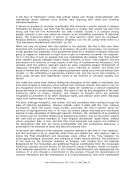
I do not think it necessary or desirable here to deal with the author‘s careful and well
written historical analysis of federal civil rights legislation, or with his exposition of the