Cultic Studies Journal, Vol. 3, No. 2, 1986 Page 64
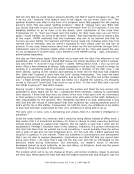
Nonetheless, as virtually all reports in all journals continually reiterate, simply being in
trance does not guarantee that a suggestion will be accepted. Thus, the well-known
statement, ―you‘ll never do anything in hypnosis that you wouldn‘t ordinarily do.‖ Despite
the relative ease with which most trained hypnotic operators can help a subject ―into‖
trance, clinical practitioners can amply document the difficulty we all have in suggesting
that our patients ―do‖ anything different from their ―normal‖ behavior.
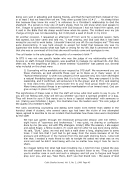
Erickson, who was very sensitive to individual differences in hypnotizability, redefined
hypnosis as being an interchange between two people in which 1) the hypnotist must gain
the subject‘s cooperation, 2) deal with the subject‘s resistant behavior, and 3) receive some
acknowledgment that something is happening (Haley, 1967). Erickson‘s work is remarkable
in that he did not regularly or even generally use formal trance and designated trance
induction. He developed ―naturalistic‖ inductions--where hypnotic behavior is produced
without ever mentioning hypnosis to the subject or ―doing hypnosis‖ on him. Erickson was
a master in striking the responsive chord in his patients. He ―paced‖ them carefully, always
starting where they were psychologically situated, and very slowly and carefully leading
them to a fulfillment of their own expectations. The following is a brief explanation of some
of these techniques along with examples of how they are used by new authoritarian groups.
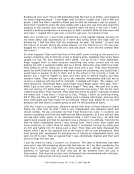
Expectation
The hypnotized person on stage in Las Vegas has an idea of what he will be asked to do
when he volunteers to be a subject. He then does it. The cult recruit has many abstract
―buzz word‖ concepts to which he will resonate. We all have them. Love, peace,
brotherhood (Schwartz, 1974). Anyone who presses those buttons expresses concepts
which are universally held virtues. The new recruit to a cultic group resonates to the
articulation of his ―own‖ ideal goals which require only his ―proper‖ behavior to be
actualized. The behavioral change is accomplished in small incremental steps, a process
which approximates the therapeutic process of pacing and leading.
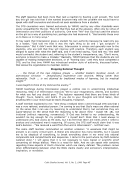
Pacing and Leading
Using trance induction as a model for all behavioral influence helps to make the
transformations effected by cultic groups seem less mysterious. In trance induction, the
hypnotist acts like a biofeedback machine, verbally commenting on every behavior of the
subject. He will note that the subject is seated, that there is a noise outside the room--
perhaps a bus that is slowly moving farther and farther away. By continuously feeding back
verifiable descriptions of the subject‘s reality to him, the hypnotist slowly moves into synch
with his subject. He follows each breath, in and out, and notes them. Very slowly he paces
his words to the subject‘s breathing, and then slightly alters his feedback. If he slows
down, he may notice an appreciable slowing in the subject‘s breathing, which he will then
note. The lines between the subject and the operator become increasingly blurry as the
subject allows the operator to describe more and more of the subject‘s experience of reality.
When witnessing to potential members, cult recruiters are instructed to mirror the interests
and attitudes of the recruit. The recruiter, then, says that he is ―into‖ music, photography,
whatever, using any means to establish that ―we are alike‖. Many new religions and therapy
groups use such tactics to ―move into synch‖ with their recruits. Skilled recruiters are able
to carry the recruit to a deeper level of suggestibility by using the same sort of pacing as
that employed by the hypnotist. If this is successful, the recruit allows the recruiter to
define the recruit‘s reality. And as the blurring of identity between recruit and recruiter
increases, the skilled recruiter brings to bear the hypnotist‘s other important tool --the
exploitation of positive transference phenomena.
The Positive Transference
Nonetheless, as virtually all reports in all journals continually reiterate, simply being in
trance does not guarantee that a suggestion will be accepted. Thus, the well-known
statement, ―you‘ll never do anything in hypnosis that you wouldn‘t ordinarily do.‖ Despite
the relative ease with which most trained hypnotic operators can help a subject ―into‖
trance, clinical practitioners can amply document the difficulty we all have in suggesting
that our patients ―do‖ anything different from their ―normal‖ behavior.
Erickson, who was very sensitive to individual differences in hypnotizability, redefined
hypnosis as being an interchange between two people in which 1) the hypnotist must gain
the subject‘s cooperation, 2) deal with the subject‘s resistant behavior, and 3) receive some
acknowledgment that something is happening (Haley, 1967). Erickson‘s work is remarkable
in that he did not regularly or even generally use formal trance and designated trance
induction. He developed ―naturalistic‖ inductions--where hypnotic behavior is produced
without ever mentioning hypnosis to the subject or ―doing hypnosis‖ on him. Erickson was
a master in striking the responsive chord in his patients. He ―paced‖ them carefully, always
starting where they were psychologically situated, and very slowly and carefully leading
them to a fulfillment of their own expectations. The following is a brief explanation of some
of these techniques along with examples of how they are used by new authoritarian groups.
Expectation
The hypnotized person on stage in Las Vegas has an idea of what he will be asked to do
when he volunteers to be a subject. He then does it. The cult recruit has many abstract
―buzz word‖ concepts to which he will resonate. We all have them. Love, peace,
brotherhood (Schwartz, 1974). Anyone who presses those buttons expresses concepts
which are universally held virtues. The new recruit to a cultic group resonates to the
articulation of his ―own‖ ideal goals which require only his ―proper‖ behavior to be
actualized. The behavioral change is accomplished in small incremental steps, a process
which approximates the therapeutic process of pacing and leading.
Pacing and Leading
Using trance induction as a model for all behavioral influence helps to make the
transformations effected by cultic groups seem less mysterious. In trance induction, the
hypnotist acts like a biofeedback machine, verbally commenting on every behavior of the
subject. He will note that the subject is seated, that there is a noise outside the room--
perhaps a bus that is slowly moving farther and farther away. By continuously feeding back
verifiable descriptions of the subject‘s reality to him, the hypnotist slowly moves into synch
with his subject. He follows each breath, in and out, and notes them. Very slowly he paces
his words to the subject‘s breathing, and then slightly alters his feedback. If he slows
down, he may notice an appreciable slowing in the subject‘s breathing, which he will then
note. The lines between the subject and the operator become increasingly blurry as the
subject allows the operator to describe more and more of the subject‘s experience of reality.
When witnessing to potential members, cult recruiters are instructed to mirror the interests
and attitudes of the recruit. The recruiter, then, says that he is ―into‖ music, photography,
whatever, using any means to establish that ―we are alike‖. Many new religions and therapy
groups use such tactics to ―move into synch‖ with their recruits. Skilled recruiters are able
to carry the recruit to a deeper level of suggestibility by using the same sort of pacing as
that employed by the hypnotist. If this is successful, the recruit allows the recruiter to
define the recruit‘s reality. And as the blurring of identity between recruit and recruiter
increases, the skilled recruiter brings to bear the hypnotist‘s other important tool --the
exploitation of positive transference phenomena.
The Positive Transference