Cultic Studies Journal, Vol. 3, No. 2, 1986 Page 60
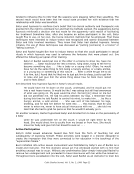
criticizing any independent decision-making by clients, and praising them for
complying with the therapist‘s recommendations.
f. Taking advantage of non-therapeutic sources of influence over the patient, e.g., by
treating employees, students, colleagues, or friends, and by becoming involved in
financial transactions other than fee-for-service arrangements, such as lending money
to clients.
II. Techniques which increase isolation (and thus dependence, indirectly)
a. Treating clients in therapy communes, at extended retreats, on long trips, and the like,
away from their usual network of relationships.
b. Prescribing long periods of solitary meditation.
c. Interpreting the client‘s problems as caused by family, friends, spouses, and/or
children, and recommending that these people be avoided or rejected in the name of
therapy.
d. Employing fear-inducing fantasies: for example, by asking the client to imagine how
others would feet about him or her if they knew the client as well as the therapist did.
Would others feel hostile, contemptuous, or have other negative attitudes toward the
client?
e. Recommending that the client associate only with the therapist‘s other clients (―for
mutual support during the difficult times of therapy,‖ as one therapist put it), and
selecting friends, dates, and spouses for clients.
f. Conducting group therapy among clients who also live and/or work together, so that
―group think‖ obscures individual critical thinking and group processes can be used to
create a ―we‖ versus ―them‖ attitude, as well as mutual admiration and support for the
therapist.
g. Denigrating all other forms of therapy and therapists, thereby essentially
communicating the message: ―you‘re better off with me,‖ or, ―If I can‘t help you,
nobody else can.‖
III. Techniques which reduce critical thinking capacity
a. Denigrating intellectual activity as a method for solving personal problems by
encouraging the client to ―stop being intellectual‖ or by defining critical thinking as
―being negative.‖ The therapist using this technique fails to distinguish between the
clients use of the intellect to clarify and understand internal processes and using the
intellect to stop the experience of these processes.
b. Encouraging the client to use therapy jargon.
c. Encouraging faith in the therapy and the therapist rather than supporting the client‘s
critical thinking and personal hypothesis-testing through experience.
d. Using vague, undefined terms and non-testable concepts in framing interpretations of
phenomena.
e. Talking to the client in complicated sentences with internal contradictions, and then
interpreting the client‘s attempts at clarification through questioning as resistance, or
as a character defect. One therapist, for example, typically responded to a client‘s
questions with: ―If I have to explain it, you couldn‘t understand it you are just not
ready to understand anything you have to ask me about.‖
criticizing any independent decision-making by clients, and praising them for
complying with the therapist‘s recommendations.
f. Taking advantage of non-therapeutic sources of influence over the patient, e.g., by
treating employees, students, colleagues, or friends, and by becoming involved in
financial transactions other than fee-for-service arrangements, such as lending money
to clients.
II. Techniques which increase isolation (and thus dependence, indirectly)
a. Treating clients in therapy communes, at extended retreats, on long trips, and the like,
away from their usual network of relationships.
b. Prescribing long periods of solitary meditation.
c. Interpreting the client‘s problems as caused by family, friends, spouses, and/or
children, and recommending that these people be avoided or rejected in the name of
therapy.
d. Employing fear-inducing fantasies: for example, by asking the client to imagine how
others would feet about him or her if they knew the client as well as the therapist did.
Would others feel hostile, contemptuous, or have other negative attitudes toward the
client?
e. Recommending that the client associate only with the therapist‘s other clients (―for
mutual support during the difficult times of therapy,‖ as one therapist put it), and
selecting friends, dates, and spouses for clients.
f. Conducting group therapy among clients who also live and/or work together, so that
―group think‖ obscures individual critical thinking and group processes can be used to
create a ―we‖ versus ―them‖ attitude, as well as mutual admiration and support for the
therapist.
g. Denigrating all other forms of therapy and therapists, thereby essentially
communicating the message: ―you‘re better off with me,‖ or, ―If I can‘t help you,
nobody else can.‖
III. Techniques which reduce critical thinking capacity
a. Denigrating intellectual activity as a method for solving personal problems by
encouraging the client to ―stop being intellectual‖ or by defining critical thinking as
―being negative.‖ The therapist using this technique fails to distinguish between the
clients use of the intellect to clarify and understand internal processes and using the
intellect to stop the experience of these processes.
b. Encouraging the client to use therapy jargon.
c. Encouraging faith in the therapy and the therapist rather than supporting the client‘s
critical thinking and personal hypothesis-testing through experience.
d. Using vague, undefined terms and non-testable concepts in framing interpretations of
phenomena.
e. Talking to the client in complicated sentences with internal contradictions, and then
interpreting the client‘s attempts at clarification through questioning as resistance, or
as a character defect. One therapist, for example, typically responded to a client‘s
questions with: ―If I have to explain it, you couldn‘t understand it you are just not
ready to understand anything you have to ask me about.‖