7
Vickie Howard, Amina Adan, Charles Attwood |Escaping the Narcissist’s Worldview
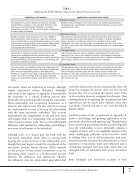
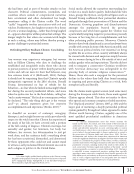
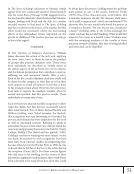
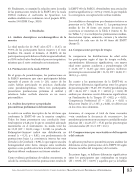
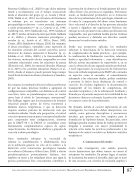
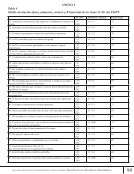
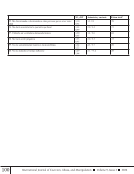
Table 1.
Applying the BITE Model to Narcissistic Abuse Victim-Survivors
narcissistic abuse are beginning to emerge, although
female experiences remain dominant. Ashleigh’s
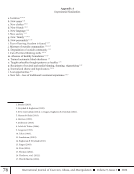
reflections in the vignette in Appendix A demonstrate
the outcomes of a critical thinking process after
physically and psychologically leaving her narcissistic
abuse relationship and recognizing dominance as a
dynamic she experienced. She also reflects on seeing
her replacement’s account of leaving the relationship
with the same narcissistic individual. This account
demonstrates the complexities of self and how one’s
self changes while in a relationship with an individual
with severe narcissistic traits. The account additionally
illustrates what leaving the relationship and finding a
new sense of self means to the individual.
Ashleigh refers to a shared goal she built with the
narcissistic individual, which often is a strong bond
keeping the victim-survivor in the relationship, even
though they may begin to doubt the investment of the
narcissistic partner. Steven Hassan (2022) expands
on the process of how shared investments occur by
discussing mind control as a bi-directional process
between the influencer and influenced, whereby
the influencer may use open-ended generalities and
invite the influenced to project meaning into them. By
using this strategy, the person does not feel coerced
because they are co-creating the fantasy story. If the
victim-survivor does not recognize this dynamic, then
assisting them in recognizing the deception they have
experienced can be much more difficult, since they
may think, “nobody did this to me” (see Bonchay &
Hassan, 2021).
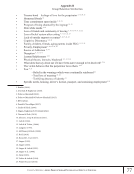
Jonathon’s sense of self, as presented in Appendix B,
shows a developing and growing exploration of the
narcissistic abuse he is still experiencing. Though he has
done everything practically possible to psychologically
leave the relationship, to leave physically remains a
complex situation and is an insightful example of the
many challenging pathways victim-survivors travel
in finding their way to self-actualization and post-
traumatic growth. Jonathon also demonstrates a critical
awareness of narcissistic traits and behaviors and is
considering strategies that may help others who are
entangled with an individual with severe narcissistic
traits.
Both Ashleigh’s and Jonathon’s accounts of their