International Journal of Coercion, Abuse, and Manipulation Volume 9, Issue 2 2026 64
Identity Development in Sex Trafficking
Identity development in ST parallels identity
development in HCGs, particularly given the array of
tactics used to destabilize the identities of survivors of
the life—tactics associated with increased vulnerability,
suggestibility, and subservience (West &Martin, 1994).
Rhythm is a common feature of ST environments
through the pimp’s rapping or the loud rap music
(Lundstrom, personal communication, 2019 see also
Huxley, 1952/2009). Similarly, each sexual encounter
can gradually add to the destabilization of the self
(Singer, 2003 Tobais &Lalich, 1994 West &Martin,
1994), as described by Hassan (2000, 2013). Too often,
media sources glorifying pimps provide exemplars
of these destabilizing tactics (Ivy, 2017 see Marshall,
1990 Pimp C, 2011). With this array of strategies, ST
unfreezes the pre-ST identity and forges a new identity.
As also noted above, ST typically involves confessions
and testimonials to refreeze the new identity and new
social systems separate from previous family and
friends and to increase suggestibility and vulnerability
to influence and control. As in HCGs, ST victims
may view ST as a desired social group and may shift
clothing, values, and preferences to fit the life (see
Dubrow-Marshall &Dubrow-Marshall, 2015 Stein,
2016). These actions reinforce the ST identity in ways
similar to a totalistic identity and raise the same risks
of pathology (Dubrow-Marshall &Dubrow-Marshall,
2016 Hassan &Shah, 2019), particularly identity
disturbance (DSM-5-TR, American Psychiatric
Association, 2022), as discussed above.
First-, Second-, and Multi-Generation ST Survivors
ST victims who enter trafficking as adults appear most
similar to first-generation members of an HCG. When a
ST victim is coerced into the system in their early teens
near the time of apoptosis transition (Schore, 2012),
their initial status as a teen means that they often have
a combination of both first- and second-generation
attributes. Second-generation children born into a
stable are generally groomed to either be a perpetrating
pimp or a sex trafficking survivor (Lundstrom, personal
communication, 2019). Similar to members of HCGs,
these individuals may struggle to recognize coercion,
manipulation, or even the possibility that they could
live outside of the life.
ST Trauma Bonds
Although we use the term “trauma bonds,” the ST
literature emphasizes the term “trauma-coerced
attachment” (TCA).
Fear, comfort, pain, and trauma (and often love,
particularly in situations with Romeo Pimps), typically
culminate in highly emotional and abusive relationships.
As in HCGs, these exploitative relationships can create
these trauma bonds (Carnes, 2018), yet survivors of ST
face particular challenges related to trauma bonds due
to the nature of ST.
Much of the ST lifestyle involves coercion to engage
in sexual behavior, typically CSAs. McIlhaney and
Bush (2008) observed that “sex involves the entire
person, physically, mentally, emotionally, and in every
other way” (p. 81). These features of ST appear likely
to increase the impacts of triple bonds with the pimp,
other ST survivors in the family, and the family itself
(Stein, 2016). Further, “the neurochemical imprint
of... sexual experience[s] remains, often for many
years impeding the very bonding process that leads to
future healthy relationships” (p. 77). These aspects of
ST appear to increase the depth and consequences of
trauma bonds for ST survivors.
Comparing HCGs and ST
Thus far, we have considered HCGs and ST in isolation.
In this section of the paper, we compare HCGs and ST
in line with Lifton’s (1961/2014) criteria. We then turn
to comparisons of recruitment and retention strategies
in HCGs and ST.
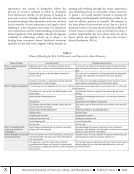
Comparison: Lifton’s Criteria
Both HCGs and ST rely on multiple forms of milieu
control, with an emphasis on controlling the physical
context, individual thought, and all communications
among the survivor, other group members, and
TCA involves a powerful emotional dependency
on the abusive partner and a shift in world-
and self- view, which can result in feelings
of gratitude or loyalty toward the abuser and
denial or minimization of the coercion and
abuse. (Raghaven &Doychak, 2015, p. 1)