International Journal of Coercion, Abuse, and Manipulation Volume 9, Issue 2 2026 30
of the most well-known and persistent narratives.
Hence, we cannot, for example, say with any certainty
(or dismiss outright) that some conspiracies about her
incorporate features of classic witchcraft accusations
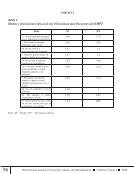
category (e): “feces, urine, or oral contact with anuses.”
We can identify, however, at least—and indeed, more
than—three features, not only in the conspiracies
that we have discussed thus far, but also in some of
the representations and discussions of Clinton that
intersect with key conspiracies about her.
Accusations of orgiastic, group sex are often a feature
of the Pizzagate pedophile ring allegations and its
variations cannibalism and the drinking of blood
are evident Pizzagate offshoots, including the kuru
and adrenochrome conspiracies. Moreover, themes
of sex, the consumption of human flesh and blood,
the sacrifice, torture, or murder of a variety of
innocent victims of all ages, permeate a wide variety
of conspiratorial statements made by QAnon, Alex
Jones, Donald Trump, and other conspiracists. Indeed,
for many conspiracists, these behaviors are taken-for-
granted standard fare of anti-Clinton narratives. Prior
to Twitter banning him early in 2021, Trump was the
principal promoter of QAnon material, including the
endless narratives alleging Clinton’s child sacrifice
rituals (Sommer, 2023). Similarly, claims that Clinton
is an agent of Satan, possesses supernatural powers,
and engages in Satanic rituals to extend her power
flourish in conspiracies about her. Clinton’s detractors
alleged she possessed “extraordinary powers ” that Bill
Clinton was her ‘familiar’ 30
1
and that she could morph
into an otherworldly and nefarious “man-woman
called ‘The Clintons’” (Bordo, 2017, p. 30). Together,
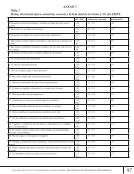
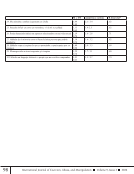
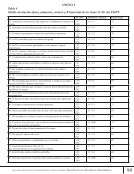
these aforementioned examples meet classic witchcraft
features a, b, c, f, and g: two criteria more than required
to meet the standard for a witch hunt.
Beyond Wood et al.’s thesis, numerous conspiracists
explicitly depict Clinton as a literal witch. Furthermore,
the witch is considered the worst form of what Lim
(2009) identifies as the Unruly Woman—one who
breaches societal norms and gendered expectations—
and is despised for it. Furthermore, deception is central
to the “woman as witch”: she is a deceiver who can
30 Historically, witches were understood to have a familiar –their own
personal demon. The nature of the familiar varied regionally across Europe
but in some areas often were small animals such as lizards, toads, cats,
insects, or dogs (Goodare, 2016). Mice, hares, ferrets, imps, and even claims
of shape-shifting animals all have been recorded as examples of familiars
(Winsham, 2025).
transform herself. Clinton’s ability to reinvent herself
when Bill Clinton ran for governor in Arkansas stoked
suspicion amongst political and religious conservatives.
To them, she was a liberal feminist wolf in conservative
sheep clothing: a witch capable of calculated deception.
Moreover, her political engagements and tours were
questioned in ways that her male counterparts never
were (nor their makeovers). Casting her as a witch, her
critics felt compelled to unmask her, to reveal the true
Hillary Clinton (Lim, 2009).
As Brisini (2019) notes, historically, not only were
those accused of being witches associated with
disrupting existing hierarchies of power, but they
were also considered cannibalistic. Conspiracies
claiming Clinton is infected with kuru do not merely
use metaphor— they identify her as a literal witch who
is both biologically and socially troublesome (Brisini,
2019, p. 209). The consumption of children parallels
the claims of the Malleus Maleficarum (1486), which
identified that witches were responsible for butchering
babies and eating them (Brisini, 2019, p. 211).
In addition, Clinton has long faced accusations of
occult practices, ranging from using Voodoo for
political gains to membership in a Los Angeles coven
(Brisini, 2019). Clinton’s detractors have depicted her
with stereotypical witch imagery: on a broomstick
(Bordo, 2017), wearing a cape and pointed hat, etc.
(Miller, 2018). Images of Clinton as the stereotypical
ugly witch, laughing with demonic glee, flying through
the air, saturated anti-Clinton online media content.
Some opponents have even scrutinized her laugh
itself as an indicator that she is a witch. As Lim notes,
“Witches are frequently identified by the shrillness of
their voice and the deviousness of their laughter” (Lim,
2009, p. 263). Kuru is also known as the “laughing
death,” because as the disease progresses to the second
stage, associated neurological deficits may result in
uncontrollable hysterical laughter. Moreover, as Brisini
(2019) remarks, while the kuru conspiracy focuses a
great deal on Clinton’s alleged cannibalism, “it is the
associated gendered claim that Clinton is literally a
witch that underwrites the conspiracy’s broader appeal
(p. 209).
Clinton’s laugh has been the subject of much discussion
and derision, both in connection with the claim that