International Journal of Coercion, Abuse, and Manipulation Volume 9, Issue 2 2026 8
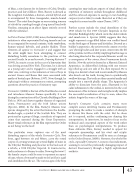
experiences and senses of themselves follow the
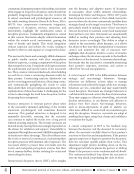
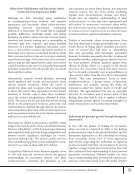
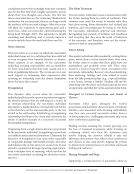
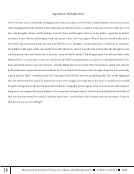
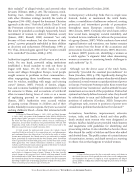
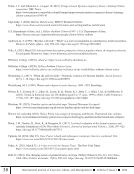
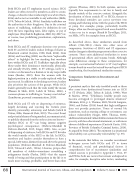
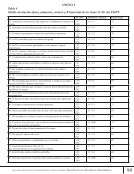
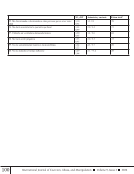
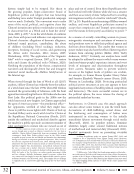
process of recovery outlined in Table 2, developed
from Jenkinson’s (2019a, 25-26) phases of healing in
post-cult recovery. Ashleigh clearly states that she has
an understanding of her experiences and now can even
look at another victim’s experiences and apply critical
thinking to a key statement they made by relating her
own experiences and her understanding of narcissistic
abuse in general. From Ashleigh’s outlook, she appears
confident in addressing content up to phase 3 of
healing from narcissistic abuse. Jonathon’s statement
indicates he has had some support within therapy in
naming and working through his abuse experiences
and identifying these as narcissistic abuse however,
in phase 1 he would identify himself as leaving the
relationship psychologically and having as little to do
with his abusive partner as possible. He remains in
the same physical environment as her, due to a lack of
financial resources. He also shows that he has addressed
several criteria in phase 2 and is moving into phase 3
content. Importantly, the four phases may not all be
linear, which also applies to the post-cult recovery
phases (Jenkinson, 2019a).
Table 2.
Phases of Healing for Post-Cult Recovery and Narcissistic Abuse Recovery
9
Vickie Howard, Amina Adan, Charles Attwood |Escaping the Narcissist’s Worldview
Where Post-Cult Member and Narcissistic Abuse
Victim-Survivor Experiences Differ
Although we have identified many similarities
in mechanisms/processes between cult member
experiences and narcissistic abuse victim-survivors
(including recovery trajectories), considering
differences is important. We would like to highlight
possible differences involving family and friend
dynamics. As within a destructive cult scenario, family
members and friends looking into a relationship as
observers may have concerns and notice harmful
behaviors of a partner displaying narcissistic traits.
As in a cult member scenario, the family member or
friend may try to discuss or warn their loved one about
their concerns, but the victim-survivor may completely
reject these warnings. At the same time, the narcissistic
partner may use this opportunity to gain even further
control over the victim-survivor, using the opportunity
to further isolate them from the people who care about
them and their welfare.
Alternatively, research around dynamics involving
family members and friends and narcissistic abuse
reports another possibility. While the victim is
amidst the abuse and recognizes what is happening
to them, they report their experiences to their family
members or friends, only to have these confidants
reject the victim’s interpretations (Howard &Adan,
2022). The reason for the rejection may involve strong
beliefs in the perpetrator’s kindness, generosity, and
trustworthiness, instilled through flattery, deception,
and manipulation. Rejection of the victim’s experiences
and interpretations leaves the victim further ostracized
and their accounts disbelieved.
Narcissists are skilled at presenting a carefully crafted
image to the outside world, which conceals their abusive
behavior. This duality—publicly appearing as charming
and competent while privately being manipulative and
abusive—creates significant challenges for victim-
survivors seeking help. The abuser’s public persona
often contradicts the private reality, making the victim-
survivor’s accounts of abuse difficult to believe.
A significant difference exists between popular views
of cult and post-cult survivors versus the general
understanding of narcissistic abusers and their
victim-survivors. Currently, the dynamics of cult
indoctrination are much better known, not only from
research sources but also from media (including
popular texts, documentaries, dramas, and films).
People have an empathic understanding of what
victim-survivors of cults may have experienced and
still endure. In comparison, narcissistic abuse within
the wider society is poorly recognized and understood,
so victim-survivors’ experiences do not share the same
societal resonance and elicit empathetic response.
Profiles of narcissistic abuse victim-survivors show
that they often have a unique personality trait. Lucas,
South, Brown, &Young (2023) identified personality
traits of women who had been in relationships
with men presenting with narcissistic personality
disorder, borderline personality disorder, or antisocial
personality disorder, explaining how abusive men can
use their partners’ altruistic qualities against them
(Brown &Young, 2018). In a sample of 601 female
survivors, the researchers found that these women
had an elevated personality trait of agreeableness (a
characteristic taken from the Five Factor Personality
Model). This trait incorporated facets of trust,
straightforwardness, a giving nature, co-operation,
humbleness, and empathy. During this study, the
researchers added two further facets of loyalty and
tolerance. The agreeableness trait may be especially
attractive to narcissists, and if women learn of this
finding, then they may be able to employ a reflexive
safeguarding strategy against becoming entangled in
future manipulative and harmful relationships.
Discussion
Indications for personal growth through therapeutic
intervention
In line with the phases of healing for narcissistic
abuse recovery as presented in Table 2, the helping
professional may want to discuss and introduce specific
therapeutic approaches to the individual recovering
from narcissistic abuse. One of these approaches
may involve supporting the individual in exploring
factors associated with their current distress by piecing
together a range of past and current factors that may
have influenced their understanding of their previous
narcissistic involvement. Different models can assist
one in understanding their previous life experiences,
and one of the most useful is the 5Ps model (Dudley
Previous Page Next Page