International Journal of Coercion, Abuse, and Manipulation Volume 9, Issue 2 2026 66
Both HCGs and ST emphasize sacred science. HCG
leaders are often viewed by members as able to create,
change, or dissolve rules inside simply on a whim (Stein,
2016) and as not accountable to any authorities (Mills,
1979 Tobias &Lalich, 1994a). Similarly, traffickers are
the authorities in their kingdoms. Due to the criminal
nature of trafficking, traffickers by definition do not
obey the laws regarding taxes, labor rights, or pay of
employees (Doychak &Raghavan, 2020 Ivy, 2017) or,
of course, laws prohibiting prostitution, exploitation,
and abuse.
Both HCGs and ST emphasize doctrine over person.
Both ST and HCG leaders induce feelings of shame as
behavioral control (Layton, 1998 Reid, 2016). Stein
(2016) and Leuchtag (2003) use the term “replaceable
others” to highlight the low standing that members
have within HCGs and ST. Traffickers typically abuse
those under their dominance emotionally, physically,
and sexually (Farley, 2003). In ST settings, rarely is a
victim ever discussed as a human or in any respectable
terms (Bender, 2019). Even the woman with the
highest position in a stable is easily replaced with the
next recruit. In addition to devaluing survivors, leaders
also prioritize the actions of the groups. While HCG
leaders generally teach that the ends justify the means
(Hassan &Shah, 2019 Lalich &Tobias, 2006), a
common phrase in trafficking is: “money over bitches”
(Lundstrom, personal communication, 2019).
Both HCGs and ST rely on dispensing of existence,
largely devaluing and rejecting the victim’s prior
identity, personality, autonomy, and beliefs (Lalich &
Tobias, 2006 Hassan &Shah, 2019). The covert threat
and potential shame of being marked, excommunicated,
or publicly shunned from the only society one knows—
whether HCG or ST—can bring intense negative
psychological consequences (Dubrow-Marshall &
Dubrow-Marshall, 2015 Singer, 2003). Also, as part
of dispensing of existence, both HCGs and ST devalue
the world outside of the HCG or the life. In HCGs,
members and leaders consider themselves to have a
special, lofty status, distinct from and above the general
population (Dubrow-Marshall &Dubrow-Marshall,
2015 Tobias &Lalich, 1994a). Likewise, pimps often
tell members of stables—sometimes resembling a
polygamous family (Farley, 2003)—that the square
world is boring and that participation in the life is so
much more exciting, profitable, and better than other
options (Thomas, 2023). In both systems, survivors
typically face requirements to cut ties to family and
friends outside of the coercive context. Alongside the
devaluation of those outside ST or HCGs, threats to
those devalued outsiders can coerce survivors into
staying and behaving in line with the goals of the HCG
or pimp. For example, pimps, particularly Gorilla
Pimps, often use threats against loved ones should the
victim ever try to escape (Frank &Terwilliger, 2015,
see Mills, 1979, for examples from an HCG).
As described above, these similarities extend from
Lifton’s (1961/2014) criteria into other areas of
comparison. Survivors of HGCs and ST experience
similar changes in identity progression in these coercive
contexts. There exist additional similarities in terms
of generational effects and trauma bonds. Although
some differences emerge in these comparisons, for
example, coerced sexual behavior in ST may heighten
trauma bonds in ways that extend beyond typical HCG
membership, the foundational similarities remain.
Comparison: Similarities in Recruitment and
Retention
A persistent myth is that only troubled youth or those
who come from dysfunctional homes join an HCG
or ST (Polaris, 2026 Tobias &Lalich, 1994b West
&Martin, 1994). “[O]rdinary, healthy people may
become entrapped in prolonged abusive situations”
(Herman, 2015, p. 1 Thomas, 2023 West &Langone,
1986), and Farber (2014) found that high intelligence
does not provide protection. Times of normal life
transitions, such as starting college or retirement, can
induce vulnerability (Singer, 2003 Thomas, 2023)
additional situational vulnerabilities remain for those in
poverty, with low educational attainment, or with more
adverse childhood experiences (Curtis &Curtis, 1993
Province of British Columbia Criminal Justice, 2014).
As argued by Stein (2016), “Recruitment is a situational
vulnerability, not a personality vulnerability” (p. 59).
In the materials that follow, we consider recruitment
techniques across both HCGs and ST in terms
of financial, social, and psychological factors. A
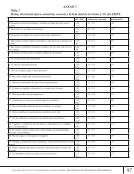
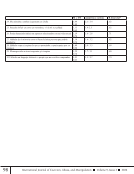
comprehensive list of recruitment similarities and
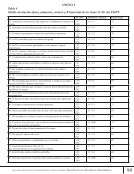
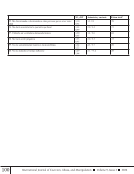
related sources is provided in Appendix 1. First, ST
and HCGs both use tactics that remain widespread in
sales, for example, deceptive sales tactics, misleading