Cultic Studies Journal, Vol. 8, No. 2, 1991, Page 37
I think most walk-aways are quite defensive at first. “Victim” is a very harsh
concept.
Several expressed frustration over the question of terminology:
I can‟t figure out if you are assuming the walk-away knows he was in a cult. It took
months of therapy before I could even begin to look at the possibility I had been
manipulated. These terms are premature.
This question is nearly an impossible one for me to answer because I think that the
terms listed are all poor ones to use for people who are just beginning to “think”
after coming out of a group that uses “mind control.” I have seen someone who was
questioning “the church” who literally threw the Bible help book on the floor and
stormed out of the room because she read the definition of the term “cult.”
Discussion
The frustration expressed by several subjects is not foreign to those who help ex-cultists
and their families. Explaining the subtlety and complexity of the unethical social influence
observed in cults is difficult enough when one has a person‟s attention and plenty of time,
such as in anexit counseling. It is perhaps impossible to capture the essence of the
phenomenon in one term. Nevertheless, those of us engaged in counseling, consultation,
and education must attempt to communicate with our audiences, however imperfect that
communication may be. In academia, where one‟s words may be printed in a specialized
journal actually read by no more than several dozen colleagues, it is relatively easy to
establish a consensus regarding terminology. When, however, one is attempting to
communicate with thousands of people, for whom this subject is not a “specialty,” the
matter becomes a bit more slippery.
The results of this study testify to the difficulty of achieving consensus regarding
terminology. The results also suggest that no term will suffice for all people and all
situations. Some people will respond to “cult” others will be highly offended. Some may
respond to “psychological abuse” others may rebel against any term containing “abuse.”
Some may respond to “spiritual trauma” others may see their experience as neither
spiritual nor traumatic.
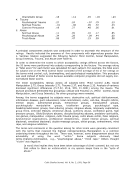
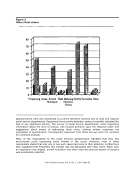
The factor analysis was particularly revealing. On the whole, subjects perceive Trauma and
Abuse as more acceptable than Mind Control, Social Manipulation, and Group Intensity. The
contrast between these two groups of factors may reflect a higher-order dimension of
effects versus processes. Trauma and abuse may represent the phenomenological effects of
processes that are generally misunderstood or repressed by cult walk-aways. The processes
of Mind Control, Social Manipulation, and Group Intensity, on the other hand, may serve as
abstract explanations that help parents understand the changes they have observed in
their children. Thus, during the years in which parents constituted the largest category of
help seekers, the second group of terms was most acceptable. But now that walk-aways
are seeking help in greater numbers, the first group of terms becomes attractive to more
people. In short, walk-aways may tend to relate to terms that describe what they actually
experienced (i.e., trauma and abuse), while parents and “educated” ex-cultists (i.e.,
those who were exit counseled or deprogrammed) may tend to relate to terms that explain
what the cultists experienced (i.e., mind control).
Although individual variation may be considerable, it should be kept in mind that the spread
of mean acceptability ratings, even though statistically significant, was relatively small.
Thus, none of the terms should be perceived as necessarily unacceptable at the individual
level. The results merely suggest nomothetic dimensions worthy of further study. The
meaningfulness of the factor loadings do, however, offer strong support for the coherence of
the ratings. The ratings probably do reflect meaningful constructions that have been little