Cultic Studies Journal, Vol. 8, No. 2, 1991, Page 82
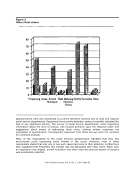
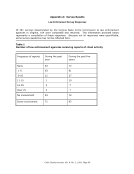
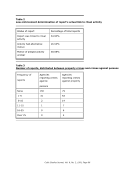
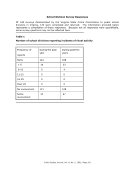
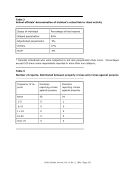
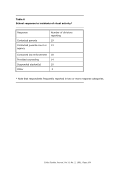
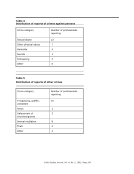
Despite the limited ritual crime involvement evidenced by these responses, a number of those
answering the questionnaire suggested that the most effective aid for social service workers
would be information on evaluating and treating youth who were involved in dangerous occult
practices.
Interviews
The high response rate, as well as the detailed nature of the information provided, was
indicative of significant and useful data. To further clarify and verify these data, a number of
selected respondents were interviewed via telephone and in person. Geographic locations with
high population density and areas that reported significant activity were the primary targets
of such interviews. Typically they were one and the same. Though respondents who indicated
little or no ritual crime in their jurisdictions were also interviewed, relatively fewer of them
were chosen.
As might be expected, interviewees reiterated responses they had provided on surveys, but
the bases for these positions were not always comparable. The follow-up investigations
elicited information falling into two basic groups: well-defined current or recent cases and
testimonials of historic or on-going abuse.
Generally, law enforcement officers and school officials were able to offer accounts of specific
misconduct that they associated with ritualistic practices. Because of the nature of mental
health practitioners‟ work, their information on ritual crime was invariably secondhand and did
not involve investigation into specific allegations. Rather, accounts by clients constituted the
sole basis for their responses.
School officials typically referred serious offenses to law enforcement authorities. For less
serious offenses, parents or other custodial parties were notified. Verification of occult
influence generally was not made by school officials.
Law enforcement officers who actually completed the surveys and who were chosen for
interviews were those reputed as being experienced in the investigation of ritual crime. In
many cases these officers were in possession of indicia of belief systems that they felt linked
the crime to the belief system itself. They conceded that in few cases could they conclusively
prove such a connection. Though this evidence sometimes indicated a suspect‟s interest in an
unconventional belief system, more often than not it failed to substantiate a causal link
between those beliefs and commission of the offense in question. Further, because
perpetrators were not apprehended in most cases, investigators were unable to definitively
assign a motive to the crime. Often they relied upon factors merely suggesting existence of a
belief system.
The presence of certain graffiti at the crime scene, or of particular clothes, tattoos, or scars on
the suspect led law officers to label the offense as a ritual crime. The occurrence of the event
on a specific date (one of many listed on a “satanic calendar”) was also a popular basis for
assigning ritual crime status, even where no suspect was apprehended and other
corroborating evidence was unavailable.
Definitive documentation of ritual crime was rare. In no case was there conclusive evidence of
homicide in Virginia that could be causally linked to the influence of a spiritual belief system or
interest in the occult.
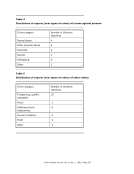
Crimes of vandalism, trespassing, and graffiti (those most frequently cited as possessing
occult overtones) had the clearest link to occult influence. Even where these crimes were
reported, follow-up investigations revealed that an occult influence was often suspected rather
than proved.