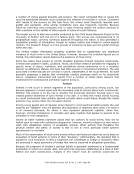
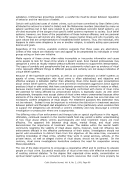
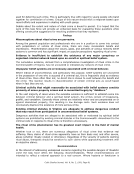
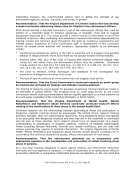
Cultic Studies Journal, Vol. 8, No. 2, 1991, Page 35
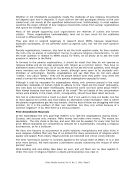
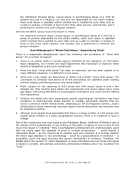
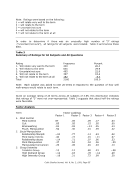
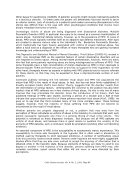
Note: Ratings were based on the following:
1 =will relate very well to the term
2 =will relate to the term
3 =uncertain/not sure
4 =will not relate to the term
5 =will not relate to the term at all
In order to determine if there was an unusually high number of “3” ratings
(“uncertain/not sure”), all ratings for all subjects were totaled. Table 3 summarizes these
data.
Table 3
Summary of Ratings for All Subjects and All Questions
Rating Frequency Percent
1. Will relate very well to the term 440 26.4
2. Will relate to the term 645 29.9
3. Uncertain/not sure 495 22.9
4. Will not relate to the term 397 18.4
5. Will not relate to the term at all 182 8.4
Total 2160 100.0
Note: Each subject was asked to rate 20 terms in response to the question of how well
walk-aways would relate to each term.
Given an average rating of all terms across all subjects of 2.65, this distribution indicates
that ratings of “3” were not over-represented. Table 3 suggests that about half the ratings
were favorable
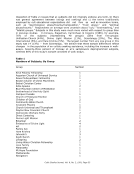
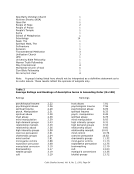
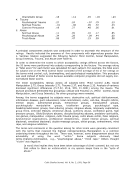
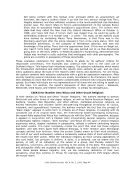
Factor Analysis
Term Factor Loadings
Factor 1 Factor 2 Factor 3 Factor 4 Factor 5
1. Mind Control
Mind Control 87 .05 .09 .17 .03
Cult .85 .05 .15 .05 .00
Brainwashing .81 .02 -.13 .05 .14
Psych. Manipulation .54 .30 .01 .39 .22
2. Social Manipulation
Relationship Maniplt. -.04 .77 .14 .23 .02
Mind Game Victims .40 .72 .01 -.11 .07
Relationship abuse -.14 .71 .07 .06 .33
Mind Manipulation .47 .54 .04 .36 -.09
Manipulated Conversion .26 .49 .45 .03 .13
3. Group Intensity
Totalistic Group .13 .12 .80 .23 -.08
High Demand Group -.12 .18 .78 -.12 .29
High Intensity Group -.18 .21 .72 .09 .20