Cultic Studies Journal, Vol. 8, No. 2, 1991, Page 86
Also significant is the fact that most MPD patients who report ritual abuse state that they were
the object of such abuse at a young age. The limited cognitive functions of young children
permit manipulation by adults who may convince the child that a certain series of events
occurred when in fact they were contrived (that is, the event in question appeared to be real
when it was mere theatrics). Even innocent acts of adults may be distorted in the minds of
children. Because adults who recount these childhood experiences view them through
children‟s eyes their stories retain such distortions. This factor may help to explain certain
accounts of ritual crime that, if accepted at face value, would be physically impossible.
While the evidence in support of organized ritual crime is found almost exclusively within the
mental health community (in the form of testimony from patients and therapists), there are
many practitioners who reject the existence of such a broad-based criminal conspiracy but
who do assert experience suggestive of more limited ritual crime. Much of the information in
support of their opinions comes not from victims but from perpetrators of what is described as
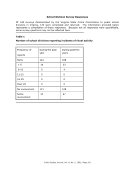
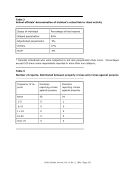
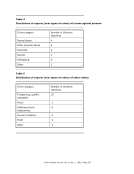
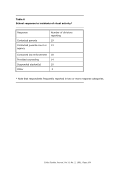
ritual crime. These crimes are most often property crimes of a relatively minor nature,
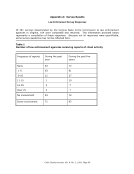
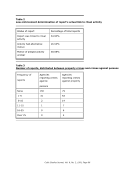
consistent with the information obtained through surveying schools and law enforcement and
social services agencies.
Patients who report participation in illegal endeavors, and who also demonstrate interest in
the occult, may cause therapists to jump to the conclusion that the delinquent acts involve
ritual crime when in actuality the belief system plays no part in the criminal acts. There is
some evidence, however, that troubled youth experience a disproportionate interest in so-
called aberrant belief systems.
Clinical studies indicate that youth who turn to occult beliefs reflective of socially ostracized
value systems tend to exhibit antisocial behavior generally, and may be self-destructive. Self-
esteem is likely to be abnormally low, suggesting the youth‟s attempt to gain greater power,
acceptance, and confidence through his participation in the occult and groups who engage in
associated practices. Also demonstrated was a high incidence of substance abuse among
these individuals. Clinical evidence does not support the conclusion that either drug abuse or
a general interest in the occult leads to ritual crime. The research does suggest the possibility
that drug abuse and participation in aberrant belief systems can be symptomatic of
psychological problems.
There is no question that psychotic and sociopathic persons who engage in various atrocities
involving loss of human life may be associated with belief systems that rationalize or explain
their behavior. Such persons may fit the model of a “self-stylist” who integrates the concepts
of other religions into a personal (and self-serving) belief system. In this case it is not a
particular belief system that influences their behavior. Rather, the behavior is a result of the
interaction between their illness and their personal belief system, and may itself affect that
illness and belief system.
Clearly there remains substantial debate within the field as to the extent to which ritual
crimes occur. Some of this debate is attributable to the same definitional problems that
generally plague this area of study. The ritual abuse often cited by therapists, for example,
encompasses interfamilial generational abuse. The reason for its characterization as ritual
abuse is sometimes due to the bizarre or habitual nature of it, despite the absence of a belief
system and associated rituals. Characterization of such abuse as ritual is not incorrect per se.
It may, however, convey false images to other professionals and to the public. And it could
certainly ignite challenges to proffered statistics of ritual abuse.
As greater understanding of physical and sexual abuse of children is gained, it is becoming
ever more evident that the proclivity for such abuse is passed from parents to children, from
one generation to the next. Thus, that generational abuse within families occurs seems
unquestionable. This fact does not establish, nor necessarily make more likely, the existence
of organized ritual abuse. The increasing publicity accorded ritual abuse claims, however,