Cultic Studies Journal, Vol. 8, No. 2, 1991, Page 32
become aware of the ideas of those who see unethical manipulation as central to cult
conversion, they do not automatically see their group in this light. For example, a former
cult member, who now provides psychological services to ex-cult members, told the senior
author that he had been out of his group for two years before he realized it was a cult, even
though he had read material such as Lifton (1961). Reevaluating years of deception is not
easy. Third, not all cults are highly manipulative or destructive. Some groups are only mildly
so and will not comfortably wear the label “cult.” And lastly, the typical cult victim has been
indoctrinated to believe that the group is always right and he or she, when dissenting, is
always wrong. Many, therefore, stumble out of their groups feeling guilty and inadequate.
They try to figure out what is wrong with themselves and frequently do not even consider
the possibility that their problems may in large part have been caused by the group, rather
than caused by their inability to live up to the group‟s standards.
The tendency of walk-aways and cast-aways to turn a deaf ear to the terminology
traditionally used by cult educational organizations poses a problem for those engaged in
outreach to this population, a sizeable minority and possibly majority of whom have
psychological problems (Galanter, 1983). These people will not avail themselves of help if
helpers do not use terms that catch the ex-members‟ attention. In order to shed light on
this problem a brief questionnaire was designed to measure ex-cultists‟ opinions about
various terms.
Method
A one-page questionnaire was mailed to 204 former cultists who had previously completed a
19-page questionnaire currently being analyzed. The questionnaire inquired into how
subjects left the groups with which they were affiliated, the names of the groups, and
whether or not in retrospect the subject would consider the group a cult. The questionnaire
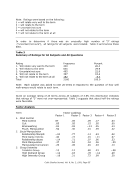
then listed 20 terms which the subject was asked to rate and rank. Specifically, the
questionnaire said, “Keeping in mind the full range of groups people leave, please rate how
well walk-aways who are unfamiliar with „counter-cult‟ literature would relate to the
following terms. Use the following rating scale ...1 =will relate very well to the term, 2
=will relate to the term, 3 =uncertain/not sure, 4 =will not relate to the term, and 5
=will not relate to the term at all.” Subjects were further asked: “Again keeping in mind
the full range of groups, please rank the above terms. Give that term which you believe
walk-aways will most readily relate to a ranking of „1‟ and mark „1‟ to the right of the term.
Mark „2‟ to the right of your second choice, and so on until you have ranked them from 1 to
20.”
Subjects were not asked their own ratings or rankings for it was believed that their ratings
and rankings would reflect education they had obtained since leaving their groups. Subjects
were also asked to suggest other terms that they believed walk-aways might respond to.
Results were tabulated and subjected to a principal components analysis.
Results
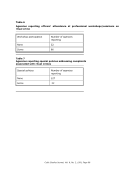
One-hundred-eight subjects had submitted questionnaires when the results were tabulated
(several more arrived after tabulation). Of these subjects, 71 were walk-aways, 10 had
been involuntarily deprogrammed, 10 had been exit counseled, and 17 had left through
“other” means --usually they were ejected.
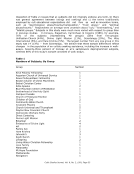
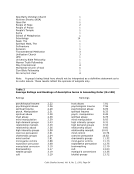
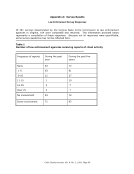
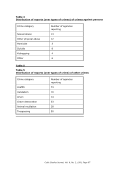
Nearly all subjects (N =100 93%) considered their group in retrospect to be a cult. The
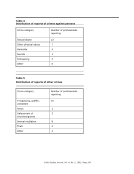
groups from which subjects came are listed in Table 1 (3 subjects did not list group names).
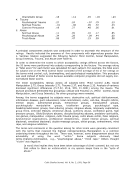
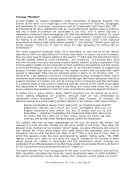
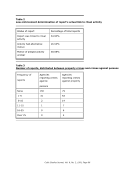
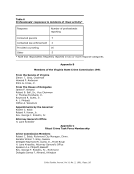
Average ratings and ranking of the listed terms for all subjects are presented in Table
2.