Cultic Studies Journal, Vol. 8, No. 2, 1991, Page 30
Outreach to Ex-Cult Members:
The Question of Terminology
Michael D. Langone, Ph.D.
American Family Foundation
William V. Chambers
University of South Florida, Ph.D
Abstract
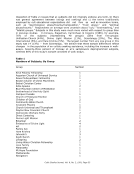
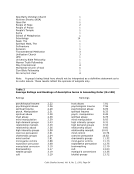
A questionnaire listing terms applicable to cults was sent former members of
cultic groups. 108 were returned in time for analysis. Subjects were asked to
rate and rank terms with regard to the degree to which they would be
meaningful and acceptable to cultists who left their groups on their own
(“walk-aways”). 71 of the 108 subjects were themselves walk-aways.
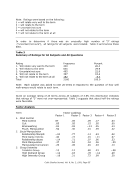
Although subjects on average gave favorable ratings to the terms, subjects
indicated that walk-aways would relate less well to traditional terms used
by cult educational organizations, e.g., “cult,” “brainwashing.” Terms such as
“psychological abuse,” “spiritual trauma,” and “trust abuse” received higher
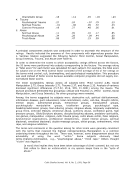
average ratings and rankings. A factor analysis produced five factors, two of
which, Abuse and Trauma, were significantly more acceptable than the
other three factors, Mind Control, Social Manipulation, and Group Intensity.
The implications of these findings for cult educational organizations are
discussed.
Organizations such as the American Family Foundation (AFF) and the Cult Awareness
Network (CAN --originally called the Citizens Freedom Foundation) came into being in the
late 1970s in order to respond to the needs of individuals and families troubled about
involvement with groups that appeared to use high-pressure tactics to recruit and retain
members. Such groups were often called cults because a) most at this time were religious
and b) the term “cult” typically referred to new, marginal religious movements that were
not connected to mainstream religions, as were sects for example (Nelson, 1968).
The families and individuals disturbed by cult involvements began to organize and form
organizations such as AFF and CAN because traditional helping sources, mental health
professionals and clergy in particular, dismissed or misunderstood their concerns
Affected individuals and families saw similarities between the tactics they had observed in
the groups causing concern and those observed by students of Korean War POWs. The
terms “brainwashing” (Hunter, 1953), ”coercive persuasion” (Schein, 1961), ”thought
reform” (Lifton, 1961), and the more popular “mind control” were used to describe and
explain the disturbing phenomena. The process of deprogramming, in which a cultist‟s
family hired former cult members to physically restrain the cultist and force him or her to
listen to information not available in the cult (Dubrow-Eichel, 1989), was a frequently
employed method for helping family members in cults (in recent years “forced”
deprogramming has been largely replaced by voluntary deprogramming, now called ”exit
counseling”).
The controversy over deprogramming became bitter as cult propagandists and sympathetic
academicians (Bromley &Richardson, 1983), on the one hand, and affected persons
and academicians and professionals sympathetic to the other side (Delgado, 1978
Langone &Clark, 1985) argued about whether cults or deprogrammers more
severely curtailed civil rights. A change in terminology quickly resulted from this debate.
Academicians sympathetic to cults stopped using the term “cult” (see Robbins, 1969 for an