Cultic Studies Journal, Vol. 8, No. 2, 1991, Page 70
Executive Summary
House Joint Resolution 147 (HJR 147) directed the Crime Commission to establish a task force
in order to study certain cult practices that represent a danger to citizens of the
Commonwealth and to determine the prevalence of such practices, the risk factors that induce
youth‟s participation in this activity, the fiscal cost resulting from property damage, and the
means of addressing these concerns.
Following expert testimony regarding the scope of issues relating to the occult and cult
practices, the task force determined that parameters to this study must be carefully drawn
and objectives narrowly focused. Particularly prominent was concern about potential conflicts
with constitutional rights to free association and exercise of religion.
To eradicate confusion and properly identify the subject matter of this study, the task force
defined the focus to be that criminal behavior which is derived from or motivated by a specific
spiritual belief system and the practices or ceremonies with which it is associated. Such
behavior is regarded as “ritual crime” or “ritualistic crime” for the purposes of this study.
Controversy about ritual crime, both in terms of its prevalence and its nature, is rampant.
Much of the debate can be traced to the careless or inaccurate use of terminology.
Inappropriate identification of and reference to groups and belief systems, as well as inexact
descriptions of what constitutes ritual crime, inevitably cloud this debate and make more
difficult an objective investigation into the actual incidence of occult-related crime.
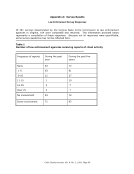
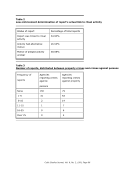
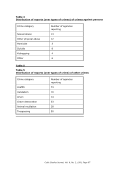
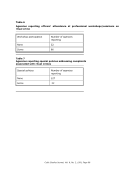
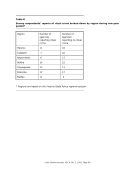
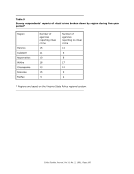
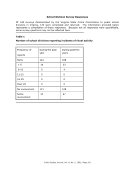
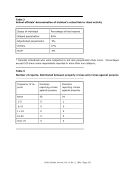
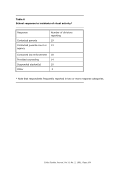
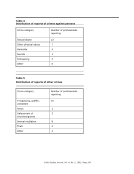
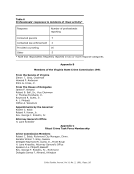
A statewide survey of all law enforcement agencies and school divisions, and geographically
representative samples of social service departments and licensed mental health practitioners
in Virginia produced comprehensive data about the incidence of ritual crime in the
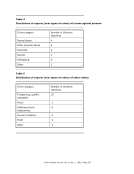
Commonwealth. Follow-up interviews confirmed that most incidents which could be linked to
belief systems involved minor property crimes. The results make clear the difficulty in
establishing causal connections between the reported cases and spiritual belief systems.
Claims regarding incidents of ritual crime suffer in many cases from a lack of adequate
evidence. While this is attributed by some to the effective disposal of evidence by cult
members, it is clear also that indicia of unconventional belief systems are often speciously
linked to ritual crime.
The research evidenced a distinct schism between the types of reports from mental health
therapists and other interviewees. While schools, law enforcement agencies, and social
service workers pointed to specific cases of crime, therapists tended to provide more general
accounts of ritual crime which they derived from their clients and which were frequently years
or decades old.
This contrast between law enforcement and mental health extends also to the goals of the
respective groups. Therapists‟ focus is on treatment issues rather than the prevention and
enforcement of crime. Response to ritual crime therefore by necessity differs for these two
segments of the population and recognition of this fact is important both in interpreting data
and in making recommendations for action.
Based upon survey results, testimony, and intensive research, the task force made the
following findings:
Misconceptions about ritual crime are pervasive.
Evidence is insufficient to establish the existence of any major conspiracy or organized
criminal network based upon an occult or spiritual belief system.
Unpopular belief systems are erroneously associated with criminal behavior.
Criminal activity that might reasonably by associated with belief systems consists