Cultic Studies Journal, Vol. 8, No. 2, 1991, Page 88
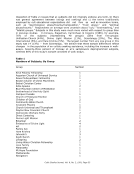
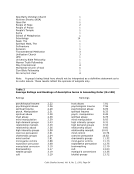
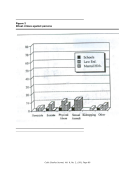
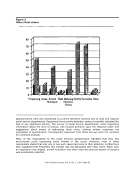
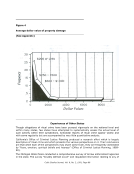
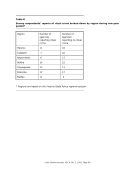
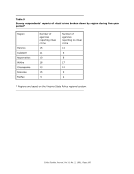
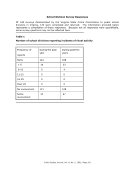
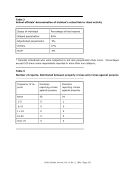
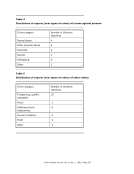
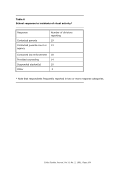
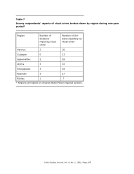
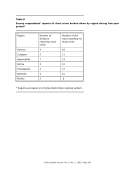
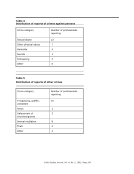
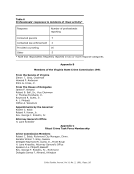
Figure 4
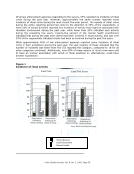
Average dollar value of property damage
(See Appendix)
Experiences of Other States
Though allegations of ritual crime have been pursued vigorously on the national level and
within many states, few states have attempted to systematically assess the actual level of
such activity within their jurisdictions. Anecdotal reports of ritual crime appear widely and
with some regularity but are accompanied by very little quantitative analysis.
California‟s Office of Criminal Justice Planning produced a research effort which is largely
descriptive of ritual crime and which presents the various perspectives on it. Their conclusions
are that while each of the perspectives may share some truth, they are frequently dominated
by “fears, emotion, spiritual beliefs and hearsay” (Office of Criminal Justice Planning, 1989-
90).
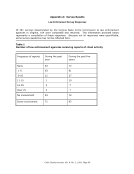
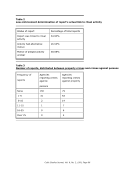
The Michigan State Police conducted a comprehensive survey of all law enforcement agencies
in the state. The survey “broadly defined occult” and requested information relating to any of
Cultic Studies Journal, Vol. 8, No. 2, 1991, Page 89
a number of crimes against property and persons. The report concluded that no causal link
could be established between occult practices and offenses of homicide or suicide. Consistent
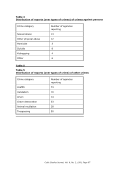
with results of the surveys by this task force, the crimes most frequently reported were
graffiti and vandalism, while animal mutilations were also frequently reported. Because
follow-up interviews were conducted only in cases involving deaths the authors declined to
offer a position on the validity of other reports in terms of occult influence.
The largest survey to date was recently conducted by the Child Abuse Research Project at the
University of Buffalo with the aid of a federal grant. This survey was comprehensive in its
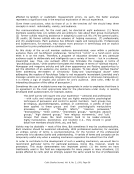
geographical scope, covering numerous agencies throughout the nation. It also generated a
substantial quantity of information, though its subject matter was limited to crimes against
children. The Research Project is in the process of compiling its data and will publish findings
within the year.
The limited reliable information presently available fails to substantiate any significant
incidence of ritual crime in the United States. However, because the available figures are so
limited, this information cannot disprove the existence of ritual crime.
Some few states have sought to control ritualistic practices through statutory enactments.
Criminal laws passed in Idaho, Louisiana, Texas, and Illinois enhance penalties for engaging in
specific forms of abuse, mutilation, and cannibalism during ceremonies or in a ritualistic
manner as defined by statute, but have had little success in convictions heretofore. The acts
proscribed in these statutes are criminal in nature, independent of the ritual element. No state
presently possesses a statute that criminalizes conduct premised solely on its ceremonial
nature. Legislative memoranda and reports from a number of states detail research that
emphasizes the constitutional prohibition against doing so.
Analysis
Interest in the occult in certain segments of the population, particularly among youth, has
become apparent in recent years with the increasing cries of concern about such involvement.
Whether this interest is on the rise or whether the prominent attention focused upon it has
created greater awareness of such interest is not clear. It is likely that media stories focusing
on occult involvement have actually spurred curiosity about occult topics, though this media
attention may simply reflect the increased interest.
Among young people who do develop some interest in unconventional belief systems the vast
majority are “dabblers” who will abandon this fascination in relatively short order. For some it
is an innocent diversion for others it may represent adolescent rebellion. Some few,
however, immerse themselves in concepts and value systems that appear to parents to be
unhealthy or even dangerous.
Insofar as belief systems represent values that run contrary to social norms, they will be
looked upon by many with substantial disapproval. Likewise, minority religions by their nature
clash with established notions of acceptable worship. When activity that threatens the
physical welfare and safety of society is tied to one or more particular belief systems
apprehension is inevitable.
Much of the examination of ritual crime among writers and lecturers today has as its basis an
evaluation of belief systems in terms of their “deviance.” Unfortunately, the standard that is
applied for such evaluation is often a subjective one. Challenges to foreign or distasteful ideas
are premised in vague assertions of threats that may be unproved or altogether groundless.
Because the judgment of another‟s spiritual beliefs is generally anathema to a fundamental
proposition on which our society rests, and which has long been established as a pillar of both
federal and state constitutions, charges of this nature must be carefully scrutinized for
Previous Page Next Page