Cultic Studies Journal, Vol. 8, No. 2, 1991, Page 36
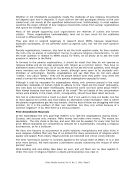
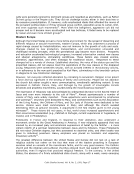
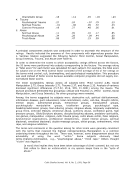
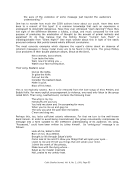
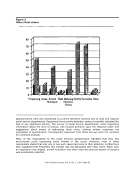
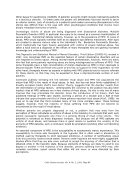
Charismatic Group .18 -.12 .45 -.18 -.23
4. Trauma
Psychological Trauma .27 .24 -.07 .79 .13
Spiritual Trauma -.01 -.06 .09 .72 .43
Coercive Persuasion .19 .27 .48 .56 .01
5. Abuse
Spiritual Abuse .11 .05 .10 .17 .85
Psychological Abuse .34 .29 -.09 .44 .60
Trust Abuse .06 .47 .19 .09 .58
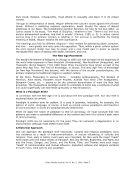
A principal components analysis was conducted in order to ascertain the structure of the
ratings. Results indicated the presence of five components with eigenvalues greater than
1. Varimax rotation suggested the following factors: Mind Control, Social Manipulation,
Group Intensity, Trauma, and Abuse (see Table 4).
In order to determine the extent to which acceptability ratings differed across the factors,
the 20 terms were partitioned into subsets corresponding to the factors. The average rating
or “total score” for each factor was calculated for each subject. For example, the total score
for subject one on the Mind Control factor consisted of the average of his or her ratings on
the terms mind control, cult, brainwashing, and psychological manipulation. This procedure
was used instead of factor scores because available computer programs did not supply non-
normalized factor scores.
The mean acceptability ratings across all subjects were: Mind Control 2.86, Social
Manipulation 2.75, Group Intensity 2.71, Trauma 2.37, and Abuse 2.33. Analysis of variance
disclosed significant differences (F=7.32, df=4, 535, P.0001) among the means. The
Duncan procedure delineated two groupings: (Abuse and Trauma) vs. (Mind Control, Social
Manipulation, and Group Intensity). No other groupings were revealed.
Among the terms suggested by subjects were: destructive cult, spiritual disillusionment,
information disease, guilt inducement, total commitment, cultic, cult-like, thought reform,
mental abuse, authoritarian groups, hierarchical groups, manipulative groups,
psychologically manipulative groups, totalitarian groups, psychological rape,
headship/submission groups, fear-inducing groups, religious abuse, religiously exploitative,
group think, enforced lifestyle, emotional abuse, authority abuse, confidence game, high
pressure groups, Bible/Scripture abusers, disciple/discipling abusers, predatory spirituality,
con games, manipulative religions, cultic trauma group, cultic abuse victim, false religions,
dysfunctional organizations, professional deceptionists, closed intense groups, spiritual
blackmail, emotional blackmail, double-message groups, elitist groups, enmeshment, mind
rape, and religious addiction.
The terms and comments in the question asking for other terms were generally consistent
with the terms that received the highest ratings/rankings. Manipulation is a common
underlying theme throughout the list. There was, however, some disagreement about the
advisability of using the word “victim.” Some subjects obviously liked
terms implying victimization, e.g., “psychological abuse,” “mind rape.” Others thought
“victim” was negative:
[a word] that implies they have been taken advantage of (their consent) but not one
that refers to them as victims which in my opinion keeps them in the “cycle of
abuse.”