Cultic Studies Journal, Vol. 8, No. 2, 1991, Page 38
affected by random or systematic measurement errors. As such, the factor analysis
represents a significant step in the empirical exploration of the cult experience.
Given these conclusions, what do those of us in the trenches do? We should keep three
concepts in mind: individuality, variety, and audience.
Our communications will, for the most part, be directed at eight audiences: (1) family
members seeking help (2) cultists who are willing to talk about their group involvement
(3) former cultists requiring assistance in adapting to post-cult life (4) the general public
(5) youth (6) former cultists who are unaware of helping resources (7) professionals
and (8) academicians. Each audience has different needs and backgrounds. Professionals
and academicians, for example, may expect more precision in terminology and an explicit
connection to prior professional or scholarly work.
As this study of the ex-cult member audience demonstrated, even within a particular
audience there will be different preferences. Some think “victim” is a harsh word some
think it is on the mark. Therefore, a program of education directed at any particular
audience ought to deliberately and intelligently use a variety of terms --but in a coherent,
meaningful way. Thus, one outreach effort may formulate the message in terms of
“psychological abuse,” while another formulates the message in terms of “spiritual trauma.”
Newspaper and magazine articles and talk show appearances are fleeting opportunities to
get the attention of an audience one wishes to educate. To talk about “spiritual trauma”
when addressing the readers of Christianity Today and “psychological abuse” when
addressing the readers of Psychology Today is not necessarily inconsistent (provided one‟s
message variants are conceptually integrated and not deceptive or otherwise manipulative)
it is merely a sign of respect and concern for one‟s audience. (See Litfin, 1982 for an
interesting discussion of the ethics of persuasion.)
Sometimes the use of multiple terms may be appropriate in order to emphasize that there is
no agreement on the most appropriate label for the phenomena under study. A recently
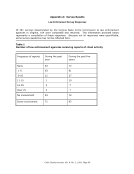
developed draft questionnaire, for example, states:
This brief survey will inquire into your experience --personal and professional
--with cultic and related groups that use highly manipulative psychological
techniques of persuasion and control to exploit members. Such groups may
be religious, psychotherapeutic, political, or commercial. A variety of have
been applied to these groups and their psychologically manipulative
processes, including: “thought reform,” “coercive persuasion,”
“brainwashing,” “mind control,” “charismatic groups,” “spiritually abusive
groups,” “high demand groups,” “new religious movements,” and “cult.”
Groups that cause the most concern tend to be leader-centered,
highly manipulative, exploitative, and totalistic (i.e., they dictate in great
detail how members should think, act, and feel).
Variety may be desirable --most of the time. But sometimes it may be counterproductive.
Each situation should be examined individually. With professional audiences, for example,
an endless variety of terms is counterproductive, for the function of the professional
community is to advance clarity and understanding. A variety of terms and concepts can be
temporarily useful only when a weeding mechanism separates the wheat from the chaff.
In order to contribute to the development of such a weeding mechanism, we would like to
recommend particular terms for particular purposes. Doing this, however, would be
premature. This study demonstrates two important points: (1) the terms we have
traditionally used in this field are inappropriate for many people in many situations (2)
people affected by cults (and we strongly suspect the same would be true of professionals