Cultic Studies Journal, Vol. 8, No. 2, 1991, Page 91
used for deterring such crime. This is particularly true with regard to young people who band
together for commission of crimes. Groups of this nature should elicit a response based upon
recent efforts and experience in dealing with youth gangs.
Debate about the extent and nature of ritual crime is bound to persist. It is hoped that the
work of this task force will provide an enhanced basis for evaluating these questions while
offering constructive suggestions for resolving problems that they represent.
Findings
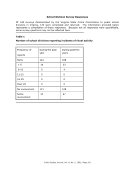
Misconceptions about ritual crime are pervasive.
Among the general population and professionals who are in a position to come into contact
with perpetrators or victims of ritual crime, there are many inconsistent beliefs and
impressions. Misinformation about the values, goals, and activities of various minority belief
systems is common and has significant impact on popular perceptions regarding ritual crime
Evidence is insufficient to establish the existence of any major conspiracy or
organized criminal network based upon an occult or spiritual belief system.
The cumulative evidence, derived from a comprehensive investigation of ritual crime in the
Commonwealth of Virginia, has not uncovered or indicated any network of ritual crime.
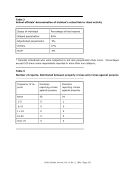
Unpopular belief systems are erroneously associated with criminal behavior.
Where indicia of unconventional, and particularly less popular, belief systems are uncovered
in the possession of one who is accused of a criminal act, this is frequently cited as evidence
of ritual crime. More often than not, no direct link is shown to exist between the beliefs and
the crime. This reaction results in characterization of certain criminal acts as occult-based
when in fact they are not.
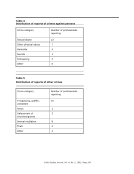
Criminal activity that might reasonably be associated with belief systems consists
primarily of minor property crimes and is committed largely by “dabblers.”
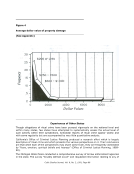
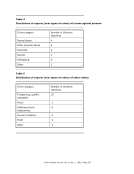
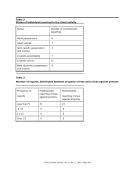
In the vast majority of cases where the available evidence is sufficient to establish some link
between criminal behavior and a spiritual belief system, the crimes consist of trespassing,
graffiti, and vandalism. Generally these crimes are relatively minor and are perpetrated on or
against abandoned property, this resulting in low damage costs. Such evidence does not
conclusively disprove the existence of more serious crime.
Existing criminal statutes in Virginia are adequate to address dangerous conduct
that may result from participation in unconventional belief systems.
Dangerous activities that are alleged to be associated with or motivated by spiritual belief
systems are prohibited by existing criminal statutes in the Commonwealth. Amendment to the
criminal code in response to ritual crime is therefore unnecessary.
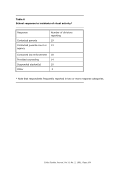
The ritual crime phenomenon has its greatest overt impact in the field of mental
health.
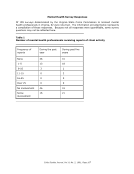
Whether true or not, there are numerous allegations of ritual crime that evidence real
suffering. Many claims of ritual crime apparently have as their basis real, and often severe,
abuse (whether ritually related or otherwise). Regardless of the veracity of patients claiming
ritual abuse, therapists should be sensitive to such claims while approaching treatment with
an objective stance.
Recommendations
In the interest of addressing widespread concerns regarding the possible dangers of ritualistic
crime the task force offers the following recommendations. These recommendations are
intended to reflect a rational approach to a real concern. Where hysteria or fanaticism is