Cultic Studies Journal, Vol. 8, No. 2, 1991, Page 77
mental health researchers populate this group. Also falling into the group, however, are
criminal justice and other governmental or public interest entities. Members of this group
recognize reason for concern regarding ritual crime simply because allegations are so
widespread and therefore demand examination.
Unlike members of the first two groups, members of the latter do not possess a uniform
position on the prevalence of ritual crime. Depending upon the focus of study, such a
determination may not even be an issue. The orientation is on the belief in existence of ritual
crime as much as validation of that belief. It is fair to say, however, that both of the extreme
positions are frequently rejected as unsubstantiated.
Finally, there are those who perceive a threat from unconventional belief systems based upon
the clash that those beliefs and values represent to their own religious views. Insofar as
purely spiritual bases for these objections are proffered, this group resides outside the focus
of this study. The task force takes no position on the preference of one religion over another,
or on the legitimacy of religious beliefs or practices except where they encourage behavior
that represents a threat to the rights or safety of society or the safety of the practitioner.
Numerous advocates across the United States and Canada have offered various perspectives
on ritual crime, based upon their particular objectives in examining this subject. Most can be
placed in one of the general groups described above. This task force initiated its investigation
with the posture of an objective observer. The study focused upon the specific issues outlined
in this report and the methodology adopted by the task force, described earlier, was
developed in response to these issues.
Surveys, Interviews, and Testimony
Surveys
In an attempt to quantify and document actual cases of ritual crime in Virginia a broad-based
survey of the Commonwealth was conducted. This consisted initially of statewide surveys to
three separate segments of the population: law enforcement agencies, public school
systems, and licensed practitioners within the various disciplines of the mental health field.
All 174 chiefs of police, 87 law enforcement sheriffs, and 145 school district officials in Virginia
received a copy of the survey. Additionally, a random sample of 155 licensed mental health
practitioners in Virginia, representing all geographical areas of the Commonwealth, was
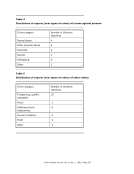
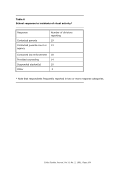
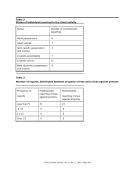
polled. The questionnaires were designed to elicit information relating to the number of
reports of ritual activity, the type of activity, the number of participants or perpetrators, the
manner in which reports were addressed, and other information concerning the respondent‟s
knowledge of, experience with, and concern about ritual crime. Jurisdictions were broken
down into regions, utilizing the classification maintained by Virginia State Police.
Through compilation of responses to these surveys the task force hoped to provide reliable
data for determining the prevalence of ritual crime, in contrast to the widely varying, and
typically anecdotal, reports that are so pervasive. That said, a caveat must be interjected.
Schools and law enforcement agencies do not generally maintain discrete records of ritualistic
crime. Therapists represent only their clientele rather than a specific geographical portion of
the general population. Nevertheless, respondents generally exhibited excellent
understanding of the information sought by the survey and provided effective responses.
Subsequent follow-up interviews further clarified and confirmed the data.
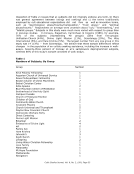
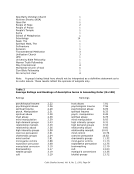
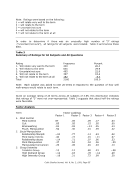
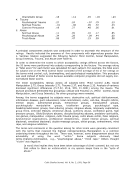
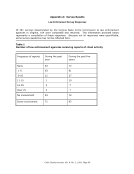
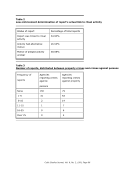
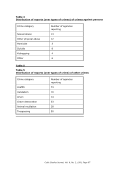
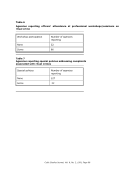
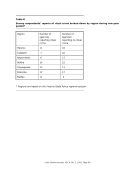
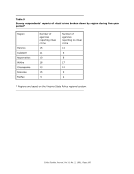
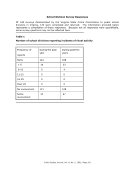
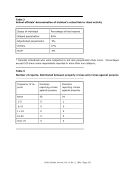
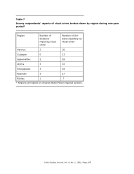
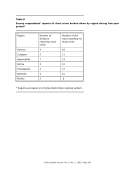
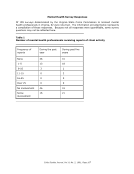
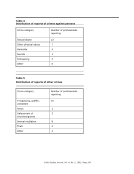
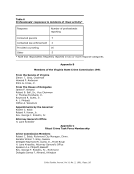
Of the 561 surveys distributed, 361 were returned (see Appendix A for compilation of survey
data), representing a response rate of 65%. School divisions returned 135 surveys, which
means that over 90% of the state‟s schools are represented. The sheriff‟s and police
departments returned over 60% of the 250 law enforcement surveys. Mental health
professionals returned approximately 30% of the 150 surveys mailed to them.