Cultic Studies Journal, Vol. 8, No. 2, 1991, Page 71
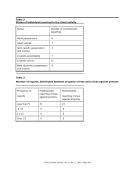
primarily of minor property crimes and is committed largely by “dabblers.”
Existing criminal statutes in Virginia are adequate to address dangerous conduct that may
result from participation in unconventional belief systems.
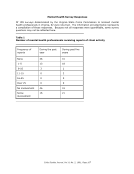
The ritual crime phenomenon has its greatest overt impact in the field of mental health.
As a result of and in accordance with these findings the task force made the following
recommendations:
That the Virginia Department of Criminal Justice Services develop a model curriculum
addressing ritual crime for Virginia‟s law enforcement officers.
That the Crime Commission‟s continued research on youth gangs be tracked and reviewed
for findings and ultimate recommendations.
That the Virginia Department of Mental Health, Mental Retardation and Substance Abuse
Services coordinate research efforts relating to the ramifications of ritual abuse in the
mental health field.
That law enforcement personnel act in cooperation with appropriate agencies in the
investigation and prosecution of claims involving ritual abuse of persons.
That school personnel and social service workers be provided objective and accurate
information on ritual crime.
That the Virginia Department of Criminal Justice Services establish a definitional standard
and review development of a separate reporting category for ritual crime.
Study Design
The subject matter of HJR 147 being of a broad and amorphous nature, the methodology
necessary for fulfillment of the resolution‟s mandate was by necessity incremental. Prior to
specific investigation into particular activity the task force required establishment of
definitional terms and an understanding of the allegations surrounding cults and the occult in
order to determine the study‟s parameters and have a context for relating certain activity to
study objectives. Consequently, an initial research project into the issues surrounding occult-
and cult-related crime was instigated.
This research was initiated by reference to a vast array of literature addressing the occult
generally, numerous specific groups, allegations of ritual crime, and discussion and analysis of
these issues. The project was both guided and augmented by interviews and correspondence
with individuals who are schooled in and have gained substantial exposure to this area of
study and concern. As the work of the task force progressed, further literature was amassed
while the focus of the research was properly narrowed and honed.
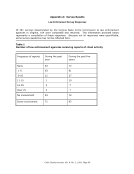
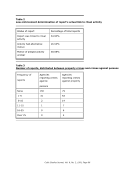
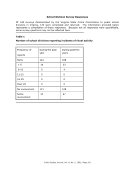
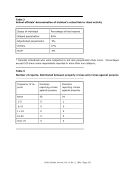
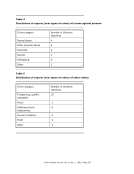
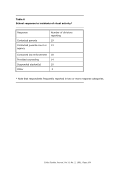
Upon establishment of study parameters, three statewide surveys of law enforcement
agencies, school divisions, and licensed mental health practitioners, respectively, were
distributed. These surveys requested information relating to the respondent‟s awareness of
ritual crime activity, its prevalence, the nature of such activity, responses to such activity, and
opinions as to legislative or other action which should be taken to address the activity, based
on the respondent‟s respective area of expertise. A subsequent statewide survey of juvenile
detention facilities and regional and local social service agencies was also made, seeking
similar information and emphasizing treatment concerns.
Selected respondents from these surveys were interviewed personally and by telephone.
Additionally, the field for interviews was expanded to include counselors in public school
systems. The purpose of such interviews was to confirm information obtained through
surveys, provide greater detail and analysis of such information, and permit an update of the
information.