Cultic Studies Journal, Vol. 8, No. 2, 1991, Page 69
Task Force Study of Ritual Crime
Michael P. Maddox
Virginia State Crime Commission
Abstract
The very general and amorphous overtones that discussions of cults frequently
assume present a particularly perplexing problem for the criminal justice field.
Because these discussions are typically pervaded by extreme emotion, a
rational response to allegations of cult, or ritual, crime becomes difficult. This
predicament is exacerbated by the ignorance surrounding the occult. While
attempting to be sensitive to the diverse viewpoints on ritual crime, this report
offers an empirical basis for evaluating the level of such activity, as well as an
objective attempt to clarify some of the conflicting issues inherent in claims of
this nature.
During the 1990 session of the Virginia legislature, Delegate Robert Tata sponsored House
Joint Resolution No. 147 (HJR 147) directing the Virginia State Crime Commission to “study
certain cult practices” and to
(1) focus its study on those cults in Virginia that emphasize or promote their
members‟ participation in dangerous, antisocial, or criminal activities as a part
of their practices (2) determine, to the extent possible, the prevalence of
such cults and their recruitment and ritualistic practices (3) identify risk
factors associated with youth involvement in such groups (4) confer with law
enforcement agencies throughout the Commonwealth regarding the reports
and documentation of occult activity, ritualistic crimes, and whether such acts
involved youth (5) inventory school divisions to determine the nature and
magnitude of the problem and the perspectives of school administrators
concerning how such problems should be managed (6) assess the final
impact of vandalism and destruction of public property due to such acts (7)
review the efforts of other states to prevent and control such cults and
resulting criminal activity (8) recommend appropriate ways in which the
Commonwealth might respond to such activity to protect public property and
safety while protecting the Constitutional rights of its citizenry and (9) limit
its study to such related matters as the Commission may deem appropriate.
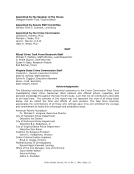
The resolution called for creation of a task force consisting of 13 members, reporting directly
to the Crime Commission, in order to fulfill the requirements of HJR 147. In addition to
members drawn from the ranks of the Commission, the task force was to be comprised of one
member each from the House of Delegates and from the Senate, and four citizen members.
Established by Section 9-125 of the Code of Virginia, the Crime Commission‟s legislative
mandate is “to study, report, and make recommendations on all areas of public safety and
protection.” Section 9-127 of the Code of Virginia provides that “the Commission shall have
the duty and power to make such studies and gather information in order to accomplish its
purpose, as set forth in section 9-125, and to formulate its recommendations to the Governor
and the General Assembly.” Section 9-134 of the Code of Virginia authorizes the Commission
to “conduct private and public hearings, and to designate a member of the Commission to
preside over such hearings.”
Pursuant to HJR 147, the Crime Commission established a task force and proceeded with this
study per the authorization and direction of such resolution.