Cultic Studies Journal, Vol. 12, No. 2, 1995, page 9
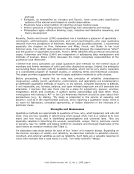
active voice --is preferable to the artificially objective usages of many scientists and
clinicians (e.g., “I asked Mr. Smith ...” is better than “The patient was asked ...”).
Topical Outline for a Clinical Case Study
This outline is intended to serve as a guideline. Adapt, add, or omit the proposed topics to
fit the circumstances.
Introduction
Describe briefly the goals, methods, and limitations (e.g., the extent of possible bias in
retrospective reports).
Circumstances
Identify interviewer and participant, date, location of interview, length of time, whether or
not recorded, interruptions and distractions, and other special characteristics or
circumstances (e.g., “Mr. Smith‟s mother came into the interview room at the end of the
hour and participated actively”).
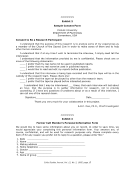
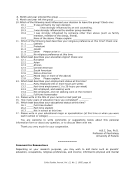
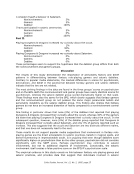
Participant Characteristics1
Describe participant‟s physical appearance, gender, age, occupational title, education, ethnic
background, religious preference, residence, marital status, parents‟ education, parents‟
occupations, parents‟ religious preferences, parents‟ marital status, ages and occupations of
siblings, political preference, mental and physical health (see Exhibit 3).
Precult Experiences
Note those participant characteristics at the time of cult recruitment that differ from current
status (e.g., age, occupation, religious preference, education, relationship with family).
Obtain history of major events related to education, occupation, religion, substance abuse,
social behavior, mental and physical health, marital status, and politics. What were the
participant‟s major values, developmental tasks completed, strengths, stresses, and issues?
Characteristics of the Group2
Specify the name of the group, the leader, type of group, date participant was recruited,
date left the group, and locations. Request descriptive information (e.g., brochures
published by group), if available.
Recruitment
Describe the circumstances of joining. What was the cult member‟s emotional state at the
time? Were recruiters honest or deceitful? Any evidence of love bombing? Other specific
examples of persuasion? Describe conversion experience. Note any unusual happenings:
magical events, visions, voices, transformations?
Experiences While in the Group
Ask participant to recall a typical day: proportion of time spent in fund-raising, recruiting,
education, administration, religious services, and so on. Describe any gifts the person made
to the group and any other financial events or transaction (e.g., “When my aunt died and
left me her farm, I deeded it over to the leader because God told me to.”). Describe
evidence related to the mental and physical health of participant (e.g., visits to physicians
1 If possible, have the participant fill out a standardized personal data form before or after the interview in order to
collect personal characteristics.
2 Use standardized forms (e.g., Group Psychological Abuse Scale [GPA]) to collect characteristics of the group. For
a copy of the GPA and detailed information on its psychometric properties, see Chambers, Langone, Dole, &Grice,
1994.
active voice --is preferable to the artificially objective usages of many scientists and
clinicians (e.g., “I asked Mr. Smith ...” is better than “The patient was asked ...”).
Topical Outline for a Clinical Case Study
This outline is intended to serve as a guideline. Adapt, add, or omit the proposed topics to
fit the circumstances.
Introduction
Describe briefly the goals, methods, and limitations (e.g., the extent of possible bias in
retrospective reports).
Circumstances
Identify interviewer and participant, date, location of interview, length of time, whether or
not recorded, interruptions and distractions, and other special characteristics or
circumstances (e.g., “Mr. Smith‟s mother came into the interview room at the end of the
hour and participated actively”).
Participant Characteristics1
Describe participant‟s physical appearance, gender, age, occupational title, education, ethnic
background, religious preference, residence, marital status, parents‟ education, parents‟
occupations, parents‟ religious preferences, parents‟ marital status, ages and occupations of
siblings, political preference, mental and physical health (see Exhibit 3).
Precult Experiences
Note those participant characteristics at the time of cult recruitment that differ from current
status (e.g., age, occupation, religious preference, education, relationship with family).
Obtain history of major events related to education, occupation, religion, substance abuse,
social behavior, mental and physical health, marital status, and politics. What were the
participant‟s major values, developmental tasks completed, strengths, stresses, and issues?
Characteristics of the Group2
Specify the name of the group, the leader, type of group, date participant was recruited,
date left the group, and locations. Request descriptive information (e.g., brochures
published by group), if available.
Recruitment
Describe the circumstances of joining. What was the cult member‟s emotional state at the
time? Were recruiters honest or deceitful? Any evidence of love bombing? Other specific
examples of persuasion? Describe conversion experience. Note any unusual happenings:
magical events, visions, voices, transformations?
Experiences While in the Group
Ask participant to recall a typical day: proportion of time spent in fund-raising, recruiting,
education, administration, religious services, and so on. Describe any gifts the person made
to the group and any other financial events or transaction (e.g., “When my aunt died and
left me her farm, I deeded it over to the leader because God told me to.”). Describe
evidence related to the mental and physical health of participant (e.g., visits to physicians
1 If possible, have the participant fill out a standardized personal data form before or after the interview in order to
collect personal characteristics.
2 Use standardized forms (e.g., Group Psychological Abuse Scale [GPA]) to collect characteristics of the group. For
a copy of the GPA and detailed information on its psychometric properties, see Chambers, Langone, Dole, &Grice,
1994.