Cultic Studies Journal, Vol. 12, No. 2, 1995, page 13
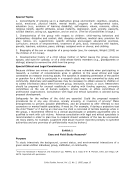
Special Topics
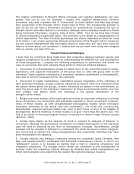
1. Concomitants of growing up in a destructive group environment: cognitive, conative,
social, emotional, physical health, mental health, progress in developmental tasks,
education (e.g., evidence of learning disability), self-esteem, values, concerns, ethics,
religious beliefs, specific attitudes, sexual maturity, depression, guilt, anxiety, passivity,
suicidal ideation, acting out, aggression, and on and on. (The list of possibilities is large.)
2. Characteristics of the group with respect to children: child-rearing behaviors and
philosophies discipline and control diet sleeping conditions medical care provision for
play taboos, sin, superstitions specific attitudes encouraged educational practices,
curriculum amount of empowerment treatment of girls, boys interactions with leaders,
parents, teachers, outsiders, peers, siblings assigned work or chores and clothing.
3. Biography of the son or daughter of a group leader (see, for example, Wright [1993] on
the children of Jim Jones).
4. Developmental history of a child whose mother or father leaves the group, divorces
spouse, and sues for custody or of a child whose family members (e.g., grandparents or
siblings) attempt to remove the child from the group.
Special Ethical and Legal Considerations
Because children are minors and because often they are vulnerable when participating in
research, a number of considerations arise in addition to the usual ethical and legal
constraints on research involving adults. The specifics in obtaining permission of the parent
or guardian for a child to participate in a research study may vary somewhat by state and
community. Diplomacy and assertiveness may be necessary to obtain access to children or
to collect information about them from the group, institution, school, or court. Researchers
should be prepared for unusual roadblocks in dealing with funding agencies, university
committees on the use of human subjects, school boards, or ethics committees of
professional organizations. Consultation with legal and ethical specialists is advised during
proposal development.
Safeguards for the welfare of the child are essential. Could the proposed research
procedures be in any way intrusive, anxiety arousing, or invasions of privacy? Make
arrangements to prevent possible aftereffects, and be prepared to offer referrals to exit
counselors or mental health specialists, if need be. For example, if during a projective test
the child “floats” or if during an interview the child is reminded of terrible beatings while in
the group, I recommend referral to a clinical psychologist or pediatric psychiatrist who is
qualified to work with cult victims. Advance consultation with legal and ethical specialists is
recommended in order to plan how to respond should violations of the law be uncovered.
(In many states, for example, suspected child abuse must be reported promptly to specified
authorities and any promises of confidentiality must be broken.)
~~~~~~~~~~
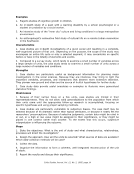
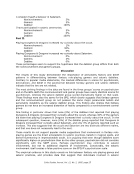
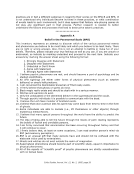
Exhibit 1
Case and Field Study Research3
Purpose
To study intensively the background, current status, and environmental interactions of a
given social unitCan individual, group, institution, or community.
3 From the Handbook in Research and Evaluation (pp. 48B49), by S. Isaac &W. B. Michael, 1981, San Diego, CA:
EdITS. Reprinted with permission.
Special Topics
1. Concomitants of growing up in a destructive group environment: cognitive, conative,
social, emotional, physical health, mental health, progress in developmental tasks,
education (e.g., evidence of learning disability), self-esteem, values, concerns, ethics,
religious beliefs, specific attitudes, sexual maturity, depression, guilt, anxiety, passivity,
suicidal ideation, acting out, aggression, and on and on. (The list of possibilities is large.)
2. Characteristics of the group with respect to children: child-rearing behaviors and
philosophies discipline and control diet sleeping conditions medical care provision for
play taboos, sin, superstitions specific attitudes encouraged educational practices,
curriculum amount of empowerment treatment of girls, boys interactions with leaders,
parents, teachers, outsiders, peers, siblings assigned work or chores and clothing.
3. Biography of the son or daughter of a group leader (see, for example, Wright [1993] on
the children of Jim Jones).
4. Developmental history of a child whose mother or father leaves the group, divorces
spouse, and sues for custody or of a child whose family members (e.g., grandparents or
siblings) attempt to remove the child from the group.
Special Ethical and Legal Considerations
Because children are minors and because often they are vulnerable when participating in
research, a number of considerations arise in addition to the usual ethical and legal
constraints on research involving adults. The specifics in obtaining permission of the parent
or guardian for a child to participate in a research study may vary somewhat by state and
community. Diplomacy and assertiveness may be necessary to obtain access to children or
to collect information about them from the group, institution, school, or court. Researchers
should be prepared for unusual roadblocks in dealing with funding agencies, university
committees on the use of human subjects, school boards, or ethics committees of
professional organizations. Consultation with legal and ethical specialists is advised during
proposal development.
Safeguards for the welfare of the child are essential. Could the proposed research
procedures be in any way intrusive, anxiety arousing, or invasions of privacy? Make
arrangements to prevent possible aftereffects, and be prepared to offer referrals to exit
counselors or mental health specialists, if need be. For example, if during a projective test
the child “floats” or if during an interview the child is reminded of terrible beatings while in
the group, I recommend referral to a clinical psychologist or pediatric psychiatrist who is
qualified to work with cult victims. Advance consultation with legal and ethical specialists is
recommended in order to plan how to respond should violations of the law be uncovered.
(In many states, for example, suspected child abuse must be reported promptly to specified
authorities and any promises of confidentiality must be broken.)
~~~~~~~~~~
Exhibit 1
Case and Field Study Research3
Purpose
To study intensively the background, current status, and environmental interactions of a
given social unitCan individual, group, institution, or community.
3 From the Handbook in Research and Evaluation (pp. 48B49), by S. Isaac &W. B. Michael, 1981, San Diego, CA:
EdITS. Reprinted with permission.