Cultic Studies Journal, Vol. 12, No. 2, 1995, page 20
The content of these games has been under moral scrutiny for quite some time by parents,
educators, and the media. There have been questions concerning “magical” spells that the
characters purportedly can cast, as well as some of the other occult-related game variables,
such as the power of magic, mythical beasts, and the abundance of demons and devils as
character opponents (Pulling, 1989). The players insist that it is “only a game,” and that the
battle between good and evil within the game concludes when the game is over (Fine,
1983). It is this soft introduction to occult-related ideas that particularly concerns parents,
lay groups, and the media.
Personality Variables Associated with
Gaming and Satanic Practices
Advocates of fantasy role-playing games appear to have substantial evidence that there is
no difference between a gamer‟s personality and that of the normal population. Two studies
(Simon, 1987 Carroll &Carolin, 1989) that measured personality characteristics of
Dungeons &Dragons gamers and nongamers, using Cattell‟s 16 PF Test, found no
significant differences between the two groups. Another study (DeRenard &Kline, 1990),
which attempted to assess alienation among Dungeons &Dragons gamers, revealed no
significant differences. Nevertheless, it has been reported in the media that many of the
personality types associated with gamers are the same for individuals involved in satanic
practices (Hicks, 1991 Larson, 1989 Pulling, 1989).
Method
Subjects
The population of individuals involved in the satanic practices studied here are often called
dabblers, that is, adolescents who are experimenting with satanic practices but are not yet
fully committed to Satanism (Langone &Blood, 1990). More specifically, a dabbler is one
who may attempt magical spells and conjurations based on books, imitation of rituals from
movies or other sources, animal mutilations and sacrifice, drinking blood and eating animal
organs, self-mutilation, and drug abuse.
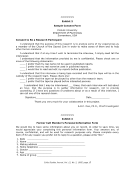
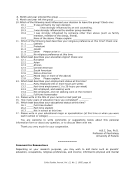
The Ss, who voluntarily participated in the survey, were 217 adult males, aged between 18
and 31 (M=age 20.1 yr. SD=1.74), residing in the New York suburban area. Ss were
informed that the study was investigating general personality characteristics and belief
systems in relation to a person‟s engagement in various kinds of activities, hobbies, and
practices. Subjects were selected from three different pools, using a random stratified
sample of fantasy role-playing gamers, satanic dabblers, and college students who were
neither gamers nor dabblers matched for age, marital status, ethnicity (95% Caucasian),
and education (minimum 4 years of high school). Fantasy role-playing gamers (n=66) were
recruited from various gaming conventions, hobby stores, and gaming clubs. The satanic
dabbler group (n=26) was recruited from local occult paraphernalia stores and bookstores,
confidential outpatient survivor groups, and underground publications of self-proclaimed
satanic splinter groups not involved with an organized satanic church. Only males were
studied because of the overwhelming preponderance of males in gaming and satanic
practices groups. Control subjects (n=125) were recruited from three suburban college
campuses.
Measures
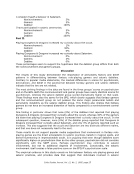
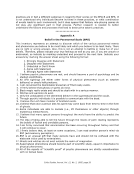
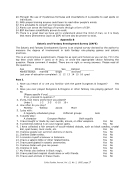
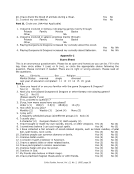
Because it has been reported that a wide range of psychiatric symptoms has been found in
subjects involved in Satanism, the Eysenck Personality Questionnaire-R (EPQ-R) (Eysenck,
Eysenck, &Barrett, 1985), a widely used and well-recognized instrument, was used to
assess and measure psychoticism, extraversion, and neuroticism. Because satanic
involvement has been associated with a high belief in occult magic (Bourget, Gagnon, &
Bradford, 1988), the Belief in Paranormal Scale (BPS) (Jones, Russell, &Nickel, 1977) was
The content of these games has been under moral scrutiny for quite some time by parents,
educators, and the media. There have been questions concerning “magical” spells that the
characters purportedly can cast, as well as some of the other occult-related game variables,
such as the power of magic, mythical beasts, and the abundance of demons and devils as
character opponents (Pulling, 1989). The players insist that it is “only a game,” and that the
battle between good and evil within the game concludes when the game is over (Fine,
1983). It is this soft introduction to occult-related ideas that particularly concerns parents,
lay groups, and the media.
Personality Variables Associated with
Gaming and Satanic Practices
Advocates of fantasy role-playing games appear to have substantial evidence that there is
no difference between a gamer‟s personality and that of the normal population. Two studies
(Simon, 1987 Carroll &Carolin, 1989) that measured personality characteristics of
Dungeons &Dragons gamers and nongamers, using Cattell‟s 16 PF Test, found no
significant differences between the two groups. Another study (DeRenard &Kline, 1990),
which attempted to assess alienation among Dungeons &Dragons gamers, revealed no
significant differences. Nevertheless, it has been reported in the media that many of the
personality types associated with gamers are the same for individuals involved in satanic
practices (Hicks, 1991 Larson, 1989 Pulling, 1989).
Method
Subjects
The population of individuals involved in the satanic practices studied here are often called
dabblers, that is, adolescents who are experimenting with satanic practices but are not yet
fully committed to Satanism (Langone &Blood, 1990). More specifically, a dabbler is one
who may attempt magical spells and conjurations based on books, imitation of rituals from
movies or other sources, animal mutilations and sacrifice, drinking blood and eating animal
organs, self-mutilation, and drug abuse.
The Ss, who voluntarily participated in the survey, were 217 adult males, aged between 18
and 31 (M=age 20.1 yr. SD=1.74), residing in the New York suburban area. Ss were
informed that the study was investigating general personality characteristics and belief
systems in relation to a person‟s engagement in various kinds of activities, hobbies, and
practices. Subjects were selected from three different pools, using a random stratified
sample of fantasy role-playing gamers, satanic dabblers, and college students who were
neither gamers nor dabblers matched for age, marital status, ethnicity (95% Caucasian),
and education (minimum 4 years of high school). Fantasy role-playing gamers (n=66) were
recruited from various gaming conventions, hobby stores, and gaming clubs. The satanic
dabbler group (n=26) was recruited from local occult paraphernalia stores and bookstores,
confidential outpatient survivor groups, and underground publications of self-proclaimed
satanic splinter groups not involved with an organized satanic church. Only males were
studied because of the overwhelming preponderance of males in gaming and satanic
practices groups. Control subjects (n=125) were recruited from three suburban college
campuses.
Measures
Because it has been reported that a wide range of psychiatric symptoms has been found in
subjects involved in Satanism, the Eysenck Personality Questionnaire-R (EPQ-R) (Eysenck,
Eysenck, &Barrett, 1985), a widely used and well-recognized instrument, was used to
assess and measure psychoticism, extraversion, and neuroticism. Because satanic
involvement has been associated with a high belief in occult magic (Bourget, Gagnon, &
Bradford, 1988), the Belief in Paranormal Scale (BPS) (Jones, Russell, &Nickel, 1977) was